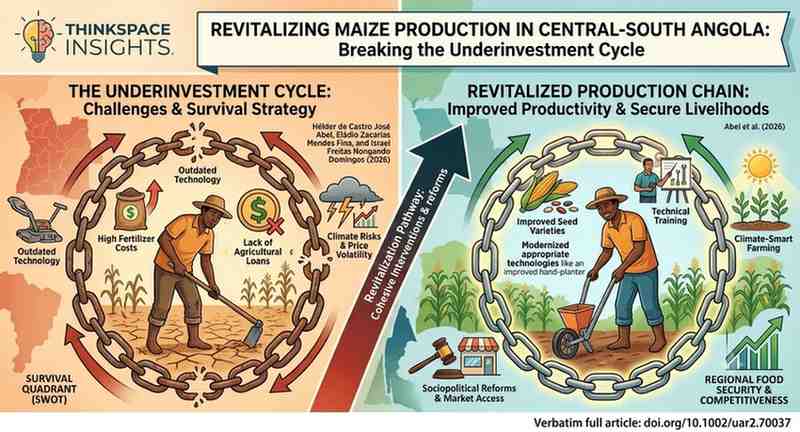

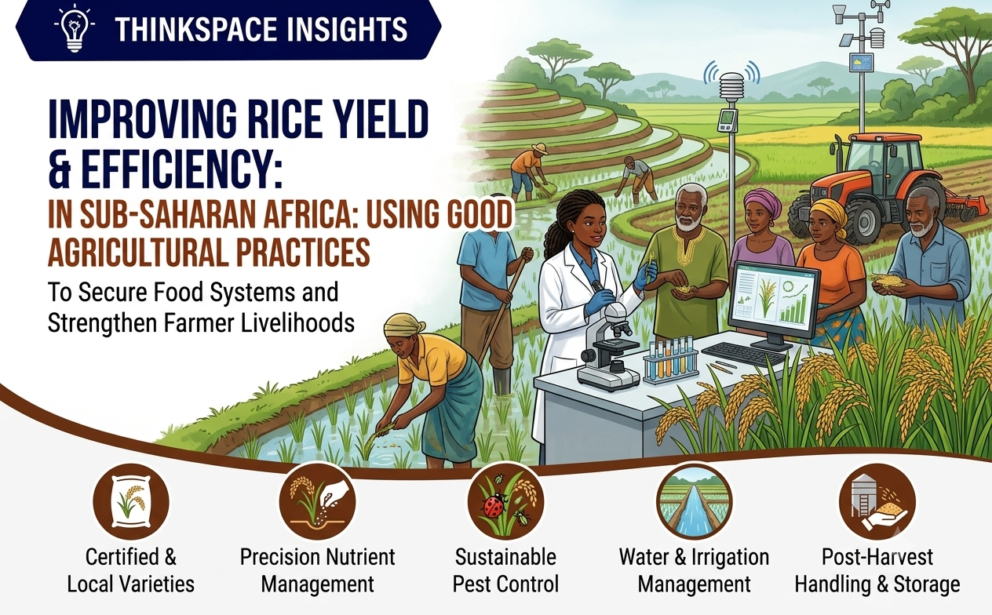
In sub-Saharan Africa, rice consumption continues to rapidly outpace local production, threatening long-term food security and straining regional economies. This widening deficit is largely driven by persistently low agricultural yields, which are heavily tied to sub-optimal field management practices on smallholder farms. Integrated Good Agricultural Practices (GAPs)—which combine optimized soil, water, weed, pest, and disease management—offer a clear framework for unlocking higher performance. However, large-scale, continental assessments of these methods across diverse agroecological zones have historically been limited.
To address this systemic knowledge gap, a comprehensive ten-year study tracking from 2013 to 2022 systematically evaluated the on-farm performance of GAPs across the continent. Researchers tested these integrated management strategies within 987 distinct fields spanning 34 sites across 20 sub-Saharan African nations. The study closely monitored three primary rice production systems—irrigated lowland, rainfed lowland, and rainfed upland—and benchmarked the outcomes directly against independent yield data from traditional farmers’ fields.
The multi-year trials yielded highly significant results, demonstrating that GAPs drastically increase overall rice yields while reducing performance volatility across the board. Mean yields reached 5.1 t ha⁻¹ in irrigated lowlands, 3.9 t ha⁻¹ in rainfed lowlands, and 2.5 t ha⁻¹ in rainfed uplands. Across these three systems, an impressive 78%, 87%, and 88% of the GAP-managed plots completely outperformed traditional farming baselines. Crucially, the implementation of GAPs stabilized regional agricultural outputs by slashing field-to-field yield variations by 25%, 29%, and 20% respectively.
The study also uncovered a direct, positive correlation between overall crop yield and fertilizer use efficiency for nitrogen, phosphorus, and potassium. Irrigated lowland systems demonstrated the highest nutrient partial factor productivity, followed by rainfed lowlands and rainfed uplands. When evaluating the explicit agronomic mechanics driving these successes, basic structural field preparation—such as precise land leveling and proper bunding—emerged alongside tailored nutrient application rates as the absolute top-ranked factors influencing high-yield plots.
Ultimately, the researchers conclude that sub-Saharan Africa possesses substantial, untapped potential to close its steep rice yield gaps and advance toward continental self-sufficiency. Achieving this macroeconomic milestone will rely heavily on transitioning away from fragmented inputs in favor of broad, scalable transitions to integrated Good Agricultural Practices. By prioritizing foundational soil preparation skills alongside optimized nutrient use efficiency, regional extension networks can empower local farmers to achieve stable, high-yield, and climate-resilient crop yields.
ThinkSpace Insights
- Closing the regional yield gap is essential for sub-Saharan Africa to transition from heavy import dependency to sustainable, long-term rice self-sufficiency.
- Integrated Good Agricultural Practices act as a powerful buffer, fundamentally dampening the high production volatility typically seen across diverse agroecological zones.
- Lowland irrigated systems yield the highest absolute outputs, but rainfed environments show the largest capacity for percentage-based yield improvements under structured management.
- Optimizing nutrient use efficiency is a core requirement for sustainable agricultural intensification, maximizing grain outputs per unit of fertilizer applied.
- Foundational land preparation techniques like bunding and leveling are just as critical to crop success as high-quality chemical applications or seed varieties.
- Transitioning from sub-optimal field habits to scalable GAPs represents an immediate, cost-effective pathway to bolster smallholder livelihoods and continental food security.
Access Full Article