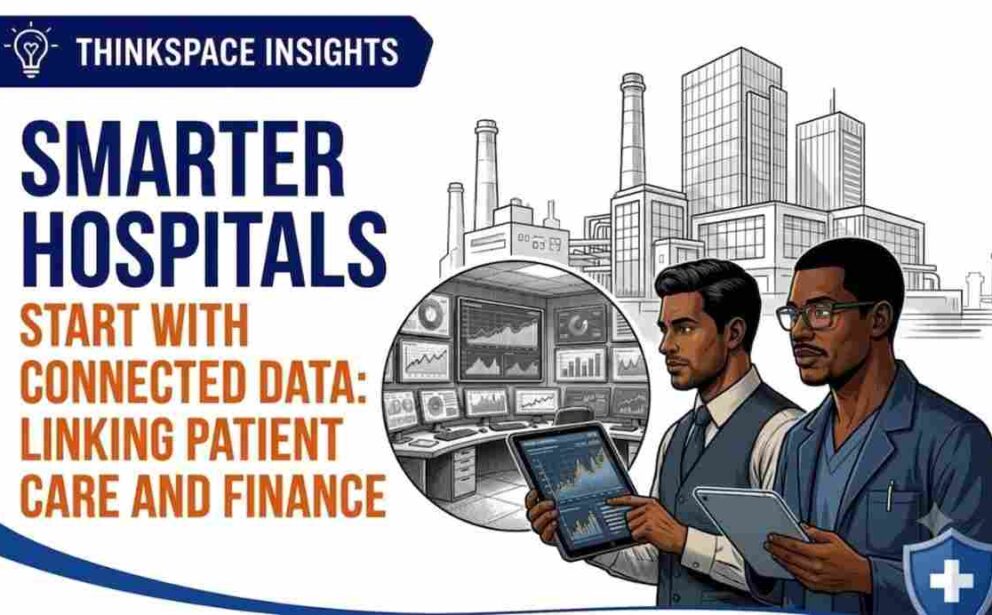
Modern healthcare organizations are drowning in data, yet they often operate like two completely different companies working under the same roof. On one side of the hospital, clinical teams rely heavily on health analytics to track patient outcomes, improve safety, and monitor population health. On the other side, the administrative and financial teams use business analytics to maximize operational efficiency, maintain financial stability, and secure a competitive advantage. This deep fragmentation creates a dangerous tug-of-war, limiting an organization’s ability to achieve its goals and frequently resulting in competing priorities rather than a unified mission.
To solve this widespread inefficiency, a team of researchers led by Ramon George O. Atento has proposed a radically different approach to hospital data management. Instead of keeping these departments siloed, their newly published conceptual framework argues for the complete integration of business and health analytics. By drawing on recent literature, the researchers mapped out a specific processual pathway to show exactly how merging these massive datasets can fundamentally transform how a healthcare organization operates from the top down.
The proposed framework operates on a logical, step-by-step pathway: it starts with raw data integration, which builds a stronger overall analytics capability, which in turn drastically improves decision quality. When an organization’s leadership is fully aligned, this high-quality decision-making leads directly to “dual outcomes.” In other words, a hospital no longer has to choose between saving money and saving lives; integrated analytics allows administrators to drive simultaneous clinical excellence and financial sustainability.
However, tearing down these walls is far easier said than done. The researchers are quick to highlight the massive roadblocks standing in the way of this integration, including deeply entrenched data silos, complex patient privacy concerns, and a general institutional resistance to adopting new workflows. Furthermore, achieving this synergy requires a high level of “knowledge absorptive capacity,” meaning the hospital staff must actually possess the skills and willingness to understand and utilize this newly combined data effectively.
Ultimately, this conceptual framework provides a much-needed roadmap for the future of healthcare management. For policymakers and hospital executives, the practical implications are clear: surviving the modern healthcare landscape requires heavy investment in integrated analytics platforms and interoperability policies. By intentionally designing tools that balance patient-centered care with efficiency-focused performance measures, hospitals can finally align their analytics with their dual imperatives, ensuring both their patients and their bottom lines remain healthy.
ThinkSpace Insights
- Healthcare data is currently fractured, with clinical teams focusing entirely on patient outcomes while administrators focus on financial efficiency.
- Integrating analytics creates a unified pathway, moving from raw data integration to enhanced analytics capability, and ultimately to better decision quality.
- Dual outcomes are highly achievable, proving that hospitals can simultaneously improve clinical care and secure financial stability if their data is aligned.
- Organizational alignment acts as the crucial moderator, ensuring that both sides of the hospital are working toward the exact same integrated goals.
- Data silos and privacy concerns remain major barriers, requiring significant cultural and technical shifts to overcome institutional resistance.
- Future sustainability demands a balanced approach, urging hospital leaders to invest in interoperable platforms that measure both human health and operational efficiency.
Access Full Article