As global demographics shift toward an increasingly aging population and the demands of clinical care grow ever more complex, the modern healthcare system is searching for highly scalable solutions. In response, healthcare robotics has rapidly emerged as a transformative tool capable of dramatically enhancing service delivery, improving patient outcomes, and streamlining overall system efficiencies. To understand both the technological progress and the practical implementation of these machines, researchers recently conducted a comprehensive, interdisciplinary survey analyzing the integration of robotics across both home and hospital settings.
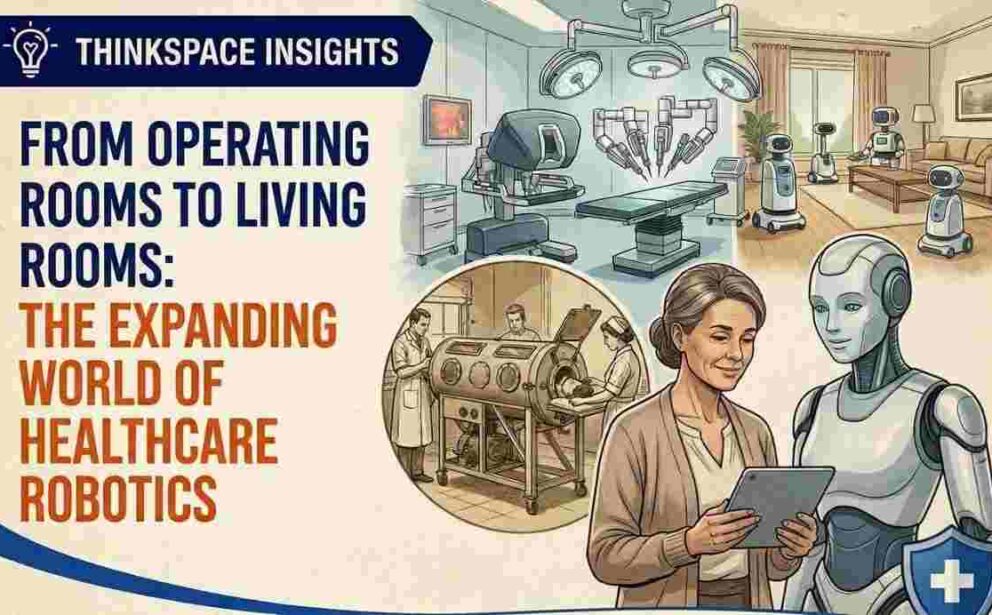
When categorizing these applications, the review first highlights the massive potential of robots in the home. For many aging or disabled individuals, maintaining independent living is a primary, yet challenging, goal. To support this, the industry has developed highly specialized assistive and companion robots. These in-home digital assistants are designed not only to help with physical, day-to-day tasks but also to provide necessary social engagement, fundamentally transforming the quality of domestic healthcare.
On the other end of the spectrum, in-hospital applications demonstrate a vastly different, yet equally critical, set of robotic capabilities. Within the clinical environment, robotics focuses heavily on optimizing complex hospital operations. This includes the deployment of highly precise surgical robots, automated logistical machines that transport supplies through busy corridors, and advanced diagnostic systems. Together, these technologies alleviate the crushing administrative and physical burdens placed on human medical staff, allowing them to focus more directly on critical patient care.
However, despite these impressive technical capabilities, moving these robots from the laboratory into everyday medical practice is fraught with significant hurdles. The survey heavily emphasizes the practice-level implications of this technological adoption, noting that successful integration requires massive workforce training, deep organizational restructuring, and active patient and caregiver engagement. Furthermore, the industry faces severe implementation barriers, including prohibitively high costs, complex interoperability issues, uneven adoption rates across different environments, and profound ethical and legal uncertainties regarding machine autonomy in healthcare.
To navigate these formidable challenges, the article concludes by outlining strategic opportunities and underexplored research areas that must be prioritized. The future of healthcare robotics relies heavily on ongoing advancements in artificial intelligence, the establishment of strict regulatory standardization, and a commitment to inclusive design principles. By addressing these core issues, the review aims to provide researchers, healthcare professionals, and policymakers with the concrete data necessary to make highly informed decisions regarding the equitable development, deployment, and governance of medical robotics.
ThinkSpace Insights
- Demographics drive robotic innovation, with aging populations and complex clinical demands necessitating highly scalable technological solutions in healthcare.
- In-home robots support independence, utilizing specialized assistive and companion machines to help vulnerable individuals maintain their autonomy outside of clinical facilities.
- Hospitals rely on robotic optimization, deploying surgical, logistical, and diagnostic systems to streamline operations and enhance overall service delivery.
- Adoption requires massive organizational shifts, emphasizing that successful integration demands comprehensive workforce training and proactive patient engagement.
- Significant barriers stall widespread use, as the industry struggles with high costs, interoperability flaws, and complex ethical and legal uncertainties.
- The future depends on standardization, highlighting the urgent need for robust regulatory frameworks, inclusive design, and further AI advancements to govern deployment effectively.
Access Full Article