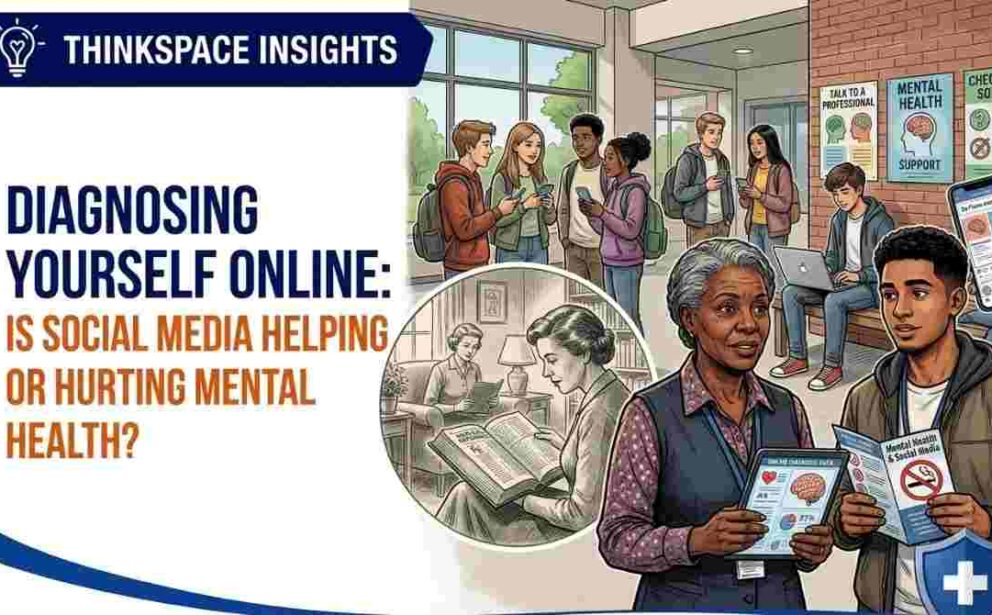
The phenomenon of individuals, particularly adolescents, self-diagnosing mental disorders has become a growing concern among academics and clinicians. Despite this widespread trend, there has been limited empirical research exploring why this happens, what the specific costs and benefits might be, and how society reacts to those experiencing distress. To address this critical knowledge gap, researchers Rosie Underhill and Lucy Foulkes conducted a qualitative study analyzing online public discussions to better understand the varied attitudes surrounding the self-diagnosis of mental health conditions.
To gather candid, unfiltered data, the researchers utilized Reddit, a massive discussion website boasting over 70 million daily users. By collecting and examining ,1195 user comments through reflexive thematic analysis, the study captured a wide spectrum of societal opinions. Reddit was specifically chosen as the data source because its freeform nature and user anonymity foster an “online disinhibition effect”. This environment encourages individuals to express highly honest, and sometimes contentious, attitudes that they might otherwise conceal when personally identified.
The thematic analysis successfully generated five distinct themes regarding public attitudes toward self-diagnosis. These included: a deep tension over who is the actual expert in diagnosis; the view of self-diagnosis as a necessary route to self-understanding within an inaccessible healthcare system; the framing of teenagers on social media as the core problem; the danger of self-diagnosis becoming a self-fulfilling prophecy; and a pervasive culture of skepticism where “now no one is believed”. Collectively, these themes reveal that individuals who self-diagnose frequently face considerable anger, derision, and criticism from the public. This intense hostility is particularly targeted toward adolescents whose self-diagnosis is perceived to be driven by social media platforms like TikTok.
The study heavily highlights a complex duality surrounding the practice of self-diagnosis. On one hand, it can provide a culturally sanctioned framework for individuals to understand their difficulties, find vital coping resources, and seek support, which is especially appealing in countries where professional healthcare is prohibitively expensive or heavily delayed. On the other hand, healthcare professionals warn of significant potential harms, including the risk of online “incubators” driving social contagion, patients unnecessarily adopting a vulnerable “sick role,” and individuals experiencing self-fulfilling prophecies that ultimately maintain or exacerbate their psychological symptoms.
Ultimately, the research underscores the urgent need to understand the motivations behind self-diagnosis rather than simply dismissing the behavior. While some individuals may incorrectly adopt diagnostic labels, recent studies indicate that some people who self-diagnose actually experience levels of psychopathology that are highly similar to those with formal, professional diagnoses. The findings suggest that society, and clinicians in particular, must learn how to appropriately support and validate distressed populations—especially adolescents—who are increasingly utilizing clinical diagnostic language as a way to express how they are feeling.
ThinkSpace Insights
- A growing digital trend, as individuals increasingly bypass traditional clinical routes to investigate their symptoms via search engines or social media platforms like TikTok.
- Reddit provides candid insights, with the study utilizing 1,195 anonymous user comments to leverage the “online disinhibition effect” and capture honest societal attitudes.
- Five core themes emerged, revealing severe tensions over diagnostic expertise, systemic healthcare inaccessibility, blame toward teenagers, self-fulfilling prophecies, and widespread public skepticism.
- Adolescents face intense hostility, as the data shows considerable anger and derision targeted specifically at teenagers who self-diagnose based on social media content.
- Benefits balance with harms, noting that while self-diagnosis offers rapid self-understanding in inaccessible systems, it also carries the risk of social contagion and the unnecessary adoption of a “sick role”.
- Validation is crucial, emphasizing that because many self-diagnosers experience genuine psychopathology, society must find ways to support youths using diagnostic language to express their internal distress.
Access Full Article