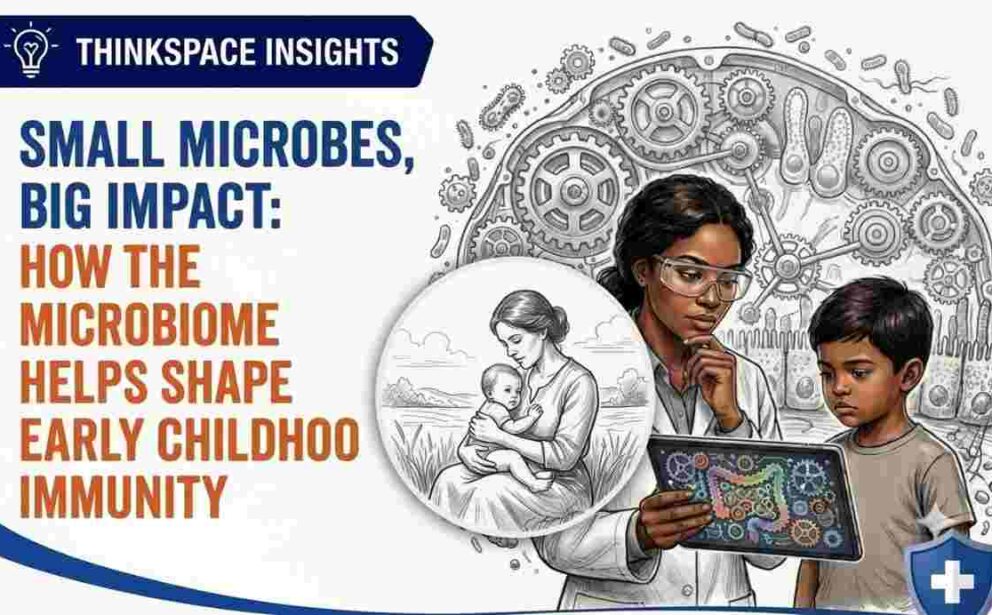
For a growing baby, the timeline from pregnancy through their second birthday—often referred to as the first 1,000 days—is an absolutely critical window of development. During this period, the foundation for an infant’s immune system is heavily shaped by their microbiome, establishing a vital, bidirectional crosstalk that is crucial for lifelong health. A deficiency in beneficial bacteria during this early stage can cause lasting immune problems and elevate disease risks later in life. To better understand this delicate ecosystem, researchers recently published a comprehensive review in the Archives of Clinical Infectious Diseases, mapping out exactly how early-life microbial exposure programs human immunity.
The biological programming actually begins much earlier than previously thought, as new evidence directly challenges the long-held medical view of a completely sterile womb. Researchers have discovered bacteria present in the meconium, placenta, and amniotic fluid, with species like Staphylococcus, Enterococcus, and Lactobacillus commonly identified. Once a baby is born, the very first microbes to colonize the gut—mainly facultative anaerobes—play a foundational role by altering the intestinal environment, consuming nutrients, and blocking potential pathogens. Over time, these starter microbes pave the way for obligate anaerobes like Bifidobacterium, fundamentally shaping the gut’s future microbial makeup and influencing long-term development.
Interestingly, this crucial microbial ecosystem extends far beyond the stomach. The review emphasizes a powerful, bidirectional relationship between the oral and gut microbiomes, noting that the mouth acts as the primary gateway to the digestive tract. Imbalanced oral bacteria do not just cause local dental issues; they actively raise the risks for severe oral and systemic diseases because the mouth continuously seeds the gut microbiota. By colonizing mucosal surfaces and producing antimicrobial compounds, a healthy gut microbiome protects against pathogens and effectively educates the immune system to foster tolerance and defense.
Unfortunately, this fragile developmental window is highly susceptible to modern medical and environmental disruptions. The researchers highlight that factors such as maternal infection, genetics, and environmental conditions can severely alter early microbial colonization. Most notably, the overuse of antibiotics can drastically reduce beneficial bacteria, like Bifidobacteria, while simultaneously increasing harmful bacteria and promoting widespread antimicrobial resistance. When these vital microbial signals are blunted or mistimed during infancy, it can lead to dangerous dysbiosis, weakened barrier integrity, and a severely impaired immune response.
Despite these modern threats, scientists are developing highly targeted solutions to repair and support the infant microbiome. The study notes that specific probiotics, such as Bifidobacterium breve M-16V and B. longum BB536, show promise in lessening conditions like eczema while potentially lowering the risks of asthma, allergy, and obesity. Furthermore, emerging therapies like Microbial Ecosystem Transplantation (MET) offer a way to precisely restore the microbiota, which is especially beneficial for infants born via Cesarean section who miss out on the mother’s natural birth canal flora. While more research is required to guarantee the long-term safety and efficacy of these interventions, deliberately managing an infant’s early-life microbiome represents a revolutionary step toward preventing chronic disease before it even starts.
ThinkSpace Insights
- The first 1,000 days are foundational, serving as a pivotal window from pregnancy to age two where the infant microbiome shapes lifelong immune health.
- The womb is not completely sterile, with new evidence revealing the presence of bacteria in the placenta, amniotic fluid, and meconium before birth.
- The mouth and gut are deeply connected, functioning as a bidirectional system where imbalanced oral bacteria can directly seed the gut and raise the risk for systemic diseases.
- Antibiotic overuse disrupts immunity, drastically reducing beneficial Bifidobacteria while promoting harmful, resistant bacteria during critical developmental stages.
- Probiotics offer targeted relief, with specific strains showing potential to lessen eczema, boost immunity, and lower long-term risks for asthma and obesity.
- MET can restore microbial balance, providing a precise method for microbiota restoration that could be especially crucial for Cesarean-born infants.
Access Full Article