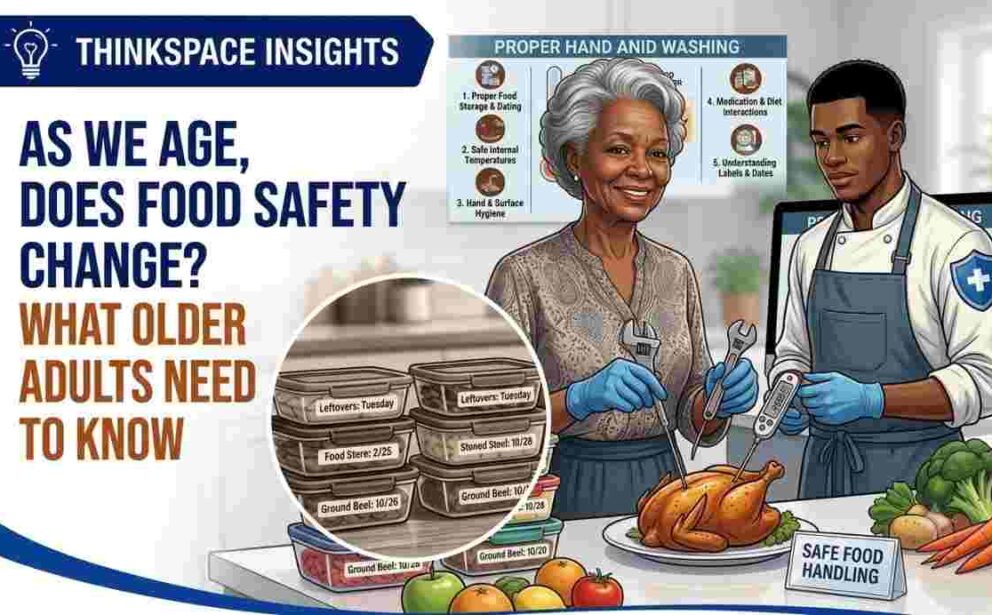
We all know someone—a parent, a grandparent, or an older friend—who has been cooking the exact same way for decades. They know their kitchen inside and out, they trust their gut, and they rely on a lifetime of culinary experience to keep their families fed and healthy. But there is a hidden catch to all that experience: as our bodies age, our immune systems naturally change, making us more vulnerable to foodborne illnesses. The rules of food safety might actually need an update, even if the family recipes stay exactly the same.
To get to the bottom of how older adults actually view these risks, a team of researchers in Germany sat down with 37 individuals between the ages of 60 and 80. Instead of just handing out dry surveys, the team hosted a series of gender-stratified focus groups. They wanted to have real, open conversations about daily cooking habits, exploring exactly how these seasoned home cooks navigate kitchen hygiene and whether they ever worry about getting sick from their own food.
What the researchers uncovered was a fascinating look into generational pride and ingrained self-reliance. The participants were overwhelmingly confident in their kitchen skills and deeply trusted their long-established routines. Interestingly, they frequently viewed their specific “post-war generation” as exceptionally tough, capable, and highly resilient to modern foodborne bugs. They felt they had survived far worse over the decades, so routine kitchen bacteria simply didn’t register as a pressing threat.
Because they felt so secure in their own abilities, these older adults happily pointed to other demographics as being at risk for food poisoning, while considering themselves mostly immune. This deep-seated confidence resulted in an incredibly low desire for any new safety information. They simply didn’t feel they needed updated guidelines, because their existing, decades-old habits had served them perfectly well up until now.
Ultimately, this study highlights a major hurdle for public health officials and families alike. If we want to protect older adults from the very real, invisible physical changes that come with aging, handing out generic health pamphlets simply will not work. We need a completely new approach to risk communication—one that involves respectful, tailored conversations that honor their lifelong culinary independence while gently addressing the shifting realities of food safety.
ThinkSpace Insights
- A lifetime of cooking builds deep confidence, which can sometimes mask the reality that our immune systems naturally weaken and become more vulnerable over time.
- Qualitative focus groups provide essential insights, showing that real, structured conversations are much better at uncovering the emotional ties people have to their cooking habits.
- Generational pride heavily influences how we see risk, with many older adults viewing their specific age group as uniquely tough and resistant to modern illnesses.
- Vulnerability is easily projected onto others, leading many older adults to believe that other at-risk groups are the ones who actually need to worry about kitchen hygiene.
- There is very little demand for new safety tips, primarily because older adults feel their existing, decades-old routines are completely sufficient.
- Public health messaging requires a new approach, shifting away from generic warnings toward respectful strategies that actually acknowledge the lived experience of older generations.
Access Full Article