
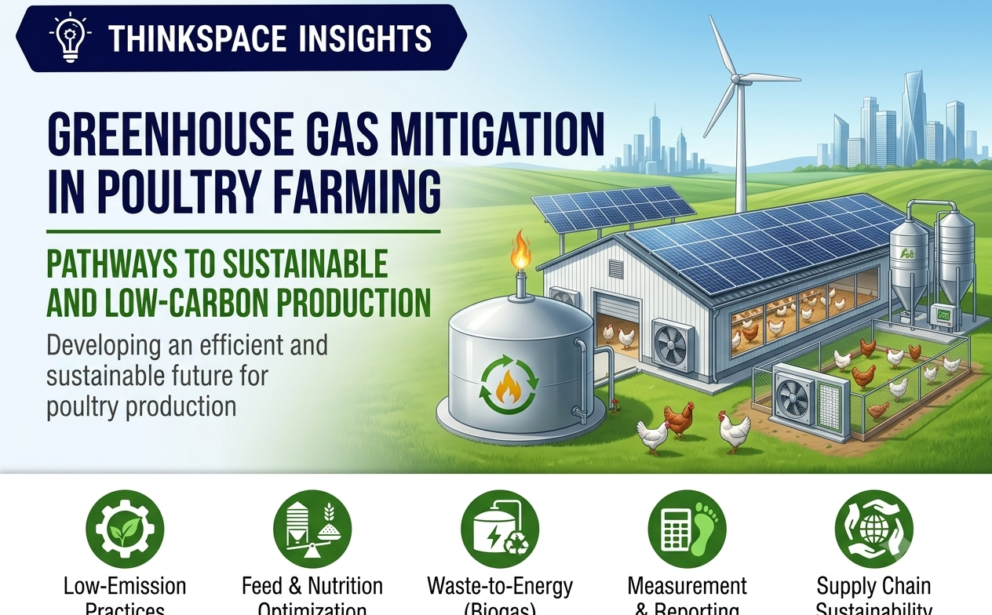
Intensive poultry production has become a cornerstone of the global food supply, but its rapid scaling carries a heavy environmental price tag. The sector currently accounts for roughly 8% of all greenhouse gas (GHG) emissions generated by the broader global livestock industry. The primary drivers behind this carbon footprint include resource-heavy feed production—which often makes up over half of total emissions—alongside conventional manure management and on-farm energy consumption, which collectively release substantial amounts of carbon dioxide, methane, and nitrous oxide. Compounding this challenge, the resulting climate shifts threaten poultry health and flock productivity, underscoring an urgent need for industry-wide mitigation.
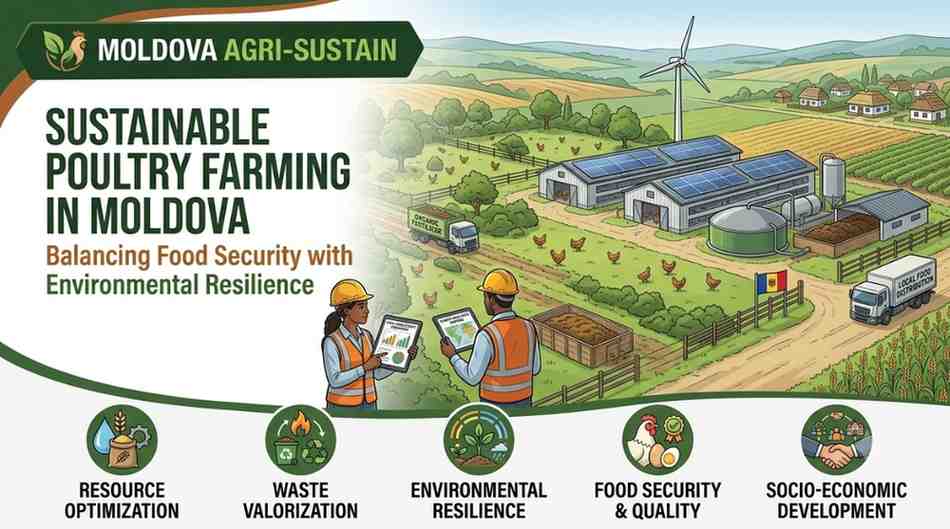
A comprehensive review by researchers Prantic Kumar Goswami, Md Salahuddin, Ahmed A.A. Abdel-Wareth, and Jayant Lohakare, published in Poultry Science, explores this critical landscape by mapping out low-carbon strategies for sustainable farming. The authors highlight the massive potential of circular economic principles, specifically utilizing nutrient recycling and waste-to-energy conversion systems alongside solar power and biogas infrastructure. At the nutritional level, feed-based interventions like precision nutrition and alternative protein sources, such as microalgae, are proving highly effective at improving feed conversion ratios and reducing harmful nitrogen excretion. Furthermore, modernizing manure management through aerobic composting, anaerobic digestion, and biochar application successfully dampens methane and nitrous oxide release while boosting nutrient recovery.
Beyond traditional farming adjustments, the study highlights how next-generation technology and genetics are reshaping poultry sustainability. The integration of precision farming tools—including IoT-enabled sensors and AI-driven decision-making systems—allows operators to optimize climate-controlled housing and feed schedules, cutting down on waste and emissions in real time. Over the long term, genetic selection focused on breeding feed-efficient and climate-resilient poultry varieties offers a permanent path toward lowered emissions. Ultimately, the authors emphasize that transitioning the global poultry sector into a climate-resilient, low-emission future requires a holistic approach backed by supportive legislative frameworks and continuous research to clear practical and economic hurdles.
ThinkSpace Insights
- The poultry industry represents 8% of all global livestock greenhouse gas emissions, with feed production driving more than half of that total carbon footprint.
- Implementing circular economy principles, such as waste-to-energy conversion and biogas integration, is crucial for decoupling poultry production from fossil fuel dependency.
- Feed-based innovations, including precision nutrition and alternative proteins like microalgae, significantly enhance feed efficiency while directly cutting down on nitrogen waste.
- Advanced manure management techniques like anaerobic digestion and biochar application dual-mitigate methane and nitrous oxide while maximizing field nutrient recovery.
- Precision livestock farming—powered by IoT sensors and AI—allows for dynamic, real-time optimization of housing conditions and resources to systematically lower emissions.
- Long-term climate adaptation requires prioritizing genetic selection to breed poultry varieties that are inherently feed-efficient and resilient to rising global temperatures.
Access Full Article