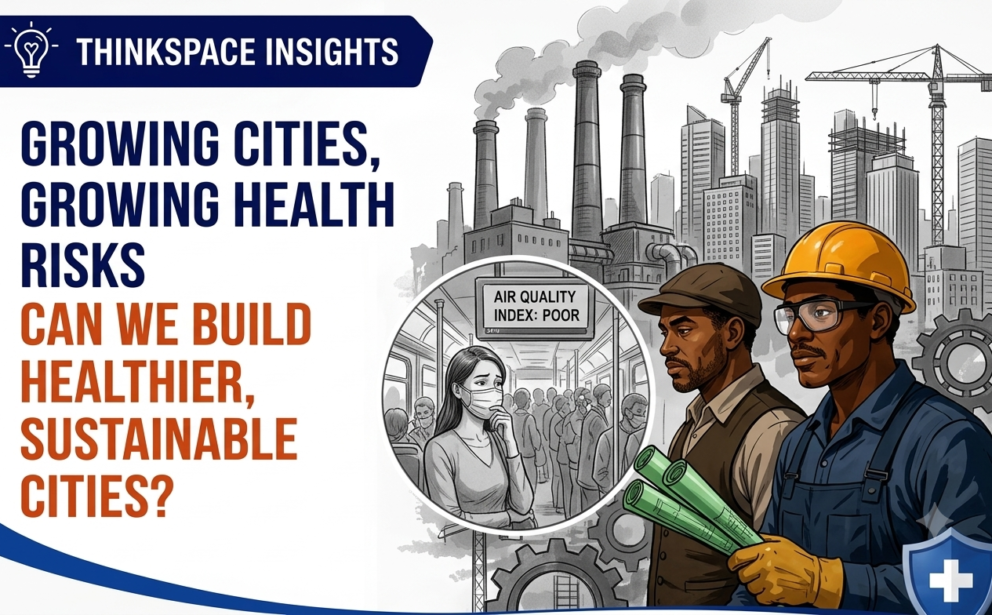
As our world becomes increasingly urbanized, the economic and social pull of the city is stronger than ever. However, this rapid migration, fueled by explosive population growth and heavy industrialization, is putting immense pressure on our urban environments—and, consequently, our physical health. The dangerous combination of severe overcrowding, industrial pollution, and strained infrastructure is creating deep health disparities, particularly in densely populated urban centers where the most vulnerable populations reside.
To address this escalating crisis, Tiago Manuel Horta Reis da Silva from King’s College London authored a critical chapter titled “Cities Under Pressure.” The research explores the complex, often toxic interplay between industrial activities and public health, arguing that we cannot continue to expand our cities without fundamentally changing how we design them. Drawing on evidence-based research and real-world case studies, the author highlights that mitigating these severe urban health risks requires far more than just building better hospitals; it demands a radical, holistic shift in modern urban planning.
The chapter proposes several innovative, structural approaches to save our cities, heavily emphasizing the urgent implementation of green infrastructure, integrative health interventions, and sweeping policy reform. By deliberately aligning sustainable urban planning and community-driven initiatives with the United Nations’ Sustainable Development Goals—specifically SDG 3 (Good Health and Well-Being) and SDG 11 (Sustainable Cities and Communities)—policymakers can build urban health systems that are not only resilient against future industrial threats but genuinely equitable for all residents.
ThinkSpace Insights
- Urbanization is a major public health threat, as rapid population growth and industrialization heavily exacerbate health disparities in densely populated areas.
- Pollution and overcrowding are the primary catalysts, creating toxic environments that severely compromise the daily well-being of city dwellers.
- Concrete must be balanced with nature, highlighting green infrastructure as a highly effective, innovative approach to mitigating urban health risks.
- Medical care is only part of the solution, as true urban resilience requires integrative health interventions and structural policy reform to protect residents.
- Development must align with global standards, emphasizing the need to target UN SDG 3 (Good Health) and SDG 11 (Sustainable Cities) in all future planning.
- Community-driven initiatives are essential, proving that equitable urban health systems must be built from the ground up, with the active participation of the people who live there.
Access Full Article