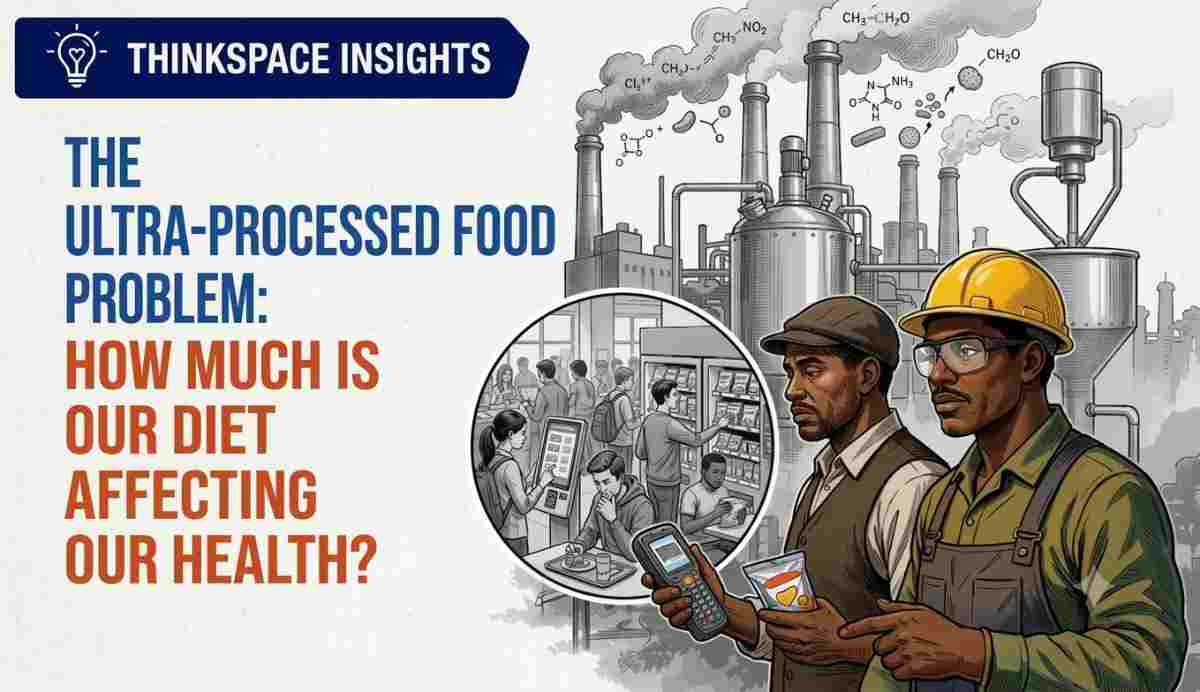
When nutritionists discuss why certain diets make us sick, they often use terms that sound like a complex chemistry textbook. For instance, they frequently reference the “NOVA classification system,” which is simply a tool researchers use to group our groceries by how heavily they have been processed in a factory—ranging from completely natural whole foods to heavily artificial “ultra-processed” items. You might also hear about “mechanistic pathways,” which is just medical shorthand for the step-by-step chain reaction that happens inside your body to cause a disease. One of the most famous pathways is the “emulsifier-microbiome-inflammation axis.” In plain English, this describes how artificial food additives (emulsifiers) disrupt the good bacteria living in your stomach (your microbiome), which leads to harmful, chronic internal irritation (inflammation). Understanding these basic concepts makes it much easier to grasp why the convenient, packaged foods lining our supermarket aisles are triggering a global health crisis.
Ultra-processed foods (UPFs) have rapidly become a dominant feature of modern dietary patterns across the globe, aggressively expanding even into previously low-consumption regions of Asia. To understand the true biological cost of this shift, researchers Taek Yong Yoo and Seong-Soo Cha conducted a massive systematic literature review. The researchers synthesized evidence from over 40 peer-reviewed studies published between 2019 and 2025, carefully examining the associations between UPF consumption, chronic diseases, underlying biological pathways, and public health policy responses.
By drawing upon umbrella meta-analyses, randomized controlled trials, and large prospective cohort studies totaling approximately 9.9 million participants, the review paints a stark and alarming picture of modern nutrition. The sheer volume of data establishes that UPF consumption is convincingly linked to type 2 diabetes with Class I evidence, and highly suggestively linked to the development of obesity. Furthermore, a diet heavy in ultra-processed foods is consistently associated with a broad spectrum of severe health issues, including cardiovascular mortality, incident cancers, kidney disease progression, cognitive decline, and depression.
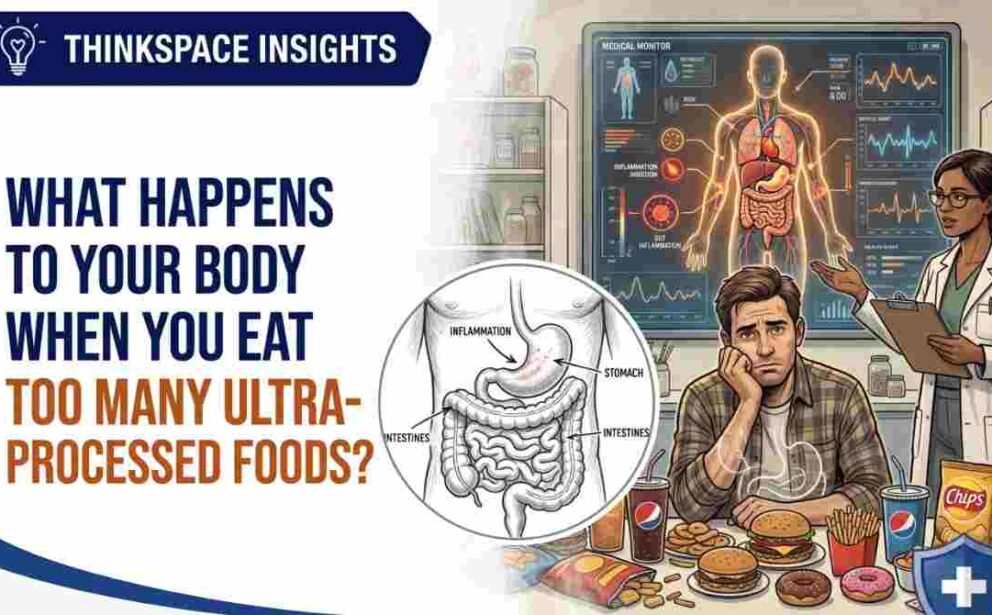
The review successfully zeroes in on exactly how these foods damage the body, identifying two primary mechanistic pathways. The first is the aforementioned emulsifier-microbiome-inflammation axis, a destructive internal process that has been directly confirmed by a landmark human randomized controlled trial. The second is the advanced glycation end-product (AGE)-RAGE NF-κB inflammatory cascade—a highly complex cellular reaction that causes chronic inflammation and is intrinsically tied to the harsh industrial food processing methods used to manufacture UPFs.
This health crisis is no longer confined to Western nations. The review documents a rapid dietary transition occurring in South Korea and China, where traditional meals are increasingly being replaced by industrial alternatives. While the total energy contributions from UPFs in these Asian nations currently remain significantly below Western levels, this dietary shift is already associated with measurable cardiovascular and metabolic harm. The evidence clearly indicates that as the global food supply undergoes this profound transformation, urgent policy interventions will be required to protect public health from the hidden dangers of industrial processing.
ThinkSpace Insights
- A massive evidence base, with the systematic review synthesizing data from approximately 9.9 million participants across more than 40 peer-reviewed studies.
- Class I evidence for diabetes, proving that the consumption of ultra-processed foods is convincingly linked to the onset of type 2 diabetes.
- Widespread chronic disease, as heavy UPF consumption is consistently associated with cardiovascular mortality, incident cancers, kidney disease progression, cognitive decline, and depression.
- Gut health is compromised, identifying the emulsifier-microbiome-inflammation axis as a primary pathway through which industrial food additives damage human biology.
- Industrial processing drives inflammation, showing that the intense manufacturing of these foods inherently triggers a harmful inflammatory cascade within the body.
- Asian diets are rapidly transitioning, highlighting that increasing UPF consumption in South Korea and China is already causing measurable cardiovascular and metabolic harm, despite remaining below Western consumption levels.
Access Full Article