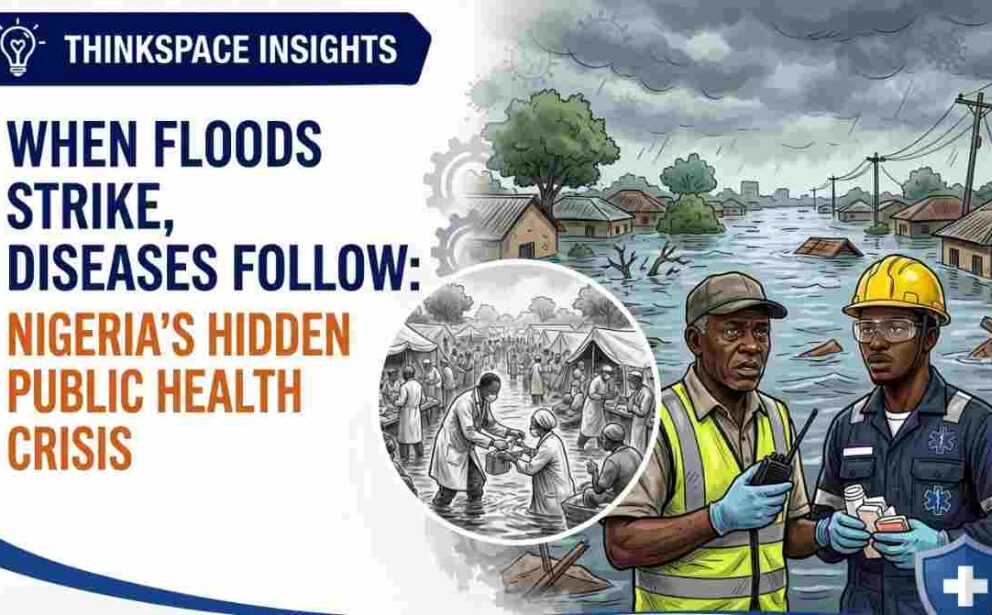
Flooding ranks among the most frequent and devastating natural disasters worldwide, imposing severe socioeconomic disruption and acute public health crises on vulnerable regions. In Nigeria, the convergence of climate-driven high-intensity rainfall, inadequate drainage systems, poor urban planning, and upstream water releases—such as those from the Lagdo Dam in Cameroon—routinely inundates both rural agricultural basins and densely populated metropolitan centers like Lagos, Port Harcourt, and communities across Bayelsa, Adamawa, and Anambra states. Beyond the direct devastation of physical infrastructure, flood events fundamentally alter the epidemiological landscape, triggering acute disease outbreaks by compromising clean water supplies, displacing millions, and overwhelming already strained healthcare systems. To delineate these complex pathways, Dorcas Adewumi Olawuyi and Adewale Stephen Olabamiji conducted a comprehensive systematic review analyzing the critical nexus between flooding events and infectious disease proliferation throughout Nigeria.
The primary mechanism driving post-flood health emergencies is the rapid contamination of municipal and rural water sources alongside the widespread destruction of basic sanitation systems. Floodwaters easily breach poorly protected latrines, sewage lines, and refuse sites, washing pathogen-rich debris directly into drinking wells and domestic waterways. This environmental failure inevitably fuels spikes in life-threatening waterborne infections, most notably cholera and typhoid fever, which rapidly sweep through crowded informal settlements and makeshift displacement camps. Compounding these waterborne threats are rodent-borne diseases such as leptospirosis, as displaced rodent populations are forced into closer, unsanitary contact with human living quarters in flood-affected communities.
Concurrently, receding floodwaters and residual stagnant pools create expansive, ideal breeding environments for vector populations, dramatically amplifying the transmission of vector-borne illnesses. Mosquito vectors proliferate rapidly in post-flood environments, leading to sharp surges in endemic malaria as well as arboviral threats like dengue fever. These biological vectors place massive, immediate burdens on public health institutions that are frequently already crippled by physical damage, supply chain disruptions, and staff displacement. The intersection of widespread vector proliferation and collapsed preventive infrastructure ensures that morbidity continues to rise long after active floodwaters have drained.
The public health consequences of these catastrophic events manifest along both direct and indirect vectors. The immediate, direct toll includes physical trauma, acute injuries, and fatal drownings sustained during the initial surge of water. However, the indirect consequences are frequently more pervasive and enduring: localized healthcare infrastructure is disrupted, routine treatments for chronic conditions are severed, clean pharmaceutical supply chains are severed, and widespread psychological distress, trauma, and anxiety take hold across displaced populations. As global climate change accelerates the anticipated frequency, severity, and unpredictability of extreme weather events across Sub-Saharan Africa, these compounding health risks will grow increasingly severe without proactive intervention.
Mitigating the compounding hazards of flood-induced epidemics demands a fundamental transition from reactive disaster relief toward comprehensive, integrated disaster preparedness and climate adaptation. Effective resilience frameworks require the deployment of robust early warning systems, reinforced healthcare infrastructure situated outside high-risk flood plains, pre-positioned emergency medical supplies, and rigorous post-flood epidemiological surveillance networks. Safeguarding vulnerable populations in Nigeria ultimately hinges on unified, multisectoral collaboration connecting policymakers, urban planners, public health professionals, environmentalists, and local grassroots communities to fortify sanitation infrastructure and build lasting systemic resilience.
ThinkSpace Insights
- Compounding drivers of inundation, as Nigerian flood vulnerability stems from an intricate mix of climate-induced torrential rains, river overflows (Niger and Benue), blocked urban drainage, and upstream dam releases like the Lagdo Dam.
- Rapid waterborne contamination, with floodwaters breaching sanitation barriers to contaminate community drinking sources, triggering immediate post-disaster outbreaks of cholera and typhoid fever.
- Vector and rodent proliferation, showing that stagnant pools expand mosquito breeding habitats to spike malaria and dengue transmission, while rodent displacement drives zoonotic risks such as leptospirosis.
- Direct trauma versus indirect fallout, balancing visible casualties from drowning and physical injury against protracted indirect burdens, including severed healthcare access and pervasive psychological trauma.
- Vulnerability centered in informal settlements, where deficient drainage networks, high population density, and lacking municipal services in cities like Lagos and Port Harcourt maximize disease transmission velocity.
- Imperative for integrated disaster policy, calling for early warning systems, post-flood surveillance, and resilient infrastructure built through cross-sector collaboration between public health authorities, urban planners, and environmental agencies.
Access Full Article