

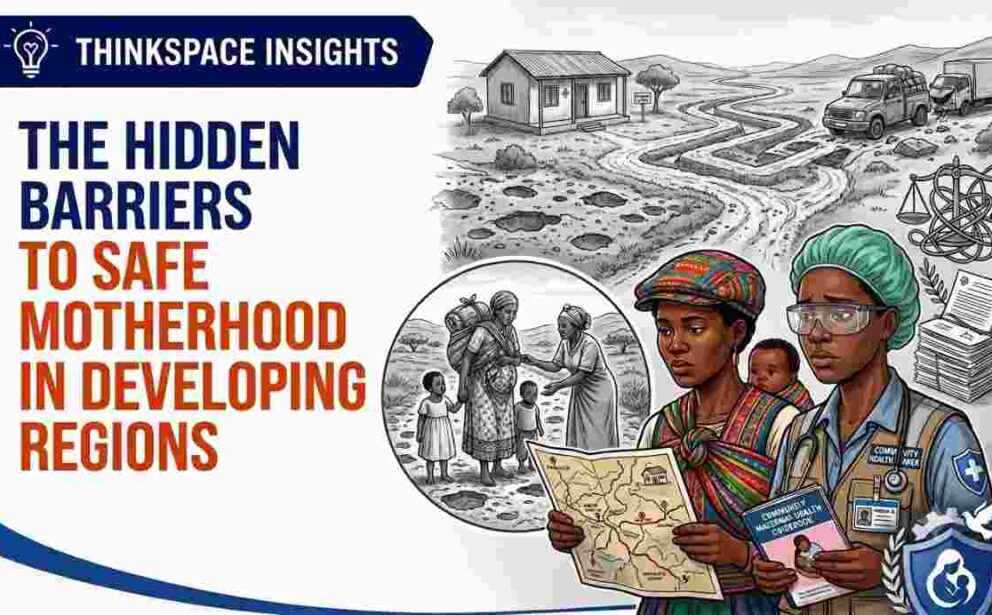
For many women in the developing world, surviving childbirth is less about complex medical mysteries and more about geography and basic infrastructure. Maternal mortality remains a devastating public health crisis, driven largely by geographic barriers, weak local health systems, and deep socioeconomic inequalities. When pregnant women cannot access quality perinatal care or skilled birth attendants, complications that should be entirely preventable frequently turn fatal.
To measure exactly how these disparities impact maternal survival rates, a research team led by Dr. Anbarasu D conducted a targeted cross-sectional study evaluating 300 pregnant women and healthcare providers. By analyzing survey data and hospital records from both rural and urban health facilities, the researchers sought to quantify the stark divide in antenatal care utilization, access to emergency obstetric care, and ultimate maternal health outcomes.
The findings paint a grim picture of rural disadvantage. The study revealed that a staggering 38% of women in rural areas suffered from poor access to antenatal care services, compared to just 14% of their urban counterparts. When it came time to deliver, the divide persisted: only 61% of rural births were attended by skilled medical personnel, while urban areas boasted an 89% attendance rate. Tragically, this lack of access translates directly into lost lives. In underserved areas, maternal mortality reached 312 per 100,000 live births—more than double the rate of 148 per 100,000 seen in better-served, urban locations.
However, the research also highlights a clear, actionable path forward. The data showed that when community-based maternal health programs were actively implemented alongside improved emergency obstetric services, maternal mortality dropped by a massive 27.4%. Ultimately, this study proves that saving maternal lives does not require reinventing medicine; it requires a relentless commitment to strengthening foundational healthcare infrastructure, expanding the skilled medical workforce, and bringing targeted, community-based interventions directly to the most isolated populations.
ThinkSpace Insights
- Geography dictates maternal survival, with rural and underserved regions experiencing drastically higher rates of maternal mortality due to poor healthcare infrastructure.
- Antenatal care access is deeply unequal, as 38% of rural women lack adequate access to vital pre-birth services compared to just 14% in urban areas.
- Skilled birth attendance is a critical missing link, with only 61% of rural deliveries benefiting from trained medical personnel, leaving mothers highly vulnerable to complications.
- The mortality gap is severe, showing 312 maternal deaths per 100,000 live births in underserved communities versus 148 in better-served zones.
- Community-based interventions directly save lives, demonstrating a 27.4% reduction in maternal mortality when emergency obstetric services and local health programs are properly implemented.
- Expanding the skilled workforce is non-negotiable, requiring urgent policy focus on deploying trained healthcare providers to the regions that need them most.
Access Full Article



































































































