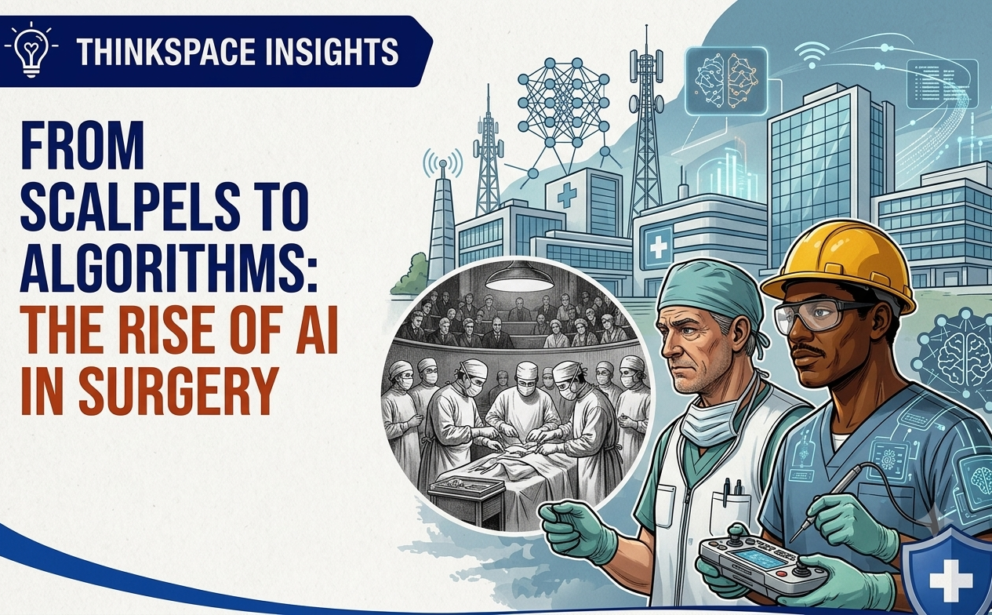
Artificial intelligence has rapidly transitioned from the realm of science fiction into tangible, real-world applications, driven by massive advances in computing power and deep learning. While we are increasingly used to algorithms powering our social networks or autonomous vehicles, their most critical frontier is arguably modern medicine. Surgery is an incredibly complex field that demands careful decisions and precise, high-stakes actions. Today, AI is aggressively stepping into the operating room to assist human hands, showing extraordinary potential in clinical decision support and intraoperative assistance.
To map exactly how fast this medical revolution is progressing, a comprehensive bibliometric analysis examined the evolution of AI in surgery from 1998 to 2024. By analyzing 821 distinct articles, the study uncovered a staggering 14.53% annual growth rate in research publications, jumping from just a single published article in 1998 to 328 in 2023. The data reveals that prominent institutions like Harvard University and Stanford University, alongside leading countries like the USA and China, are the primary forces driving this technological surge.
The impact of artificial intelligence actually begins long before the first incision is ever made. Before surgery, these algorithms analyze vast medical records and imaging to offer highly personalized treatment plans and precise risk assessments. Once the patient is actively in the operating room, AI acts as a digital safety net, monitoring the procedure in real-time. It actively identifies key anatomical structures and helps surgeons perform exact operations, ultimately working to reduce human error in highly critical moments.
This technological support extends well into the recovery phase. After a procedure, AI systems continuously monitor a patient’s recovery to actively predict and prevent potential complications, significantly improving the overall quality of care. However, despite this immense promise, the integration of AI in surgery is still in its relatively early stages. Currently, most applications are limited to unimodal deep learning, meaning the technology often relies on single types of data, and there remain significant gaps in international guidelines and development.
Moving this technology from exciting prototype to global standard will require more than just writing better code. The researchers highlight an urgent need for long-term validation studies to prove these tools are consistently safe and effective. Future development must focus heavily on addressing data quality and security challenges while safely expanding into diverse surgical contexts. By fostering deep interdisciplinary collaboration between surgeons and data scientists, the medical field can unlock the full potential of AI, fundamentally transforming precision, efficiency, and patient care for generations to come.
ThinkSpace Insights
- AI has moved from sci-fi to the surgical ward, leveraging immense computing power and deep learning to actively assist in complex medical decision-making.
- Research is exploding globally, with surgical AI publications seeing a 14.53% annual growth rate, heavily spearheaded by institutions in the USA and China.
- Preoperative planning is highly personalized, as AI algorithms can rapidly analyze medical records and imaging to map out customized treatment strategies before surgery begins.
- AI provides real-time intraoperative support, actively identifying key anatomical structures during surgery to help doctors perform precise actions and reduce errors.
- Current technology has notable limitations, as most modern surgical AI relies on unimodal deep learning, highlighting a need for more complex, integrated systems.
- Future success relies on long-term data security, requiring rigorous validation studies, international collaboration, and strict data quality protocols to protect patients.
Access Full Article