

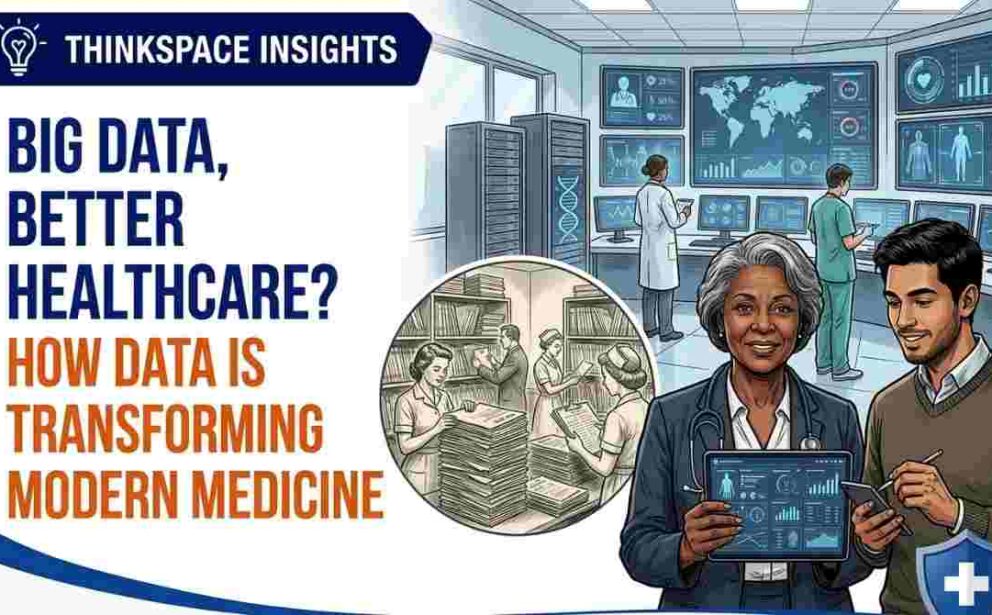
Big data technologies are fundamentally transforming the landscape of biomedical and health-care informatics research. Across the medical spectrum, massive volumes of biological and clinical data are being generated and collected at an unprecedented speed and scale. For instance, next-generation sequencing technologies can now process billions of DNA sequence data points daily, while the widespread adoption of electronic health records (EHRs) continuously documents vast amounts of detailed patient information. This explosion of data presents a unique, powerful opportunity to uncover hidden medical knowledge and create novel methodologies designed to drastically improve the quality of health care.
A major driver of this big data revolution is the rapidly decreasing cost associated with acquiring and analyzing complex biomedical information. This vital financial shift is actively fueled by continuous technology upgrades, including the emergence of advanced sequencing machines and the development of sophisticated hardware and software specifically designed for parallel computing. Coupled with the extensive, ongoing expansion of EHR systems, these technological leaps make it increasingly feasible for researchers and clinicians to harness massive datasets efficiently. Consequently, the application of big data in health care has evolved into a fast-growing field, yielding numerous new discoveries and methodologies over the past five years.
To synthesize this rapid progress, a comprehensive literature review by Jake Luo, Min Wu, Yiqing Zhao, and their colleagues explores how big data is specifically applied across four major biomedical subdisciplines. In the realm of bioinformatics, high-throughput experiments are actively facilitating groundbreaking new genome-wide association studies, allowing researchers to track the complex genetic underpinnings of various diseases at a massive scale. Simultaneously, in the field of clinical informatics, frontline medicine directly benefits from the sheer volume of collected, structured patient data. By leveraging these comprehensive datasets, healthcare providers can move beyond intuition and make highly intelligent, data-driven clinical decisions.
The transformative impact of big data extends equally into medical imaging and population-level public health. Imaging informatics is currently experiencing rapid integration with modern cloud platforms, a technological shift that allows institutions to seamlessly share massive medical image datasets and streamline complex diagnostic workflows across geographic boundaries. On a broader scale, public health informatics leverages advanced big data techniques to protect entire populations. By analyzing vast, diverse datasets, public health officials can accurately predict and continuously monitor dangerous infectious disease outbreaks, such as Ebola, enabling much faster and more effective emergency responses.
While the recent progress and clinical breakthroughs driven by big data applications are undeniable, the field still faces significant practical hurdles. The literature review meticulously outlines the current challenges and existing gaps that must be bridged to fully realize the potential of these integrated technologies. By summarizing these obstacles alongside the immense opportunities for future advancement, the research provides a critical roadmap, ensuring that the continuous influx of biomedical data directly translates into tangible, sustainable improvements in global health care delivery.
ThinkSpace Insights
- Unprecedented data generation, driven globally by the sheer processing power of next-generation sequencing and the extensive expansion of electronic health records.
- Decreasing analytical costs, fueled by advanced sequencing machines and novel hardware and software engineered for rapid parallel computing.
- Bioinformatics accelerates genetic research, utilizing high-throughput experiments to easily facilitate new genome-wide association studies of various diseases.
- Clinical informatics empowers decisions, leveraging vast amounts of collected patient data to enable intelligent, highly accurate healthcare choices on the frontline.
- Cloud platforms transform imaging, allowing for the rapid integration, secure sharing, and streamlined workflow management of incredibly large medical image datasets.
- Public health leverages predictive tracking, utilizing big data techniques to successfully monitor and accurately predict severe infectious disease outbreaks like Ebola.
Access Full Article



































































































