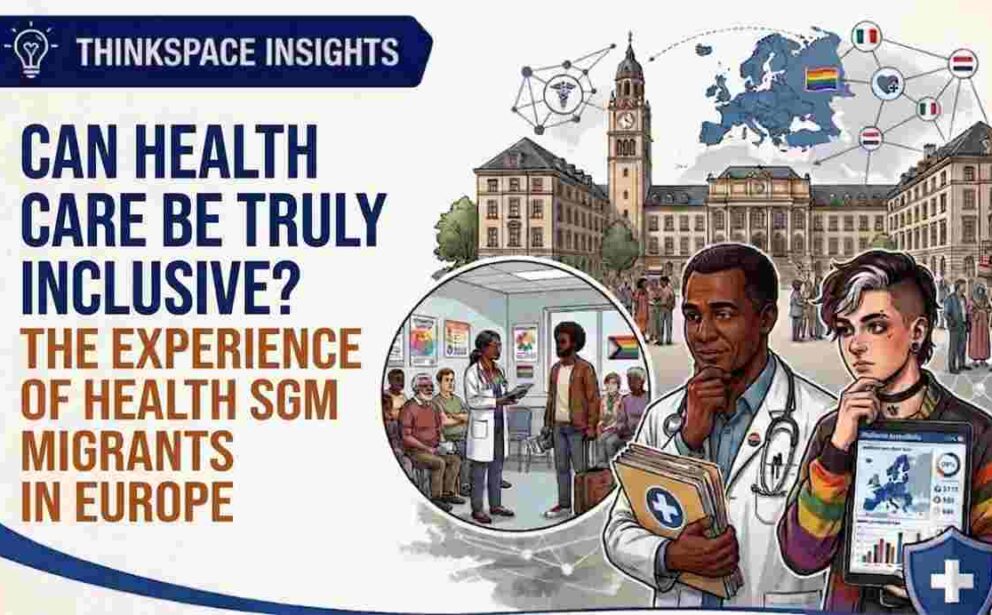
Sexual and gender minority (SGM) migrants face a compounding burden of vulnerability when attempting to navigate foreign healthcare systems. After relocating to Europe in search of safety or better opportunities, these individuals frequently encounter a complex web of systemic barriers that prevent them from accessing both basic and specialized medical care. Understanding the true scope of this public health issue is a critical first step toward building equitable infrastructure. To map this landscape, a research team conducted a comprehensive systematic review to examine exactly how SGM migrants access, utilize, and experience healthcare across the European continent.
The research team executed a rigorous, PRISMA-guided search across major medical databases, analyzing literature published through October 2025. Filtering strictly for peer-reviewed studies focused on SGM migrants within European borders, the investigators ultimately synthesized 16 critical studies, comprising ten quantitative and six qualitative papers. By assessing the methodological quality of these articles, the researchers were able to draw out a stark, evidence-based picture of the current state of migrant healthcare, revealing heavily fragmented services and deep systemic inequities.
The qualitative findings exposed severe, multifaceted barriers that actively block these migrants from receiving adequate general healthcare. Patients frequently reported struggling with legal insecurity, pervasive discrimination, and crippling language barriers when attempting to interact with medical professionals. Furthermore, the studies highlighted a glaring lack of culturally responsive, migrant-sensitive, and linguistically accessible services. Without these basic supportive frameworks, many individuals are left entirely isolated from the medical care they urgently need.
Interestingly, the review revealed that existing medical research is highly disproportionate, focusing almost exclusively on HIV and sexual health services specifically for migrant men who have sex with men. Within this narrow clinical focus, quantitative data identified varying barriers to care, such as low perceived personal risk and uneven uptake of preventative measures like PrEP and routine testing. While sexual health intervention is undeniably vital, this heavily concentrated research focus has inadvertently created massive blind spots regarding the broader, holistic healthcare needs of the SGM migrant community.
These clinical blind spots leave highly vulnerable demographics without adequate support or representation. The review highlighted a severe lack of evidence regarding mental health interventions, general primary care, and gender-affirming treatments. Transgender individuals, along with lesbian and bisexual women, remain vastly underrepresented in the scientific literature, and the researchers could not identify a single study addressing the healthcare utilization of intersex migrants. To truly protect these populations, future research must expand beyond specialized sexual health services and isolated geographic regions to support the development of genuinely equitable, fully accessible healthcare systems across all of Europe.
ThinkSpace Insights
- SGM migrants face compounded vulnerabilities, navigating complex foreign medical systems while simultaneously encountering systemic discrimination and profound legal insecurity.
- Language and cultural barriers severely limit care, with a notable lack of linguistically accessible and migrant-sensitive services actively preventing patients from seeking general healthcare.
- Current research is heavily skewed, with the vast majority of studies focusing almost exclusively on HIV and sexual health services for migrant men who have sex with men.
- Major demographic gaps persist in the literature, as transgender individuals and lesbian or bisexual women are vastly underrepresented in European healthcare studies.
- Holistic healthcare data is urgently needed, emphasizing a critical requirement for broader research into mental health support, general primary care, and gender-affirming treatments across more diverse European regions.
Access Full Article
https://link.springer.com/article/10.1007/s10903-026-02005-8