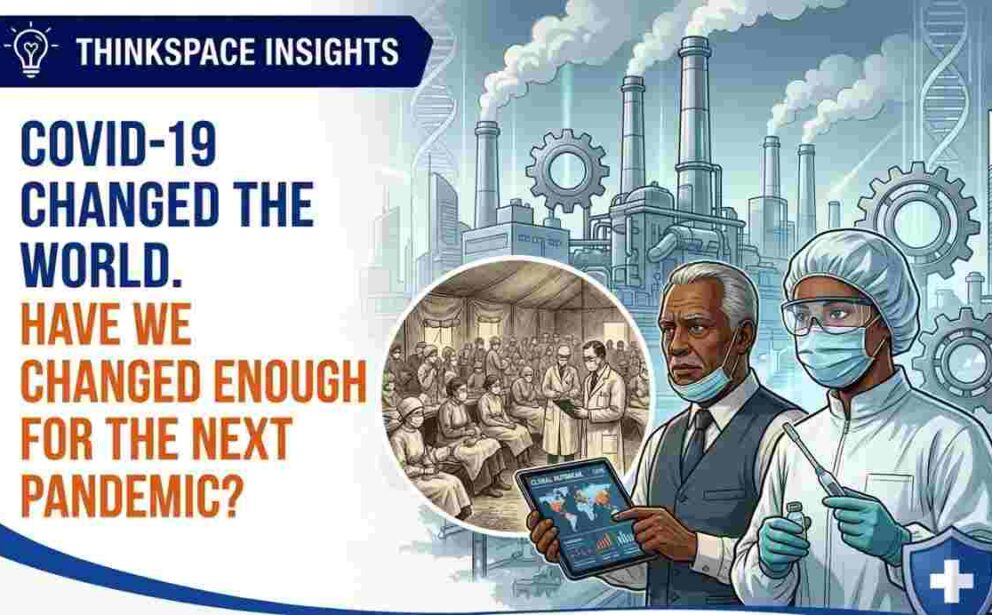
When the COVID-19 pandemic swept across the globe, it brought the world to a grinding halt and shattered a comfortable illusion. For years, global health experts believed we were reasonably prepared for a major infectious disease outbreak. We had advanced medical technology, international health organizations, and pandemic response plans gathering dust on government shelves. Yet, when the crisis actually hit, those theoretical plans quickly unraveled, exposing deep, structural weaknesses in how the world handles a fast-moving, invisible threat.
To understand exactly where things went wrong and how we can survive the next inevitable health crisis, a team of researchers led by Ata Mohajer-Rostami conducted a massive evaluation of the global COVID-19 response. By analyzing epidemiological models, surveillance data, and case studies from various countries, the team pieced together a comprehensive post-mortem of our pandemic strategies. One of their most shocking findings completely flipped conventional wisdom: many high-income nations, which boasted top-tier preparedness rankings before the pandemic, actually vastly underperformed when the virus hit their shores.
So, what actually separated the countries that managed the crisis well from those that spiraled out of control? The research showed that success wasn’t just about having the most expensive hospitals. The nations that achieved better control were the ones that implemented swift, early interventions, rolled out vaccines equitably, and maintained remarkably consistent, transparent public messaging. In contrast, the countries that struggled were bogged down by delayed policy actions, weak surveillance systems that completely missed asymptomatic spread, and deeply fragmented data networks that left local health officials flying blind.
Beyond the logistics of lockdowns and testing, the study highlighted a massive, tragic failure in global solidarity. Vaccine inequity severely crippled the worldwide response, proving that a pandemic cannot be defeated if life-saving treatments are hoarded by a few wealthy nations while the rest of the world waits. Furthermore, public trust emerged as a vital currency; even the most brilliant scientific advancements were rendered essentially useless if political leaders failed to communicate honestly and effectively with their citizens.
Ultimately, this comprehensive review serves as an urgent blueprint for the future. We cannot afford to simply move on and forget the brutal lessons of the past few years. A truly effective preparedness program for the next pandemic must prioritize sustained, long-term investment in surveillance, demand genuine international data sharing, and guarantee equitable access to care. By building multidisciplinary response teams and committing to total transparency now, we can transform the tragic failures of COVID-19 into a resilient, global shield for whatever comes next.
ThinkSpace Insights
- High preparedness rankings didn’t guarantee success, as the study revealed that many wealthy, high-income nations surprisingly underperformed during the actual crisis.
- Early interventions and transparent messaging are critical, proving to be the dividing line between countries that controlled the spread and those that faced catastrophic surges.
- Delayed policy and fragmented data crippled responses, leaving health systems unable to effectively track asymptomatic transmission or allocate resources properly.
- Global vaccine inequity prolonged the crisis, demonstrating that infectious diseases cannot be contained globally if life-saving resources are not distributed fairly.
- Public trust is just as important as scientific advancement, showing that public health strategies fail entirely without clear, honest communication from leadership.
- Future readiness requires multidisciplinary collaboration, highlighting the urgent need for international data sharing, sustained surveillance investment, and equitable care networks.
Access Full Article
Https://assets.cureus.com/uploads/review_article/pdf/431186/20251221-355157-8l4ofh.pdf