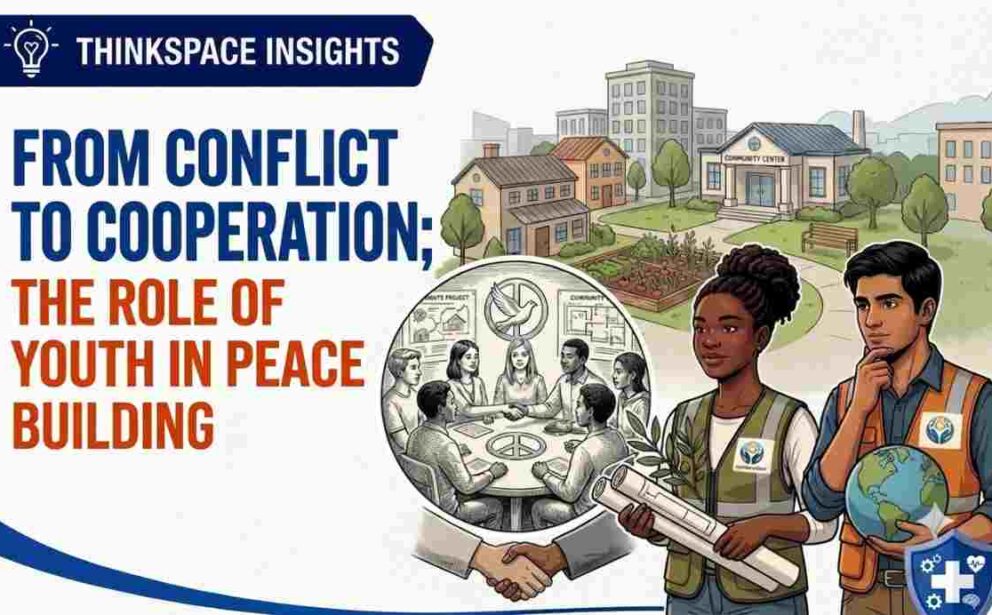
The border between Turkana and West Pokot counties in northern Kenya has long been marred by persistent intercommunal violence. Despite sustained interventions from both state and non-state actors, these conflicts continue to severely undermine local livelihoods and regional development. Seeking a more sustainable solution, conflict resolution experts are increasingly looking toward a demographic that holds the key to long-term stability: the youth. A recent comprehensive study, anchored in Peacebuilding and Conflict Transformation theories, evaluated exactly how youth-led initiatives are actively fostering inter-communal peace in this highly volatile region.
To accurately measure this grassroots impact, researchers employed a mixed-methods descriptive survey design across selected wards in both Turkana and West Pokot counties. The research team gathered quantitative and qualitative data from a robust sample of 318 respondents, achieving a solid 71.9% response rate. By directly engaging with local youth, civil society organizations, government officials, and community elders through targeted questionnaires, interviews, and focus group discussions, the study captured a holistic, ground-level view of the ongoing peacebuilding processes.
The findings clearly demonstrate that young people are far from passive observers in their communities. Youth are actively driving peace through high engagement in cross-border dialogue forums, cultural exchanges, joint sports activities, shared livelihood programs, and peace caravans. Statistical analysis confirmed that these youth-led initiatives significantly contribute to variations in positive inter-communal peace outcomes. Specifically, these grassroots activities were found to successfully enhance crucial communication channels, build mutual trust, foster vital social cohesion, and directly reduce deeply ingrained stereotypes between the rival communities.
Beyond grassroots activities, the study evaluated formal conflict prevention mechanisms, identifying mediation as the absolute most effective tool for promoting peace. However, the overall success of these systems is heavily undermined by severe operational bottlenecks on the ground. Researchers noted that early-warning systems consistently suffer from delayed response times, significant coordination gaps, and chronic resource constraints. Furthermore, the momentum of youth participation is frequently derailed by elite capture of local resources and persistent structural socio-economic challenges, which keep these vital peacebuilding efforts irregular rather than sustained.
Perhaps the most concerning finding is a massive disconnect between existing legal frameworks and the grassroots reality. Although robust institutional structures designed to support peacebuilding technically exist, local youth awareness of these frameworks sits at a dismal 38%, with their actual participation in formal peace structures falling below 30%. To achieve long-term, sustainable peace along the Turkana–West Pokot border, the study concludes that policymakers must urgently bridge this institutional gap. Strengthening genuine youth inclusion, radically improving early-warning responsiveness, and proactively increasing legal awareness are critical steps required to permanently transform the conflict dynamics in northern Kenya.
ThinkSpace Insights
- Youth are active agents of peace, heavily driving conflict transformation along the volatile Turkana–West Pokot border through grassroots initiatives.
- Cultural and social exchanges work, with dialogue forums, sports, and peace caravans statistically proven to enhance communication and build trust.
- Stereotypes are actively degrading, as these youth-led interactions successfully break down historical prejudices and build social cohesion between rival communities.
- Mediation is highly effective, ranking as the most successful formal conflict prevention mechanism compared to early-warning systems.
- Operational bottlenecks cripple progress, with delayed responses, poor coordination, resource constraints, and elite capture threatening to derail peace efforts.
- A massive institutional disconnect exists, revealing that while legal frameworks for peace exist, youth awareness is shockingly low (38%) and formal participation remains under 30%.
Access Full Article