

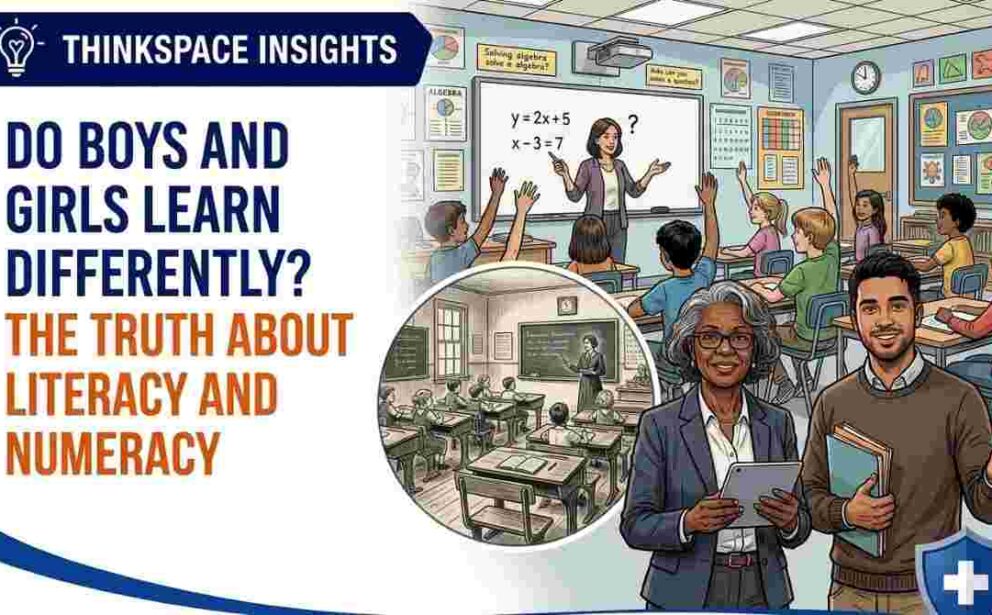
While biological sex inherently defines physical characteristics, gender operates as a complex social construct, dictating the roles, behaviors, and attributes deemed appropriate by specific societies. This sociological framework extends deeply into the classroom, where education plays a key role in shaping and reinforcing gender-related social perceptions. A critical review by researchers Melyana R Pugu and Aslan explores exactly how these dominant gender norms and societal expectations create stark, measurable disparities in foundational educational attainment between men and women.
This educational divide is most evident when analyzing core competencies across global student populations. Literacy—the ability to read, write, and interpret diverse texts—and numeracy—the ability to understand and solve quantitative problems—are the dual foundations of modern education. However, international surveys such as the Programme for International Student Assessment (PISA) consistently reveal a significant divergence in how students acquire these skills. Across many countries, the data clearly shows that female students tend to achieve higher outcomes in literacy, while male students frequently excel in numeracy.
The researchers emphasize that this achievement gap is not the result of innate biological differences, but rather the consequence of pervasive social factors and systemic educational approaches. Deeply ingrained stereotypes, such as the persistent belief that science and mathematics are subjects more suitable for men, actively reduce women’s participation and confidence in these fields. Conversely, female students are often disproportionately encouraged to excel in literature and the arts. These differing social expectations are further compounded by varying levels of social support, biased approaches to learning at home, and a lack of gender-sensitive pedagogical methods from teachers.
To dismantle these systemic barriers, the study heavily emphasizes the critical importance of transitioning toward a more gender-responsive and inclusive approach to education. The researchers recommend deploying targeted, actionable strategies to create a supportive learning environment for all students. This includes implementing equal interest coaching, integrating explicit gender stereotype awareness programs into the curriculum, and securing the active, ongoing involvement of both parents and the broader school community to reinforce equitable expectations outside of the classroom.
Ultimately, addressing this achievement gap is essential for empowering individuals to make wise decisions and contribute productively to an increasingly complex, information-based world. By eliminating discrimination and actively providing equal opportunities, gender-inclusive education helps ensure that every student can reach their full potential. The authors note that this mission perfectly aligns with the Sustainable Development Goals, promoting lifelong learning opportunities and working toward the advancement of a more just and equitable global society.
ThinkSpace Insights
- Gender is socially constructed, defining specific societal roles and behaviors that are distinct from biological sex and heavily influence educational expectations.
- The achievement divide is clear, with international data consistently showing female students excelling in literacy while male students outperform in numeracy.
- Stereotypes dictate performance, as societal norms that frame math as a male domain actively reduce female participation and confidence in the subject.
- Foundational skills are at stake, emphasizing that both literacy and numeracy are essential, empowering competencies for navigating modern society.
- Inclusive pedagogy is the solution, requiring schools to adopt gender-responsive teaching methods and equal interest coaching to close the achievement gap.
- Community involvement is required, highlighting that parents and the broader school community must actively participate in dismantling educational gender barriers.
Access Full Article



































































































