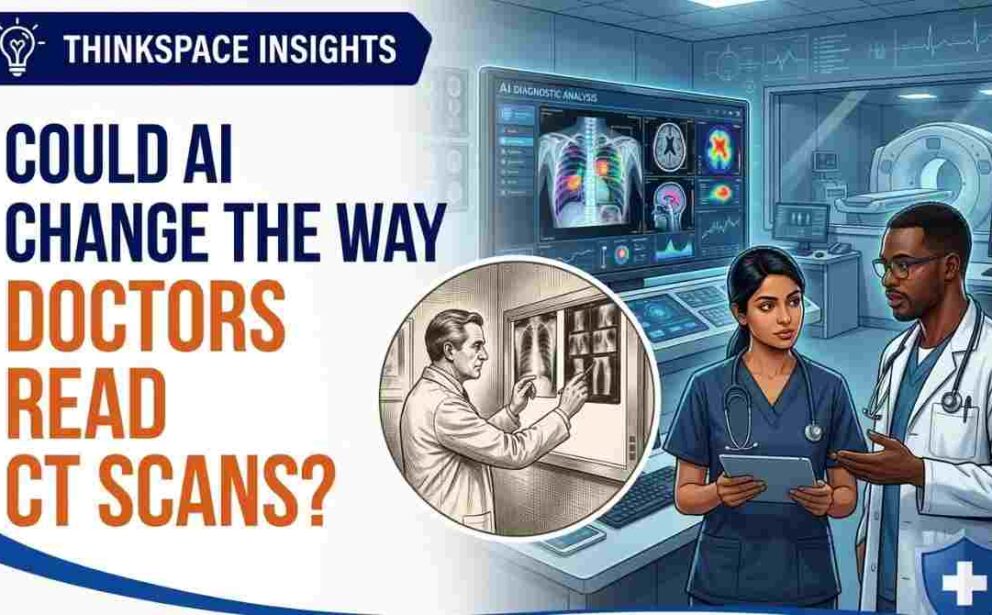
The field of radiology is experiencing a massive technological shift, moving from a reliance solely on human expertise to a deeply augmented approach driven by artificial intelligence (AI). Computed tomography (CT) imaging, a cornerstone of modern diagnostics, is being rapidly transformed by AI algorithms capable of automated image analysis and advanced clinical decision support. This integration represents more than just a software upgrade; it is a fundamental paradigm shift in how medical imaging is approached, promising to reduce diagnostic errors and improve personalized patient care. To understand the true clinical impact of these tools, a recent systematic review by Kirolos Eskandar rigorously evaluated AI’s performance, diagnostic accuracy, and integration pathways within CT imaging.
To build a comprehensive picture of the current landscape, the systematic review synthesized peer-reviewed literature published between January 1, 2010, and March 31, 2025. The researcher cast a wide net, searching major databases including PubMed, IEEE Xplore, Scopus, ScienceDirect, and Google Scholar to quantify reported gains in diagnostic performance and workflow efficiency. Out of 128 initial records, 25 high-quality studies met the strict inclusion criteria for data extraction. The quality of these studies was rigorously assessed using standardized tools like the Newcastle-Ottawa Scales (NOS), Cochrane RoB 2, or AMSTAR 2, ensuring that the final analysis was built on highly reliable clinical evidence.
The clinical findings across these 25 studies were highly encouraging for the future of automated diagnostics. AI applications in CT imaging demonstrated consistent improvements across key performance metrics, specifically in sensitivity, specificity, and overall time to diagnosis. The algorithms excelled in highly specific, critical tasks, most notably in the early detection of lung nodules and the rapid triage of intracranial hemorrhages. In real-world hospital implementations, the deployment of these AI tools resulted in reported detection rate increases of over 20% while simultaneously reducing turnaround times. By identifying subtle patterns in CT data that may be too minute for human detection, machine learning and deep learning networks are making increasingly accurate predictions that directly enhance clinical outcomes.
Despite these impressive performance metrics, moving AI from the research laboratory to the bustling radiology department is fraught with practical challenges. The review identified several critical barriers preventing widespread adoption, including significant concerns over dataset bias and a lack of extensive external validation. Furthermore, radiologists frequently grapple with interpretability or “black box” concerns, struggling to fully trust an algorithm when its internal decision-making process is not transparent. Beyond the algorithms themselves, hospitals face immense workflow integration challenges and must navigate a constantly evolving landscape of regulatory issues before these tools can be safely and legally deployed.
From an administrative perspective, the financial viability of AI in radiology is complex but ultimately promising. Economic analyses within the reviewed studies suggest a potentially favorable return on investment (ROI), particularly within high-volume clinical settings where efficiency translates directly into cost savings. However, these financial gains are highly sensitive to software licensing costs and the necessary infrastructure investments required to run complex neural networks. To fully realize the profound benefits of AI in CT imaging, the healthcare industry must prioritize rigorous multi-center validation, demand transparent reporting, and design human-centered workflows supported by continuous post-deployment surveillance.
ThinkSpace Insights
- AI is reshaping radiology, transitioning the field from relying solely on human visual inspection to utilizing automated image analysis for highly improved diagnostic accuracy.
- Detection rates see massive boosts, with real-world AI implementations reporting greater than 20% increases in detection rates alongside reduced diagnostic turnaround times.
- Specific tasks show the most promise, as algorithms consistently improve sensitivity and efficiency for critical tasks like lung nodule detection and intracranial hemorrhage triage.
- “Black box” algorithms hinder clinical trust, highlighting that a lack of interpretability remains a major barrier to widespread adoption among practicing medical professionals.
- Systemic barriers stall integration, with hospitals facing significant hurdles regarding dataset bias, limited external validation, and complex regulatory issues.
- High-volume settings yield the best ROI, showing that while initial infrastructure is expensive, busy clinical environments can achieve a favorable return on investment through increased efficiency.
Access Full Article