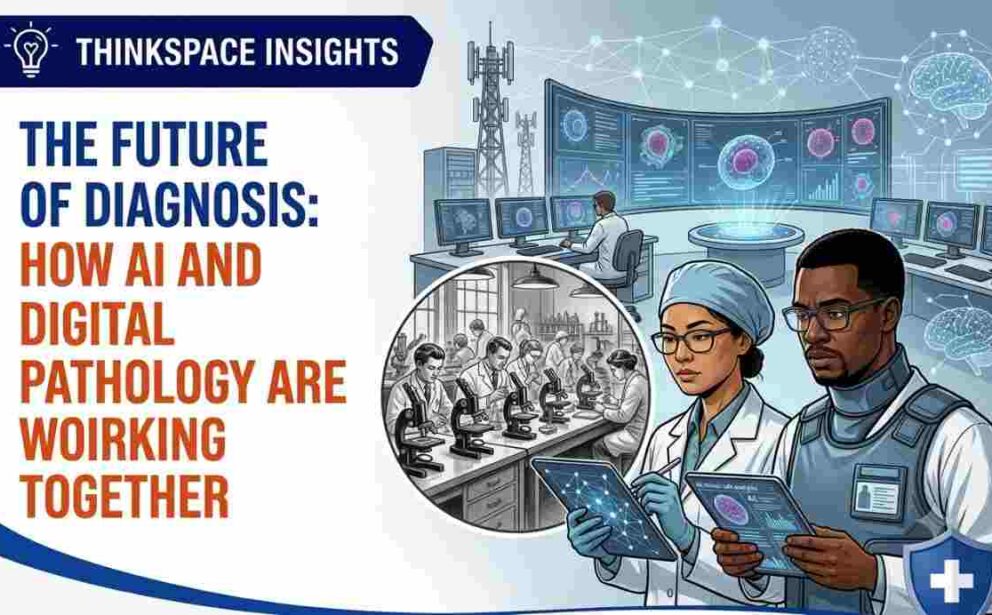
For decades, the cornerstone of diagnostic medicine has relied on a highly manual and labor-intensive process: expert pathologists meticulously examining glass tissue slides under a microscope. However, modern diagnostic medicine is rapidly approaching a breaking point. Laboratories worldwide are facing significant challenges related to an overwhelming workload burden, increasing interpretative complexity, and the inevitable issue of diagnostic variability between different human experts. Digital pathology—the practice of converting these physical glass slides into high-resolution digital images—has emerged as a transformative paradigm, primarily because it finally allows for the direct integration of artificial intelligence into the diagnostic workflow.
To address these escalating clinical challenges, researcher Muhammad Huzaifa Qadir presented a comprehensive experimental framework designed to seamlessly bring AI into modern digital pathology. Rather than relying solely on raw computing power, this study took a highly balanced approach by combining quantitative deep learning-based image analysis with qualitative, expert-driven validation. By processing whole-slide histopathological images through a structured, multi-step pipeline, the research aimed to prove that AI can handle the heavy lifting of tissue analysis without losing the nuanced understanding of a trained human specialist.
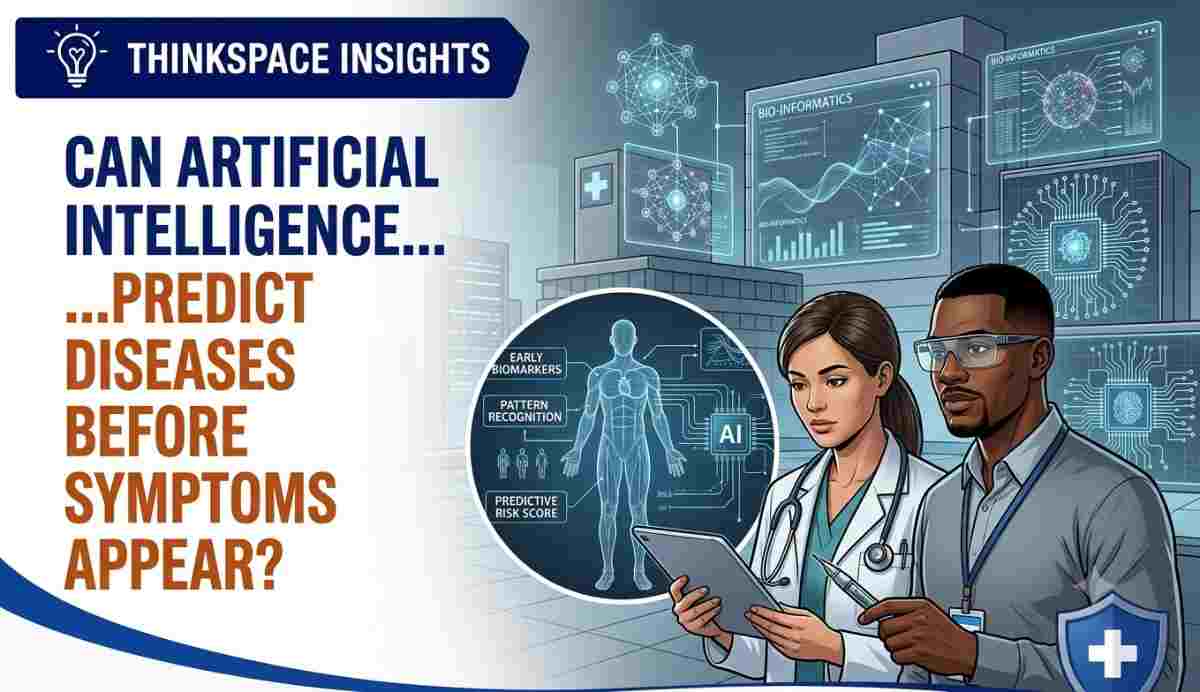
The technical mechanics of this framework are built on a robust deep learning pipeline that includes careful image preprocessing, convolutional neural network (CNN)-based feature extraction, and slide-level diagnostic aggregation. When put to the test, the model’s performance was systematically evaluated using standard classification metrics, and the results were highly promising. The AI demonstrated strong predictive accuracy, a tightly balanced ratio of sensitivity and specificity, and crucially, stable generalization when tested against entirely independent sets of data, proving the algorithm wasn’t just memorizing specific training images.
However, high statistical accuracy is rarely enough to win over medical professionals, who rightfully distrust “black box” algorithms that provide answers without showing their underlying logic. To bridge this gap and enhance clinical interpretability, the researcher heavily utilized “Explainable AI” (XAI) techniques. These tools actively revealed the diagnostically meaningful regions of the tissue slides that the AI focused on to make its predictions. When human experts reviewed these visual explanations, the integration of their feedback confirmed that the AI-generated predictions aligned perfectly with established histopathological criteria, reinforcing the genuine clinical relevance of the technology.
Ultimately, this study goes beyond theoretical computer science by developing a scalable system architecture that illustrates how AI can be practically deployed within real-world digital pathology environments. The fundamental philosophy driving this architecture is to support interactive clinical decision support rather than pushing for fully autonomous machine diagnosis. By keeping the technology human-centered, the results indicate that AI-assisted digital pathology can substantially improve both diagnostic efficiency and consistency, all while rigorously preserving the transparency and human oversight that patient safety demands.
ThinkSpace Insights
- Pathology is facing a critical bottleneck, with increasing workloads and diagnostic variability driving the urgent need for technological intervention in the lab.
- Deep learning delivers exceptional accuracy, as the structured CNN pipeline successfully processed whole-slide images with strong predictive precision and stable generalization.
- The framework combines math with human expertise, pairing quantitative deep learning image analysis directly with qualitative expert validation.
- Explainable AI (XAI) builds clinical trust, visually highlighting the specific, diagnostically meaningful regions the algorithm used to formulate its conclusions.
- AI aligns with established medical criteria, with expert feedback confirming that the machine’s visual explanations matched standard histopathological rules.
- Interactive decision support is the future, emphasizing a scalable system designed to assist human pathologists rather than replace them with autonomous diagnosis.
Access Full Article