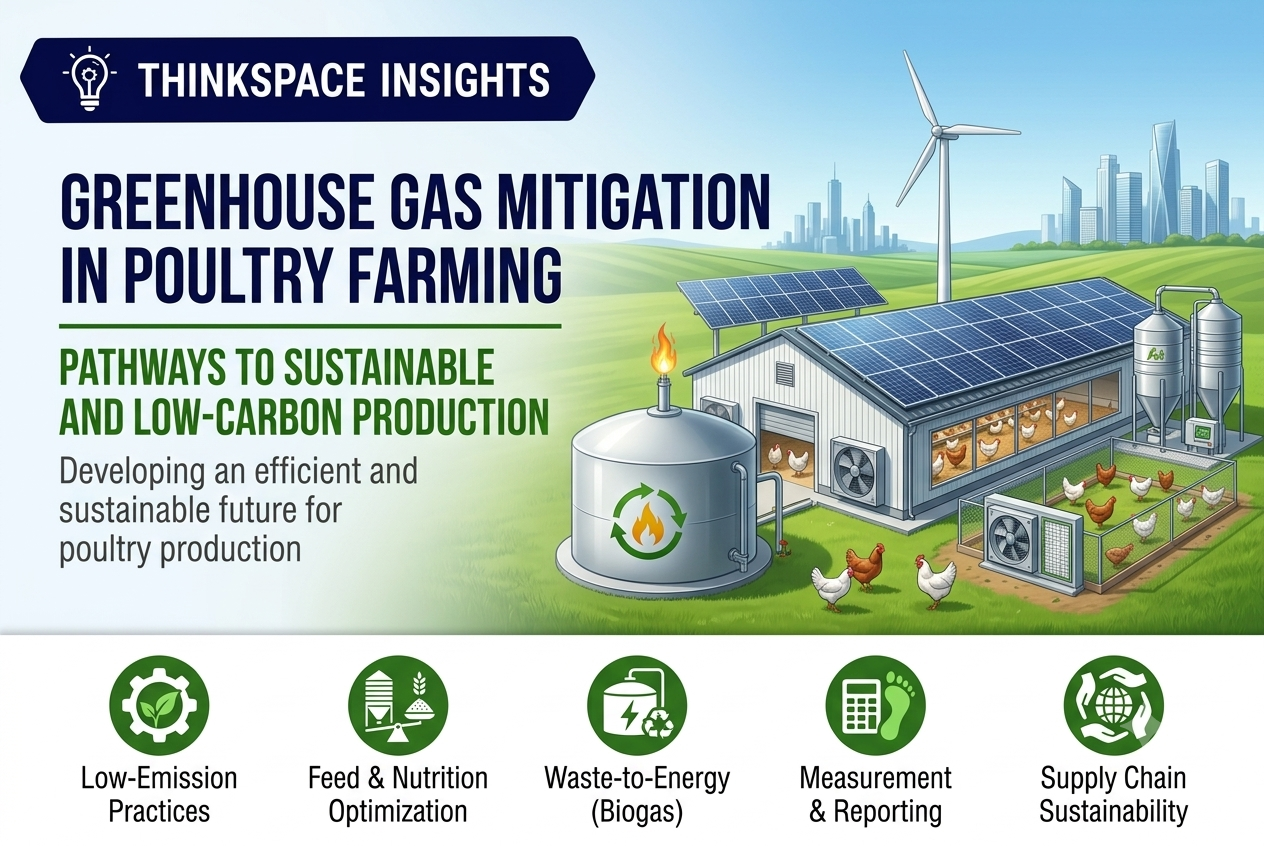

Poultry farming ranks among the most rapidly expanding sectors of global agriculture, playing an indispensable role in boosting food availability, improving dietary quality, and driving economic stability in rural communities. The sector’s notable efficiency stems from its exceptionally short production cycles and its unique capability to convert agricultural by-products into high-quality protein, energy, and essential nutrients.
However, the increasing scale of global poultry production brings serious environmental liabilities. As the sector expands, it places an intensive demand on vital land and water resources, drives up feed requirements, and significantly impacts greenhouse gas emissions, soil nutrient balances, and regional water quality.
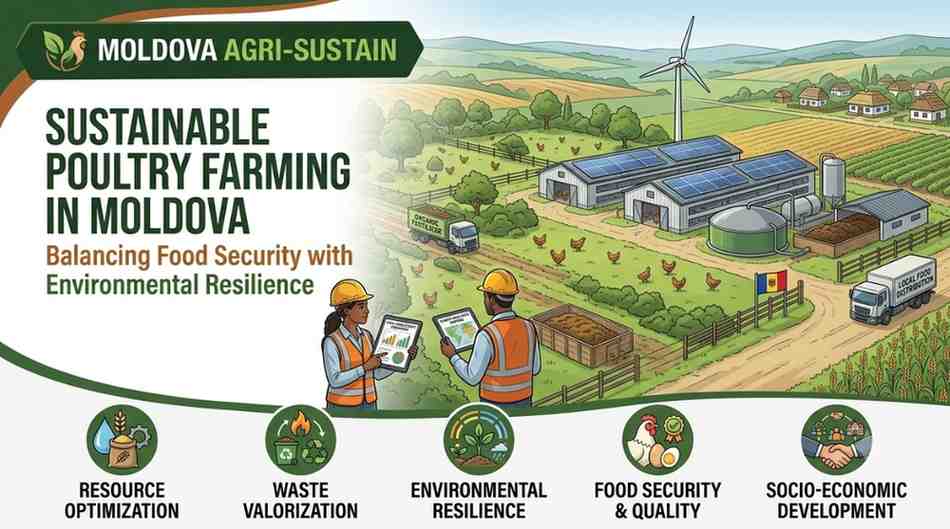
A comprehensive study by Larisa Caisin and Elena Scripnic from the Technical University of Moldova examines these critical dynamics within the Republic of Moldova, where poultry farming serves as a vital anchor for the agricultural economy. Drawing on recent statistical data and scientific literature, the authors review production dynamics, farm structures, and technological adoption to provide a holistic overview of the sector’s current state.
The findings highlight a dual reality: while the poultry industry is a crucial pillar for strengthening food security and supporting rural livelihoods across Moldova, it is also increasingly susceptible to severe resource limitations and mounting environmental pressures.
To navigate these challenges, the analysis underscores that long-term sector resilience cannot rely on traditional methods alone. The authors emphasize that the key to a competitive and sustainable future lies in the proactive implementation of precision livestock farming technologies, the rigorous upgrading of biosecurity measures, and the promotion of environmentally sustainable farming practices. Ultimately, this study delivers essential insights designed to help policymakers and industry stakeholders build a modern, resource-efficient poultry sector.
ThinkSpace Insights
- Poultry farming remains an essential pillar for rural economic stability and global nutrition due to its short production cycles and efficient resource-conversion capabilities.
- The rapid scaling of poultry production creates severe environmental trade-offs, including intensive land and water depletion alongside increased greenhouse gas emissions.
- In the Republic of Moldova, the poultry sector is highly valuable for domestic food security but remains dangerously vulnerable to resource constraints.
- Transitioning the industry from a resource-heavy model to a resilient ecosystem requires the urgent adoption of precision livestock farming technologies.
- Maintaining strict, modernized biosecurity protocols is a non-negotiable requirement for protecting poultry systems from volatile environmental and biological risks.
- Future policy frameworks must incentivize eco-friendly practices, ensuring the poultry industry can remain economically competitive without compromising soil and water quality.
Access Full Article