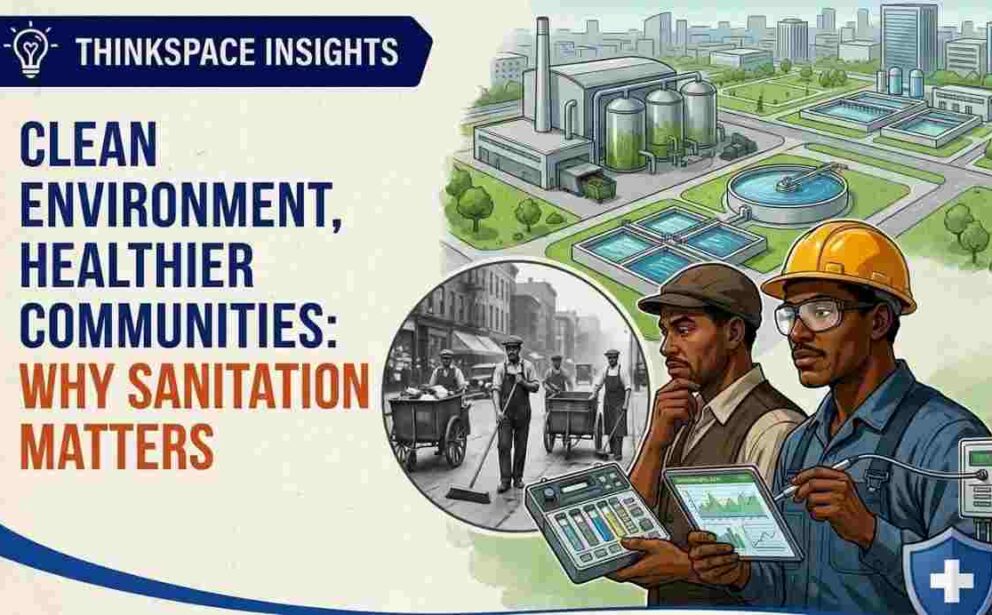
Environmental sanitation is the absolute bedrock of community health, serving as the primary mechanism for providing a clean environment and breaking the relentless cycle of disease. Despite massive global advancements in modern medicine, many developing nations, including India, are still lagging dangerously behind in this foundational field. Researchers emphasize that the appalling unsanitary conditions present in many regions require a massive “sanitary awakening,” similar to the major public health overhauls that took place in mid-19th century London. A recent comprehensive review by Shalini Kulshrestha and Tushar Tailor highlights that achieving this awakening requires highly targeted interventions, robust political commitment, and a deep understanding of the behavioral and cultural factors that dictate community hygiene.
The cost of ignoring this sanitary awakening is both economically and physically devastating. In India alone, historical estimates revealed that inadequate sanitation cost the country approximately $54 billion, or a staggering 6.4% of its GDP, in a single year. Over 70% of this massive economic impact was directly health-related, heavily driven by entirely preventable conditions like severe diarrhea and acute lower respiratory infections. The sheer scale of the infrastructure deficit driving these illnesses is alarming; research indicates that an estimated 72% of Indians still lack access to improved sanitation facilities, and not a single major city in the country currently boasts a continuous water supply.
When addressing these severe deficits, policymakers in developing countries frequently make a critical miscalculation: they focus primarily on institutional settings like municipal services and hospitals while completely ignoring the household. The review firmly argues that there is a dangerous reluctance to acknowledge the home as a setting of equal importance in the chain of infectious disease transmission. In reality, studies consistently show that household-level water quality interventions—specifically multiple interventions focusing on personal hygiene and point-of-use water treatment—are often significantly more effective at reducing diarrheal illnesses than simply treating water at the municipal source.
However, delivering clean water to a home is not a standalone cure if the surrounding environment remains highly contaminated. The research emphasizes a critical rule of epidemiology: when general sanitation conditions are poor, simple water quality improvements may have a minimal overall impact on community health regardless of the amount of water contamination. To truly combat waterborne infectious diseases, interventions must be completely holistic. This involves implementing demand-driven approaches, utilizing community-led total sanitation campaigns, and aggressively leveraging Information, Education, and Communication (IEC) strategies to drive effective, lasting behavioral change at the grassroots level.
Ultimately, promoting the health of a community requires recognizing that continuous water supply and environmental hygiene are inextricably linked. Successful modern intervention strategies are already testing innovative approaches to bridge this gap, such as forming public-private partnerships to maintain local infrastructure and using microcredit to empower women to improve local water access. By shifting the public health focus to prioritize household hygiene alongside broad municipal upgrades, developing nations can finally eliminate the critical pathways of disease transmission and build a sustainable, healthy future for their rapidly growing populations.
ThinkSpace Insights
- Sanitation breaks the cycle of disease, acting as the most fundamental requirement for promoting community health and preventing outbreaks.
- The economic toll is staggering, with inadequate sanitation costing India an estimated 6.4% of its GDP ($54 billion) in 2006, primarily due to health-related losses.
- Infrastructure deficits remain massive, as estimates show 72% of Indians lack access to improved sanitation, and no major Indian city has a continuous water supply.
- The home is a primary transmission zone, highlighting a dangerous flaw in developing nations that overly focus on hospitals and institutional settings while ignoring household hygiene.
- Household interventions are highly effective, proving that treating water and improving hygiene at the point-of-use often reduces diarrheal illness more than source-level treatments.
- Water quality relies on overall sanitation, as providing clean drinking water yields minimal health impacts if the surrounding environmental sanitation remains poor.
Access Full Article