
Harm reduction programs have long focused on reducing the immediate dangers associated with drug use through interventions such as syringe exchange services, overdose prevention programs, and safer drug-use education. While these strategies have significantly improved public health outcomes, a recent paper by Alhelí Calderón-Villarreal argues that one critical issue continues to receive insufficient attention: access to water, sanitation, and hygiene (WASH) services for people who use drugs (PWUD).
Published in the Harm Reduction Journal, the study highlights how inadequate access to clean water, sanitation facilities, and hygiene resources exposes marginalized drug users—particularly those experiencing homelessness or housing insecurity—to serious health risks, social exclusion, and preventable infections.
The paper emphasizes that WASH insecurity is not simply an issue of convenience or public infrastructure. Instead, it directly influences health outcomes and human dignity. People without reliable access to safe water or sanitation are often forced into unsafe practices such as using contaminated water for drug preparation, wound cleaning, or personal hygiene, as well as open defecation due to lack of restroom access.
These conditions significantly increase the risk of skin and soft tissue infections, which are among the leading causes of hospitalization among people who use drugs. WASH insecurity is also linked to the spread and worsening of infectious diseases such as HIV and Hepatitis C, while exacerbating chronic health conditions and weakening overall health outcomes.
Beyond physical health risks, the study explains that poor access to sanitation and hygiene services contributes to stigma, social exclusion, and heightened exposure to structural violence. Women and gender-diverse individuals experiencing homelessness or drug dependency may face increased vulnerability to gender-based violence when public hygiene and sanitation facilities are unavailable or unsafe.
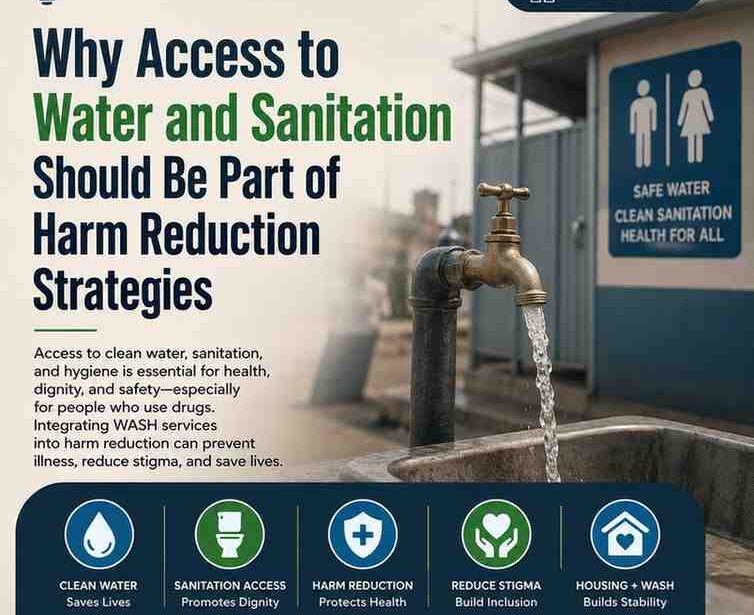
The article argues that harm reduction frameworks must evolve beyond clinical interventions alone to include basic human needs such as sanitation, hygiene, and access to safe public infrastructure. According to the author, integrating WASH services into harm reduction programs could significantly reduce preventable illness while promoting dignity, safety, and social inclusion.
The study highlights several emerging strategies already being adopted in some harm reduction settings. These include mobile hygiene units, portable sanitation facilities, public restroom access initiatives, and “radical hospitality” approaches that prioritize dignity and nonjudgmental care. Housing First models that integrate WASH access into supportive housing systems are also identified as important long-term solutions.
Importantly, the paper emphasizes that WASH access should be understood as both a public health intervention and a human rights issue. Without addressing sanitation insecurity, efforts to reduce drug-related harm may remain incomplete and less effective for the populations most at risk.
ThinkSpace Insights
1. Integrate WASH Services into Harm Reduction Programs
Harm reduction initiatives should incorporate access to clean water, sanitation facilities, hygiene supplies, and wound-care resources as core public health interventions.
2. Expand Safe Public Hygiene Infrastructure
Governments and local authorities should increase access to safe, accessible, and 24/7 public restroom and hygiene facilities, particularly in underserved urban communities.
3. Address Housing Insecurity as a Public Health Priority
Housing First approaches that integrate sanitation, hygiene access, and healthcare support can help reduce health risks among vulnerable populations.
4. Reduce Stigma Through Human-Centered Harm Reduction
Programs should adopt dignity-focused and nonjudgmental approaches that recognize sanitation access as essential to health, safety, and human rights.
5. Strengthen Policy Coordination Between Public Health and Urban Services
Public health agencies, sanitation departments, housing authorities, and harm reduction organizations should collaborate to develop integrated responses that address both health and infrastructure needs.
The paper ultimately expands the conversation around harm reduction by emphasizing that effective public health interventions must also address the environmental and social conditions that shape vulnerability. Access to clean water, sanitation, and hygiene services may not traditionally be viewed as part of harm reduction, but the findings suggest they are essential for reducing preventable illness, protecting dignity, and promoting health equity among marginalized populations.
As cities and healthcare systems continue to confront homelessness, infectious disease outbreaks, and substance use crises, integrating WASH into harm reduction strategies could become an increasingly important pathway toward healthier, safer, and more equitable communities.
Read Abstract via https://harmreductionjournal.biomedcentral.com/articles/10.1186/s12954-026-01262-0