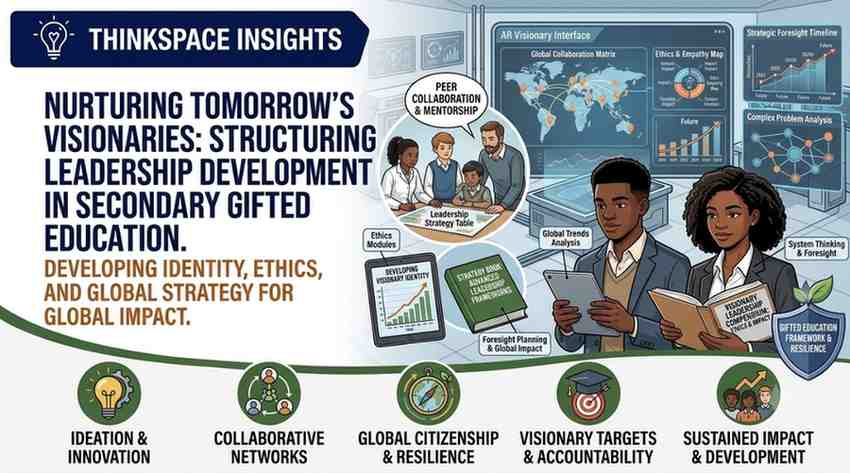
Engaging young minds often requires moving beyond traditional academic boundaries. For educators managing the complex social and psychological dynamics of senior secondary youths, finding ways to validate their experiences and foster genuine engagement is a constant, evolving challenge. Non-formal educational settings offer a unique frontier for this, providing alternative avenues to build identity, encourage self-expression, and drive social participation outside the rigid structures of formal curricula.
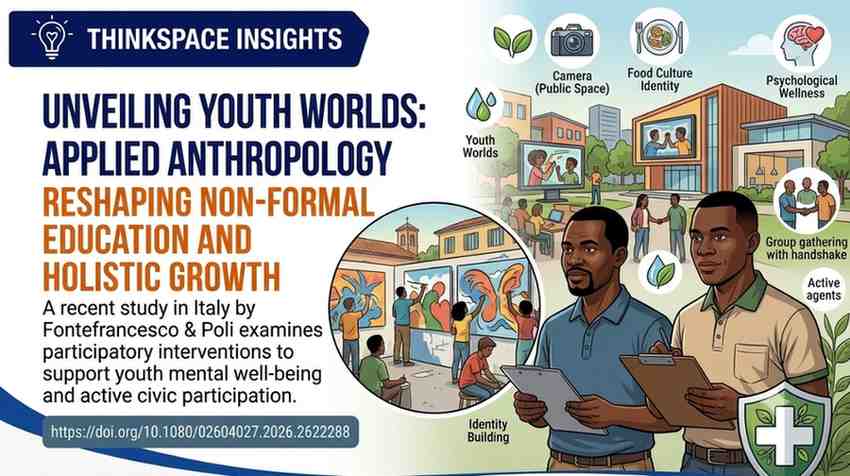
A recent article by researchers Michele Filippo Fontefrancesco and Elena Fusar Poli explores exactly this dynamic through the lens of applied anthropology. Published in early 2026, the study examines three specific interventions conducted in Italy—“Bang! Immagini da Valenza!”, “Il Cibo a 4 Occhi,” and “Pazzesk@”—that were explicitly designed to understand and elevate the lived experiences of young people. By utilizing a hands-on, participatory methodological approach, the projects investigated how these youths relate to public spaces, use food culture as a marker of identity, and navigate the lingering psychological hurdles of a post-pandemic world.
The findings demonstrate that moving away from top-down instruction in favor of an interdisciplinary, multimodal approach successfully creates a safe, expressive environment for young learners. This setting not only facilitates crucial intergenerational dialogue but also solidifies the youth’s role as active, engaged agents within their own communities. By actively co-constructing their identities, the participants felt more valued and understood by the adults facilitating the programs.
Ultimately, the authors argue that applied anthropology holds immense potential for resolving deep-seated educational and social issues. The study issues a strong recommendation to expand these participatory, community-driven practices into new territorial and institutional frameworks. Doing so can fundamentally upgrade how society supports the holistic growth, mental well-being, and active civic participation of future generations.
ThinkSpace Insights
- Non-formal educational interventions provide a necessary buffer, creating safe expressive spaces for youths to navigate post-pandemic psychological challenges away from academic pressures.
- Participatory methodologies shift students from passive observers to active agents, empowering them to co-construct their own cultural and social identities.
- Everyday themes like food culture and public space navigation serve as highly effective catalysts for breaking the ice and fostering meaningful intergenerational dialogue.
- Integrating applied anthropology into broader educational frameworks helps instructors better understand the complex, lived realities of their senior secondary-aged students.
- Addressing modern youth disconnection requires an interdisciplinary approach that actively bridges the gap between established community institutions and marginalized youth populations.
- True community resilience depends on treating youths as active stakeholders rather than just future citizens waiting for their turn to participate.
Access Full Article
https://doi.org/10.1080/02604027.2026.2622288