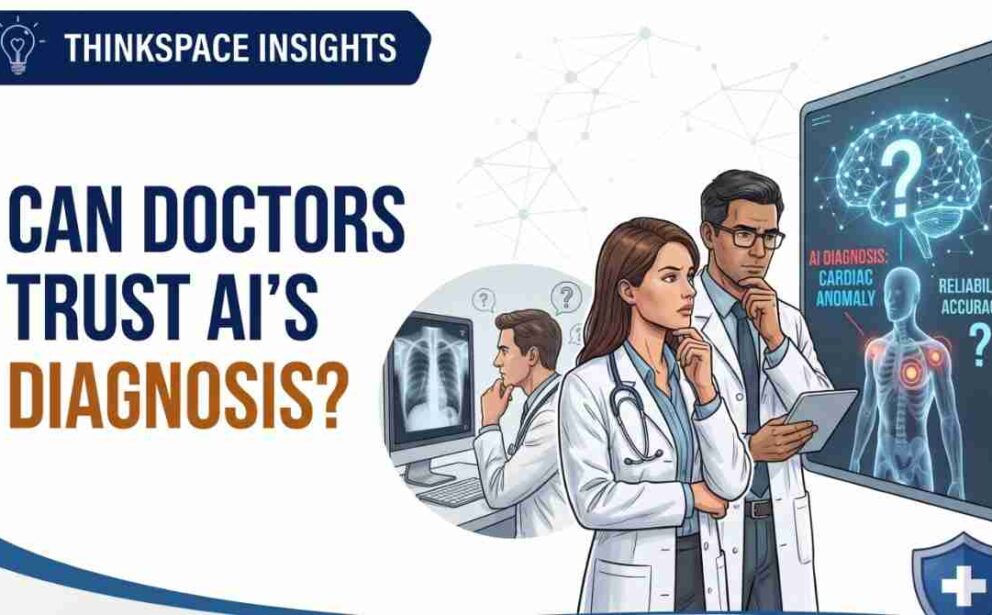
Imagine receiving a severe medical diagnosis from a doctor who simply says, “Just trust me,” but refuses to explain how they arrived at that conclusion. For years, this has been the primary issue with using artificial intelligence in healthcare; the algorithms act as a “black box,” providing highly accurate predictions without revealing the underlying logic. To solve this critical trust issue, computer scientists are now combining “ensemble studying” (using multiple algorithms working together) with “explainable artificial intelligence” (XAI). This integrated approach is actively revolutionizing AI-driven disease detection by forcing the computer to clearly show its work to the human doctors relying on it.
A recent analysis by researchers Bimboga Siddik Yarman and Saurabh Pratap Singh Rathore explores this exact frontier, providing a comprehensive look at emerging trends in AI for disease diagnosis. The core objective of their evaluated methodology is to massively enhance the interpretability, robustness, and clinical relevance of AI models in real-world healthcare settings. By leveraging the collective intelligence of numerous algorithms simultaneously, the system becomes significantly more reliable than older, single-algorithm programs.
The technical outcomes of this combined approach are highly promising. The research underscores that these augmented ensemble models consistently demonstrate advanced performance when directly compared to traditional standalone models. These technical improvements encompass not just progressed predictive accuracy, but also a heightened resilience against adversarial assaults—meaning the diagnostic system is much harder to trick or corrupt with bad data.
However, the most significant breakthrough is the newfound interpretability of the AI-generated predictions. By integrating XAI strategies, the system provides obvious, transparent insights into exactly why it made a specific diagnostic selection. This transparency allows for seamless, safe collaboration between rigid AI structures and nuanced human professionals, fostering a deep sense of trust in AI-driven predictions across the medical field.
Through rigorous evaluation, the researchers demonstrate that this inclusive approach fundamentally empowers clinicians with highly actionable insights. Instead of simply blindly following a computer’s output, doctors can use the AI’s transparent reasoning to foster collaborative choice-making directly with their patients. This ensures that the human element of medicine remains central, even as the technological tools become vastly more complex.
Looking ahead, the destiny and scope of research in this domain are substantial and multifaceted. The authors note that future research endeavors must prioritize the improvement of these hybrid AI architectures while carefully addressing the surrounding moral and societal implications. By continuously harnessing the synergies between ensemble learning, XAI, and rising technologies like the Internet of Medical Things (IoMT), blockchain, and augmented reality (AR), scientists can pave the way for a future where diagnostic equipment actively reworks healthcare for the betterment of society.
ThinkSpace Insights
- Shattering the black box, as the integration of explainable artificial intelligence (XAI) forces diagnostic algorithms to transparently reveal the logic behind their medical predictions.
- The power of teamwork, highlighting that “ensemble studying”—which leverages the collective intelligence of multiple algorithms—significantly outperforms traditional standalone AI models.
- Enhanced clinical safety, with the new hybrid models demonstrating progressed predictive accuracy and a much higher resilience against adversarial assaults or bad data.
- Empowering the doctor, as the transparent nature of XAI provides human clinicians with actionable insights rather than blind directives, enabling better collaborative choice-making with patients.
- Fostering digital trust, proving that giving AI the ability to explain itself is the key to creating seamless, trusting collaboration between human professionals and artificial structures.
- A connected future, noting that the next wave of innovation will combine these transparent AI systems with the Internet of Medical Things (IoMT), blockchain, and augmented reality.
Access Full Article