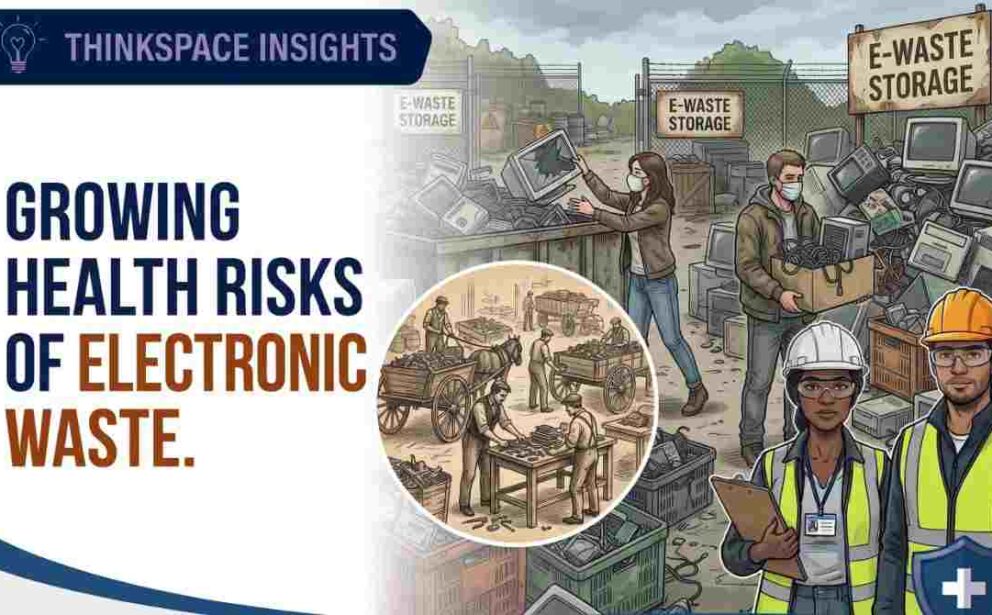
Imagine buying a highly advanced, ultra-efficient car, only to abandon it in your neighbor’s yard the moment a slightly newer model is released. While this sounds absurd for automobiles, it accurately describes humanity’s current relationship with consumer electronics. Driven by a relentless cycle of rapid technological advancement and shortened product lifespans, the world is facing an unprecedented crisis regarding what happens to our gadgets when they die. This discarded technology, known as electronic waste (e-waste), is currently one of the fastest-growing solid waste streams on the planet, increasing at an alarming annual rate of 3% to 5%.
This exploding volume of discarded circuitry is not just a logistical nightmare; it is a severe, dual-edged environmental hazard. E-waste comprises a highly complex mixture of valuable, recoverable resources buried alongside numerous toxic and hazardous substances. These hidden dangers include heavy metals and persistent organic pollutants that, when improperly collected or disposed of, pose substantial, lethal risks to both environmental quality and human health across developed and developing regions alike. The crisis is particularly severe when end-of-life electronics are shipped from high-income nations to low- and middle-income countries (LMICs), creating massive transboundary vulnerability hotspots.
To chart a path out of this toxic technological trail, a research team led by Happiness Stephano Maleko conducted a critical, comprehensive review of global e-waste management. Published in Frontiers in Environmental Science, their study aimed to systematically synthesize the current global status and trends of e-waste generation, collection, and recycling. By critically examining recent evidence on the distribution of e-waste-derived contaminants, the researchers sought to identify the most effective approaches for sustainable management and hazard reduction.
The study maps out the alarming mechanisms of e-waste contamination, revealing how toxic elements escape from discarded devices and infiltrate the environment. The review meticulously documents how these emerging contaminants permeate soil, air, and dust environments, eventually bioaccumulating in plants, animals, and aquatic systems. Once in the ecosystem, these hazardous materials establish clear exposure pathways that directly threaten surrounding human populations, making safe recycling technologies an absolute biological necessity.
The most severe complications arise in LMICs, where formal recycling infrastructure is severely limited and regulatory enforcement is dangerously weak. In these regions, the influx of electronic waste has triggered widespread informal recycling activities. Desperate to extract valuable metals, informal workers frequently resort to highly hazardous extraction methods, such as manual dismantling, open burning of plastics, and toxic acid leaching. These unregulated, survival-driven practices drastically amplify the release of lethal pollutants, creating severe health crises for the informal workers and their surrounding communities.
Resolving this global crisis requires moving far beyond simple consumer awareness. The researchers systematically evaluated necessary interventions, concluding that the world must rapidly implement coordinated, circular-economy-oriented strategies. To effectively reduce environmental toxicity and protect human health, policymakers must enforce strict regulatory frameworks, mandate eco-design strategies that make devices easier to recycle, and officially integrate and protect the informal recycling sector. Ultimately, advancing sustainable e-waste management requires profound international cooperation to ensure that the pursuit of technological progress does not leave a permanently poisoned planet in its wake.
ThinkSpace Insights
- An exploding waste stream, as rapid technological advancement and shortened product lifespans have made e-waste one of the world’s fastest-growing solid waste streams.
- A toxic treasure trove, highlighting that discarded electronics contain a complex mixture of highly valuable recoverable resources alongside dangerous heavy metals and persistent organic pollutants.
- Transboundary dumping, revealing that end-of-life electronics are frequently moved from high-income countries to low- and middle-income nations, creating severe vulnerability hotspots.
- Widespread contamination, documenting how e-waste contaminants easily escape into soil, air, and aquatic systems, establishing direct exposure pathways to human populations.
- Hazardous extraction, noting that limited formal infrastructure in developing regions leads to dangerous informal recycling practices like open burning and toxic acid leaching.
- Circular solutions required, concluding that sustainable management demands strict policy frameworks, eco-design strategies, and the formal integration of informal recycling sectors to protect global health.
Access Full Article