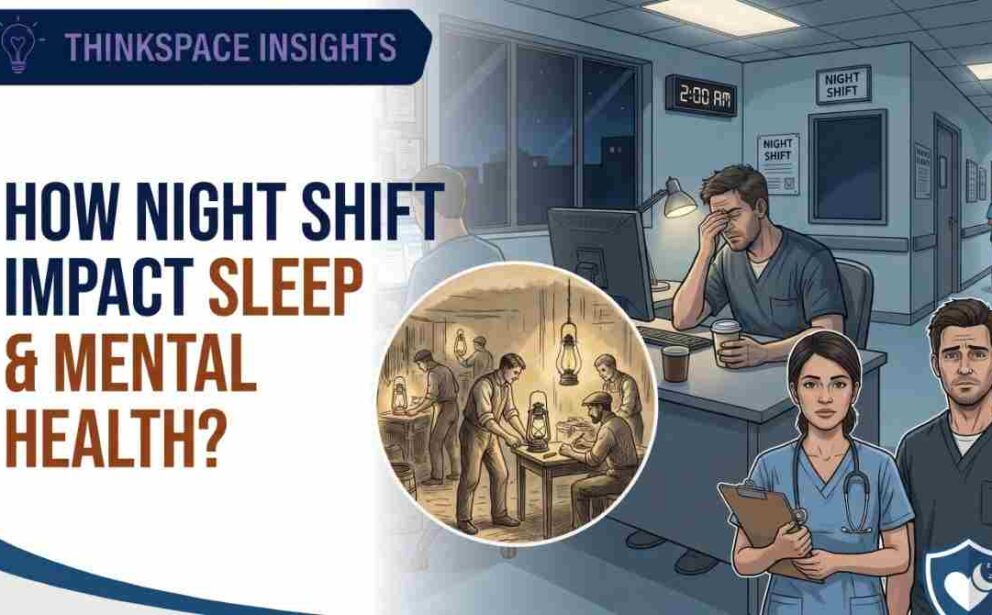
Think of a smartphone battery that is constantly being charged and drained at random, unpredictable intervals. Eventually, the battery’s internal calibration breaks down, and it can no longer hold a stable charge or accurately report its power levels. In the human body, our circadian rhythm acts as this delicate internal battery calibration. When adults engage in non-standard “shift work,” they constantly force their bodies to operate against their natural biological clocks. This unpredictable charging cycle inevitably leads to a breakdown in the body’s natural systems, causing severe disruptions in restorative sleep and dangerous fluctuations in overall psychological stability.
Shift work is no longer an anomaly; it is an indispensable component of contemporary industrialized societies. A substantial proportion of the global workforce—ranging from healthcare professionals and correctional officers to industrial factory workers—is currently engaged in non-standard working schedules. However, this modern economic necessity comes with a steep biological cost. Employees working irregular hours, extended shifts, or night schedules frequently report severe sleep impairment, which has been directly associated with increased workplace accidents, reduced job performance, and heightened cognitive impairment.
While researchers have long known that shift work causes physiological problems, many previous studies examined sleep-related issues and mental health outcomes completely independently, limiting our understanding of how they interrelate. To bridge this gap, a research team led by Sabah Shakeel Shaikh conducted a comprehensive systematic review. Published in Cureus, the study aimed to evaluate the combined association between shift work exposure and both sleep and mental health outcomes simultaneously. The team systematically screened major medical databases for studies published between January 2016 and January 2026, ultimately analyzing 11 high-quality studies encompassing diverse occupational groups across Europe, North America, Asia, and Australia.
The findings of the review confirmed that the biological toll of circadian misalignment is massive and deeply intertwined. Across all the included studies, shift work exposure was consistently associated with severe sleep-related outcomes, including chronic insomnia, poor overall sleep quality, and a clinical entity known as “shift work sleep disorder”. Because many shift workers experience persistent difficulty adapting their internal biological clocks to irregular or nocturnal work schedules, they are placed at a permanently increased risk of chronic sleep disturbance and excessive daytime sleepiness.
This chronic lack of restorative sleep does not just make workers tired; it actively degrades their psychological stability. The researchers found that sleep-related outcomes among shift workers are closely and dangerously linked to adverse mental health conditions. Individuals experiencing shift work sleep disorder commonly report compounding symptoms of clinical depression, anxiety, severe stress, and chronic fatigue. Furthermore, the evidence suggests that the unpredictable nature of these work schedules, combined with a worker’s limited control over their shift patterns, directly correlates with higher rates of depressive symptoms and drastically reduced work productivity.
Ultimately, this systematic review proves that sleep deprivation and mental health decline cannot be treated as isolated occupational hazards. Because shift work exposure is intrinsically associated with this dual threat among adult workers, standard corporate wellness programs are no longer sufficient. The researchers conclude that industries must urgently adopt integrated occupational health strategies that simultaneously address both sleep regulation and psychological well-being. By recognizing the deep connection between biological rhythms and mental health, societies can better protect the essential workers who keep the modern world running around the clock.
ThinkSpace Insights
- The broken biological clock, as engaging in shift work forces adults to operate against their natural circadian rhythms, leading to severe biological disruptions.
- An industrial necessity, noting that a substantial proportion of the global workforce, including healthcare and industrial workers, relies on these non-standard schedules.
- A dual-threat analysis, with researchers conducting a systematic review of 11 international studies to examine how shift work impacts both sleep and mental health simultaneously.
- Chronic sleep disorders, revealing that unpredictable and nocturnal schedules consistently trigger insomnia, poor sleep quality, and shift work sleep disorder.
- Compounding psychological harm, highlighting that this chronic sleep disturbance is closely linked to severe mental health outcomes, including depression, anxiety, and high stress.
- Integrated health strategies, concluding that industries must urgently deploy occupational health policies that address sleep and psychological well-being as a unified issue.
Access Full Article