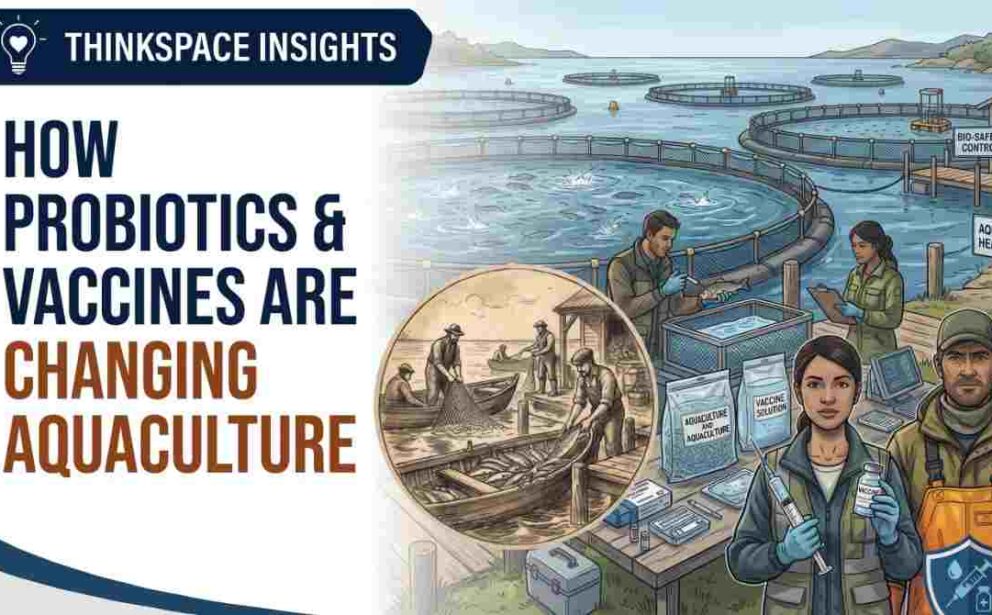
Think of a crowded metropolis where millions of people are packed tightly together; if a contagious virus emerges, it spreads like wildfire because of the extreme density. In the underwater world of global fish farming, the exact samel dynamic occurs. As the aquaculture industry shifts toward more intensive, high-density production systems to meet soaring consumer demands, the resulting stress significantly increases the vulnerability of the fish. These tightly packed farming practices create a perfect aquatic habitat for pathogens to rapidly multiply and spread, threatening the stability of our global food systems.
The stakes for controlling these underwater outbreaks are incredibly high. According to the Food and Agriculture Organization (FAO), aquaculture currently provides over half of all global aquatic animal production for human consumption. However, this vital food security sector suffers devastating annual losses due to rampant disease susceptibility. Estimates indicate that approximately 10% of all cultured aquatic animals worldwide become infected, representing a staggering economic loss of more than $10 billion USD every single year.
To combat these massive economic and nutritional losses, researchers are turning to advanced biological engineering. A research team led by Akinloye Emmanuel Ojewole conducted a comprehensive review examining the environmental and health impacts of these new tools. Published in Frontiers, the study systematically evaluates the performance and implications of various biotechnology applications designed to ensure sustainable aquaculture and improve overall fish health management.
The review highlights a robust arsenal of emerging biotechnological tools, moving far beyond traditional farming methods. Advances now include the deployment of probiotics, vaccines, molecular diagnostics, phage therapy, and cutting-edge tools like nanotherapeutics and CRISPR/Cas9 gene editing. These biological interventions are designed to actively enhance a fish’s innate disease resistance, ultimately aiming to drastically reduce the industry’s reliance on chemical treatments and improve survival rates in intensive environments.
Despite this high-tech promise, significant complications remain regarding how these tools interact with the broader ecosystem. The researchers warn that antibiotic use remains dangerously widespread in aquaculture, actively contributing to global antimicrobial resistance, severe toxicities, and alarming food safety risks. Furthermore, while new genetic interventions and probiotics offer cleaner alternatives, their success is highly volatile, heavily dependent on the specific strain, host, dose, and environment, and they currently face severe pathogen-specific limitations and ecological risks.
Ultimately, saving the aquaculture industry requires more than just releasing genetically edited fish into a pond. The study concludes that achieving truly sustainable production while protecting public health demands highly responsible implementation. Moving forward, the industry must prioritize improved antimicrobial stewardship, advanced wastewater treatment, strict containment strategies, and harmonized ethical governance frameworks to safely integrate precision aquaculture into the modern world.
ThinkSpace Insights
- A crowded metropolis, as the shift toward intensive aquaculture production creates high-density environments where aquatic pathogens easily multiply and spread.
- Feeding the world, noting that aquaculture is essential for global food security, accounting for over 50% of the world’s aquatic animal production for human consumption.
- Massive economic losses, highlighting that aquatic diseases infect roughly 10% of cultured animals worldwide, costing the industry over $10 billion USD annually.
- The biotech arsenal, exploring how advanced tools like CRISPR/Cas9, nanotherapeutics, and vaccines are being used to enhance disease resistance in fish populations.
- The antibiotic threat, warning that the widespread use of antibiotics in fish farming continues to drive severe antimicrobial resistance and serious food safety risks.
- Responsible implementation, concluding that the safe use of biotechnology requires strict governance, ethical frameworks, and advanced wastewater treatment to protect local ecosystems.
Access Full Article
https://www.frontiersin.org/journals/aquaculture/articles/10.3389/faquc.2026.1771129/full