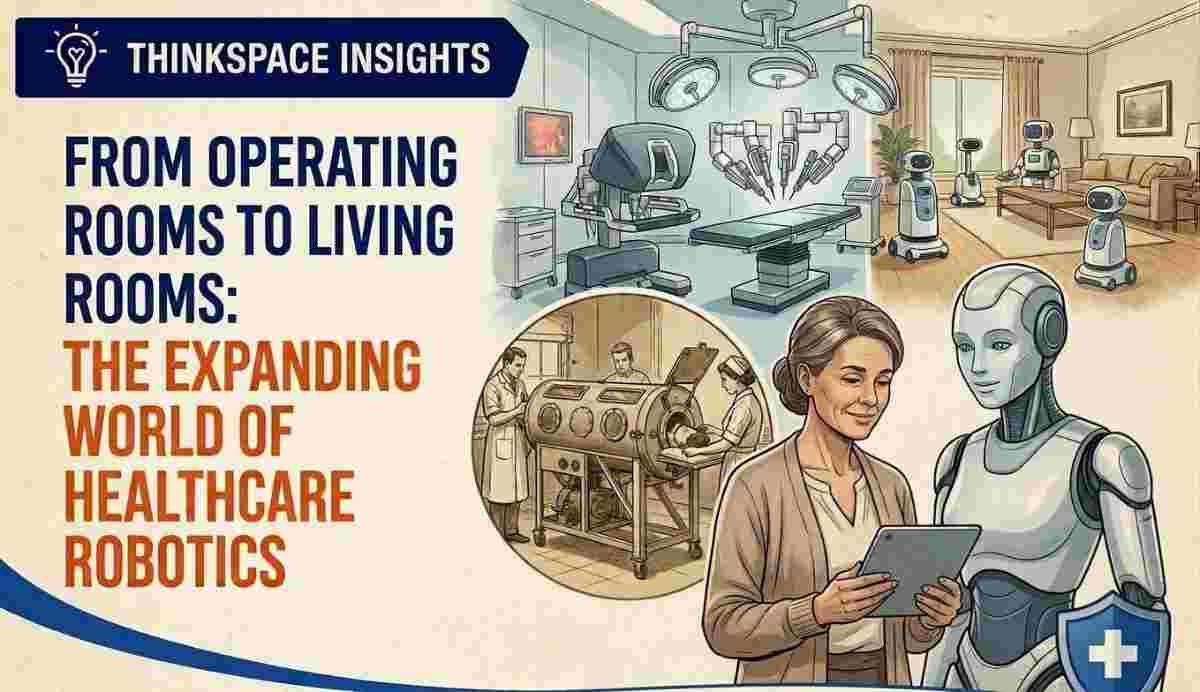

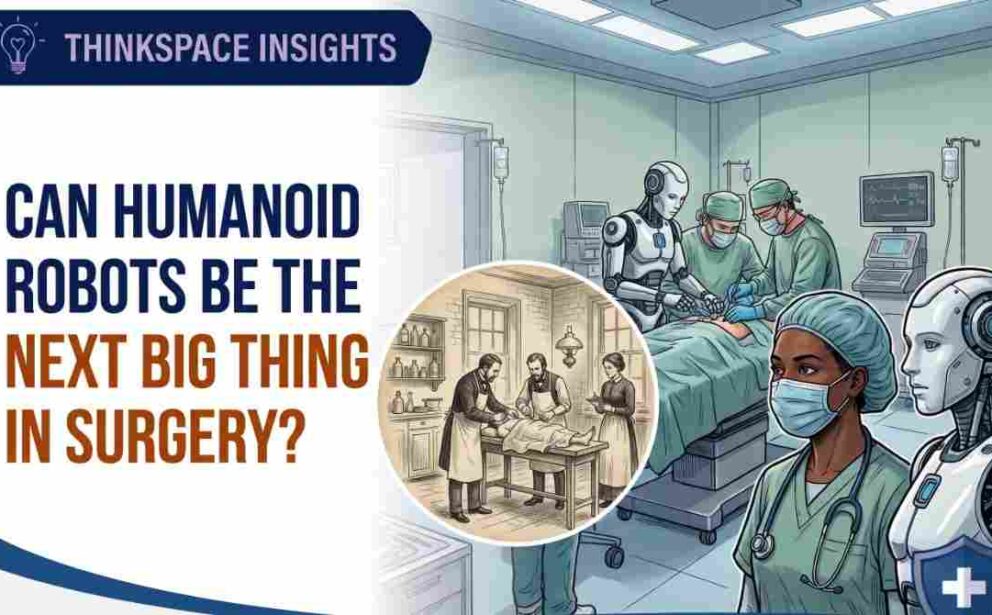
Imagine a bustling professional kitchen during a dinner rush, where a new chef is introduced to the line. Instead of using highly specialized, single-purpose gadgets, this new chef must be able to hold the same knives, navigate the same tight spaces, and manipulate the same pots and pans as everyone else. Now imagine if that new chef were a humanoid robot, engineered not just to assist with administrative tasks, but to step up to the prep station and eventually cook. This is precisely the kind of transition currently being attempted in the high-stakes world of medicine. For years, robotic surgery has relied on massive, purpose-built, and immobile platforms that require entirely custom-designed environments. Today, however, researchers are testing whether versatile, humanoid robots can step directly into existing operating rooms and utilize the exact same tools that human surgeons have used for decades.
The push toward this technological leap is driven by severe and worsening global challenges in healthcare. Many hospitals are grappling with chronic staffing shortages and an ever-increasing demand for care, creating a widening gap between clinical workloads and the available skilled labor. While automation has successfully streamlined digital and logistical hospital tasks, the physical, embodied work of patient care—such as manipulating delicate surgical instruments—remains a major bottleneck. Traditional robotic systems, like Intuitive Surgical’s da Vinci Surgical System, are highly effective but are entirely dedicated to their custom-designed setups. Because of these limitations, hospital administrators and engineers are eager to explore how humanoid form factors might offer a more flexible, mobile, and cost-effective solution for a variety of clinical tasks.
To evaluate whether this ambitious vision is actually possible, a research team led by Zekai Liang conducted a groundbreaking, systematic evaluation of humanoid technology. Published in Nature, their study aimed to determine whether contemporary humanoid robots could meet the incredibly demanding precision, control, and safety requirements of minimally invasive surgery. Specifically, the team focused on evaluating these advanced machines during laparoscopic surgical tasks, providing the first rigorous, evidence-based assessment of their practical capabilities and technical limitations in a clinical setting.
The core of their research involved developing a humanoid-based laparoscopic teleoperation framework, which allowed a human operator to control a bimanual humanoid robot as it interacted with standard, general-purpose surgical instruments. To test this setup, Liang and his colleagues designed a series of rigorous evaluations. They began with “benchtop characterization” to measure the robot’s raw mechanical precision and control. They then transitioned to dry-laboratory user studies, where human operators of varying surgical experience levels used the humanoid interface to perform standard laparoscopic maneuvers. Finally, they conducted highly advanced in vivo porcine studies to evaluate how the robot performed in a realistic, biological environment.
The results of these exhaustive trials provided a crucial, quantified assessment of the robot’s technical feasibility, task performance, and clinical readiness. The data confirmed that humanoid robots can successfully perform complex, multi-step laparoscopic tasks, proving that their mobility and dual-arm manipulation capabilities are highly promising for surgical assistant roles. However, the trials also highlighted several significant technical barriers that currently prevent their immediate clinical deployment. The researchers identified issues with latency, hand-eye coordination during teleoperation, and the high force feedback requirements needed to ensure patient safety as major bottlenecks that must be resolved.
Ultimately, the study proves that while the era of the humanoid surgeon is closer than ever, these machines are not yet ready to operate independently. Overcoming these remaining engineering and safety challenges will require intense collaboration between roboticists, clinical professionals, and regulatory bodies. However, by establishing a clear, evidence-based benchmark for what humanoid robots can and cannot do, this research paves the way for a future where robotic assistants can seamlessly step into standard operating rooms, helping to alleviate clinical workloads and permanently improve surgical outcomes.
ThinkSpace Insights
- A major healthcare pinch, as chronic staffing shortages and rising patient demand are driving the urgent need for flexible, embodied automation in hospitals.
- A groundbreaking study, with researcher Zekai Liang and his team conducting the first systematic evaluation of humanoid robots performing surgical tasks.
- Evaluating surgical readiness, by testing a bimanual humanoid robot using general-purpose laparoscopic instruments across benchtop, dry-lab, and in vivo porcine studies.
- The promise of humanoid form, proving that dual-arm, mobile robots have the unique potential to adapt to existing human operating environments without custom infrastructure.
- Technical bottlenecks remain, identifying critical challenges in latency, precise force feedback, and user control that must be resolved before clinical deployment can occur.
- Defining the benchmark, providing an invaluable, evidence-based assessment of current humanoid capabilities to guide future development in robotic surgery.
Access Full Article