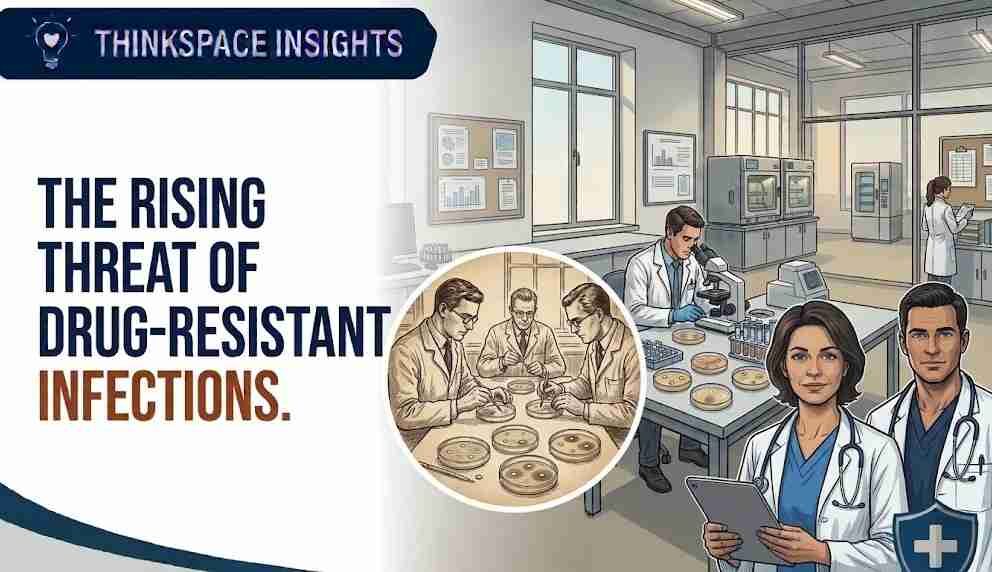
Think of a highly effective master key that can unlock and disarm any biological threat. For decades, antibiotics have served as this master key in modern medicine. However, if you recklessly overuse the key in every single lock you encounter, the locks will eventually adapt, change their internal mechanisms, and render the key completely useless. In the medical world, this terrifying evolutionary adaptation is known as antimicrobial resistance (AMR). Driven by the inappropriate and excessive use of antimicrobial agents across human, animal, and environmental sectors, microorganisms are rapidly evolving to survive our best treatments, leading to persistent infections, soaring mortality rates, and a massive global public health crisis.
Despite ongoing global initiatives to combat this threat, the burden of AMR continues to rise, particularly in low- and middle-income countries (LMICs) where diagnostic infrastructure and regulatory enforcement are often severely limited. To comprehensively understand the current scale of this crisis, a research team led by Neha Rout conducted an extensive narrative review. Published in the journal Pathogens, the study synthesizes recent global evidence from major scientific databases to track antimicrobial utilization and resistance patterns across different healthcare levels between 2015 and 2025.
The review exposes stark geographical variations and alarming pathogen-specific trends. For instance, while carbapenem resistance in Escherichia coli remains relatively low globally at 2-3%, it spikes dangerously in Southeast Asia (17-18%) and reaches roughly 40% in India. Other superbugs, such as Klebsiella pneumoniae, show consistently high resistance exceeding 40% globally, while Pseudomonas aeruginosa exhibits stable resistance levels between 25-45%. Disturbingly, the researchers also found that according to WHO AWaRe data, there has been a global shift toward the increased prescribing of “Watch”-category antibiotics, further accelerating the evolutionary pressure on these bacteria.
The study also highlights how the physical environment of healthcare dictates risk. The prevalence of resistance actively increases as patients move from primary to tertiary care settings, directly reflecting the greater antimicrobial exposure found in advanced hospitals. This heavy exposure presents a severe danger to vulnerable populations—including pediatric, elderly, pregnant, and immunocompromised patients—who often face much higher risks of severe adverse outcomes like nephrotoxicity, hepatotoxicity, and devastating microbiome disruption. Furthermore, the researchers caution that treatment failure isn’t always purely genetic resistance; clinical failures can also stem from complex factors like bacterial biofilm formation, host immune dysfunction, and pharmacokinetic variability.
Ultimately, winning the war against superbugs requires far more than just discovering new drugs; it requires meticulously managing the ones we already have. The researchers emphasize that antimicrobial stewardship interventions—such as strict prescribing restrictions, routine clinical audits, rapid diagnostics, and digital decision support systems—are highly effective at reducing inappropriate use. By implementing these integrated, data-driven stewardship programs alongside robust global surveillance, the medical community can successfully mitigate the global burden of AMR and protect the efficacy of our most vital life-saving medicines.
ThinkSpace Insights
- The evolutionary threat, as inappropriate and excessive antimicrobial use across human and animal sectors is driving microorganisms to develop severe, life-threatening resistance.
- Geographical hotspots, revealing that while E. coli resistance is low globally, it reaches alarming rates of approximately 40% in countries like India.
- The tertiary care trap, noting that the prevalence of antibiotic resistance actively increases from primary care clinics to tertiary care hospitals due to heavy antimicrobial exposure.
- A dangerous prescribing shift, highlighting WHO data that indicates a concerning global trend toward the increased use of critical “Watch”-category antibiotics.
- Toxicity in the vulnerable, warning that heavy antimicrobial exposure puts pediatric, elderly, and immunocompromised patients at high risk for nephrotoxicity and microbiome disruption.
- Data-driven stewardship, concluding that strict prescribing restrictions, rapid diagnostics, and routine clinical audits are essential interventions to reduce inappropriate drug utilization.
Access Full Article