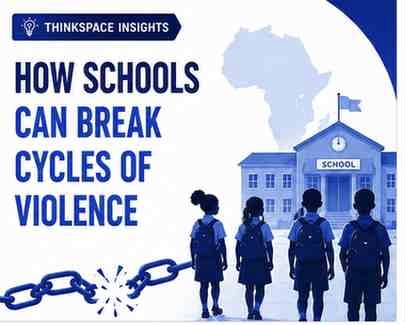

In the critical field of peace education, understanding how to manage conflicts and actively promote a culture of nonviolence requires looking closely at institutional governance. While curriculum design and classroom activities are vital, the long-term success of these initiatives hinges heavily on a less-examined factor: the critical role that leadership and management play in driving and sustaining educational innovations.
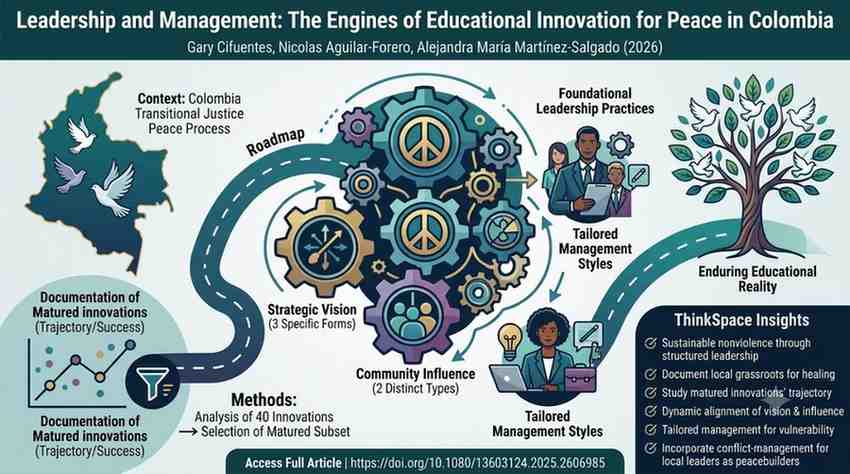
A timely study by researchers Gary Cifuentes, Nicolas Aguilar-Forero, and Alejandra María Martínez-Salgado investigates this exact dynamic. Published in early 2026, their work focuses on Colombia—a nation currently navigating a complex transitional justice peace process. In such environments, macro-level political negotiations often dominate the headlines, meaning that local, grassroots peacebuilding practices within school systems are frequently overlooked.
To bridge this gap, the authors analyzed 40 distinct educational innovations designed for peace across the country. From this broad dataset, they selected a specific subset of innovations characterized by their matured development, long-term trajectories, and sustained success over time. By focusing on projects that have survived the test of time, the study uncovers the core management practices required to keep peace initiatives alive in volatile landscapes.
The study’s most significant findings reveal a clear, structured correlation between three specific forms of strategic vision and two distinct types of community influence. Each of these combinations connects directly to unique management styles, which the authors categorize as foundational leadership practices.
Ultimately, this research provides a powerful, empirical framework for how structured leadership can transform abstract peace concepts into enduring educational realities. The insights serve as an essential roadmap not only for those researching peace education but also for policymakers and administrators deploying educational innovations within vulnerable and conflict-affected contexts worldwide.
ThinkSpace Insights
- Building a sustainable culture of nonviolence in schools requires shifting focus from basic curriculum delivery to structured leadership and management practices.
- During macro-level national peace transitions, documenting and uplifting local, grassroots educational innovations is essential to achieve lasting societal healing.
- Evaluating the true impact of peace education requires studying matured innovations with a long trajectory rather than short-term, temporary projects.
- Successful peace leadership relies on a dynamic alignment between an administrator’s internal vision and their external influence on the surrounding community.
- Tailored management styles are mandatory for navigating the unique institutional frictions and resource limitations found in vulnerable educational settings.
- Standardized educational frameworks must evolve to incorporate conflict-management strategies that empower local school leaders as active peacebuilders.
Access Full Article