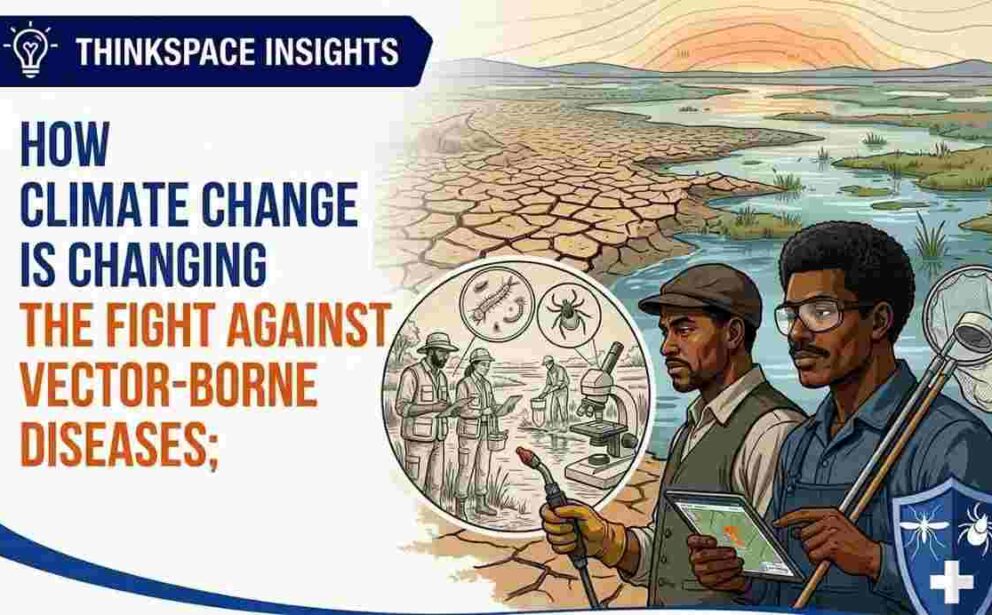
Climate change is widely recognized as the defining public health crisis of the 21st century, profoundly threatening human, animal, and environmental integrity through the interconnected “One Health” framework. While natural disasters and extreme weather often dominate the headlines, one of the most dangerous consequences of this planetary shift is microscopic. Vector-borne diseases (VBDs), including numerous zoonoses, are rapidly emerging and re-emerging globally as highly climate-sensitive health outcomes. Because the insects that carry these pathogens are so deeply influenced by their physical environment, any shift in global climate variables fundamentally alters the transmission dynamics and host-vector interactions that dictate public health.
The biological mechanisms driving this crisis are directly tied to the weather. Rising global temperatures, increasingly erratic precipitation patterns, and fluctuating humidity levels are entirely reshaping the ecological landscape for disease-carrying insects. Hematophagous (blood-feeding) arthropods—such as mosquitoes, ticks, biting midges, blackflies, and sandflies—are uniquely equipped to thrive in these altered environmental conditions. As the planet warms, the historical biological barriers that once kept these vectors in check are dissolving, allowing their overall abundance and geographic distribution to expand at an unprecedented rate.
To systematically understand this escalating threat, a narrative review by Ahmed Abdulaziz Almohammadi maps out exactly how these shifting climate variables are accelerating pathogen development across the globe. Major global diseases like malaria, dengue, Zika, chikungunya, Lyme disease, and West Nile virus are no longer safely confined to their traditional, historical boundaries. Instead, researchers are documenting aggressive geographic range expansions, altered and extended transmission seasons, and entirely unpredictable emerging outbreak patterns. The review draws special attention to highly vulnerable areas like the Eastern Mediterranean region, where climate projections indicate an environment increasingly suitable for explosive VBD transmission.
Combating this evolving, mobile threat requires a massive structural shift in how global public health systems operate and prepare for outbreaks. The review evaluates crucial prevention strategies through the lens of climate adaptation, emphasizing that standard pest control is no longer sufficient. Modern defense requires highly integrated vector management alongside the deployment of novel biotechnologies, such as Wolbachia-based approaches that genetically neutralize disease-carrying mosquitoes. When combined with an urgent, sustained push for targeted vaccine development, these advanced tools provide a much stronger barrier against the shifting map of disease.
Ultimately, winning the fight against climate-sensitive VBDs demands a unified, intersectoral “One Health” approach. By integrating real-time meteorological and climate data directly into advanced disease forecasting and early warning systems, health officials can finally transition from reactive outbreak management to proactive, targeted prevention. Sustained financial and structural investment in both traditional surveillance methods and innovative vector control technologies is absolutely essential. To protect global populations from this climate-driven crisis, we must adapt our public health infrastructure just as rapidly as the vectors themselves are adapting to the warming world.
ThinkSpace Insights
- Climate change drives disease expansion, acting as a primary catalyst that fundamentally alters the ecology, abundance, and transmission dynamics of vector-borne pathogens.
- Warming temperatures erase historical boundaries, allowing hematophagous vectors like mosquitoes and ticks to expand their geographic footprint into previously inhospitable regions.
- Major diseases are breaking seasonal norms, with illnesses like malaria, dengue, Zika, and Lyme disease exhibiting altered seasonal transmission cycles and novel, unpredictable outbreak patterns.
- Novel biotechnology is a critical defense, emphasizing the need for advanced interventions like Wolbachia-based vector control and accelerated vaccine development to mitigate risks.
- Early warning systems must use climate data, requiring public health officials to integrate real-time environmental forecasting into their disease prediction models to stay ahead of outbreaks.
- The “One Health” approach is mandatory, demanding deep, intersectoral collaboration across human, animal, and environmental health sectors to build resilient, proactive defenses.
Access Full Article