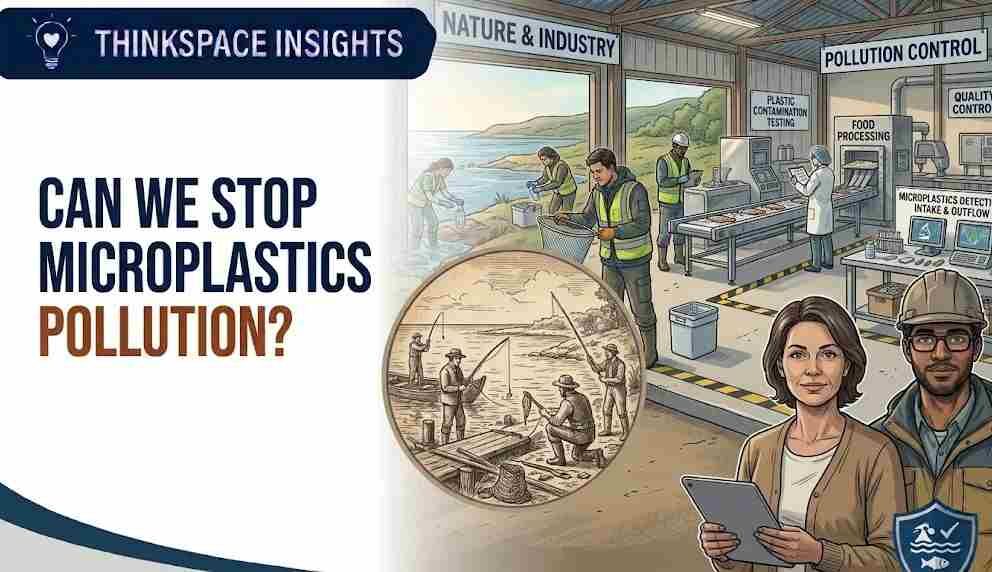
Think of a highly advanced manufacturing plant designed to perfectly seal and protect our food, only to discover that the machinery itself is microscopicallly shedding into the meals. In the modern food industry, our absolute reliance on durable, low-cost plastics has inadvertently created exactly this scenario. Because conventional plastics boast remarkable mechanical strength and thermal resistance, they have become completely irreplaceable in packaging and processing. However, this indestructible nature is a double-edged sword; as these materials inevitably degrade, they shed “microplastics”—synthetic polymer particles smaller than 5 millimeters—directly into our terrestrial, aquatic, and immediate food-system environments.
The sheer scale of this synthetic accumulation is staggering. From 1950 to 2015, global industries produced an estimated 6.3 billion tons of plastic materials. Of that massive footprint, a mere 9% was subjected to recycling, while a massive 79% was disposed of in landfills or directly released into the environment. With over 380 million tons of plastics currently being produced annually—a substantial amount earmarked strictly for single-use packaging—microplastics have rapidly emerged as a critical food safety and environmental concern.
To systematically map out how these synthetic fragments infiltrate our diets, a research team led by Md Sabir Ahmed Mondal conducted a comprehensive review. Published in Sustainable Food Technology, the study traces the exact contamination pathways through which microplastics migrate away from food processing equipment, packaging materials, and storage environments to subsequently disperse into the food chain. The researchers sought to evaluate the associated toxicological implications and outline urgent sustainability perspectives for the global food industry.
The review highlights that human exposure primarily occurs through the direct ingestion of contaminated foods and beverages, alongside inhalation and dermal contact. Once inside the biological system, these particles pose severe toxicological threats. The available evidence indicates that microplastic exposure can trigger oxidative stress, systemic inflammation, and metabolic disruption. Furthermore, because of their chemical composition, these microscopic fragments can act as dangerous carriers, transporting other hazardous chemicals directly into highly controlled cellular structures and tissues.
Despite these alarming biological red flags, the researchers pinpointed severe gaps in our current scientific defense. The industry suffers from a critical lack of standardized detection protocols, making it incredibly difficult to uniformly detect and monitor plastics across the food supply using spectroscopic and chromatographic approaches.
Additionally, long-term toxicological data remains ambiguous due to the ethical constraints of testing on human subjects and the scarcity of variable long-term experiments.
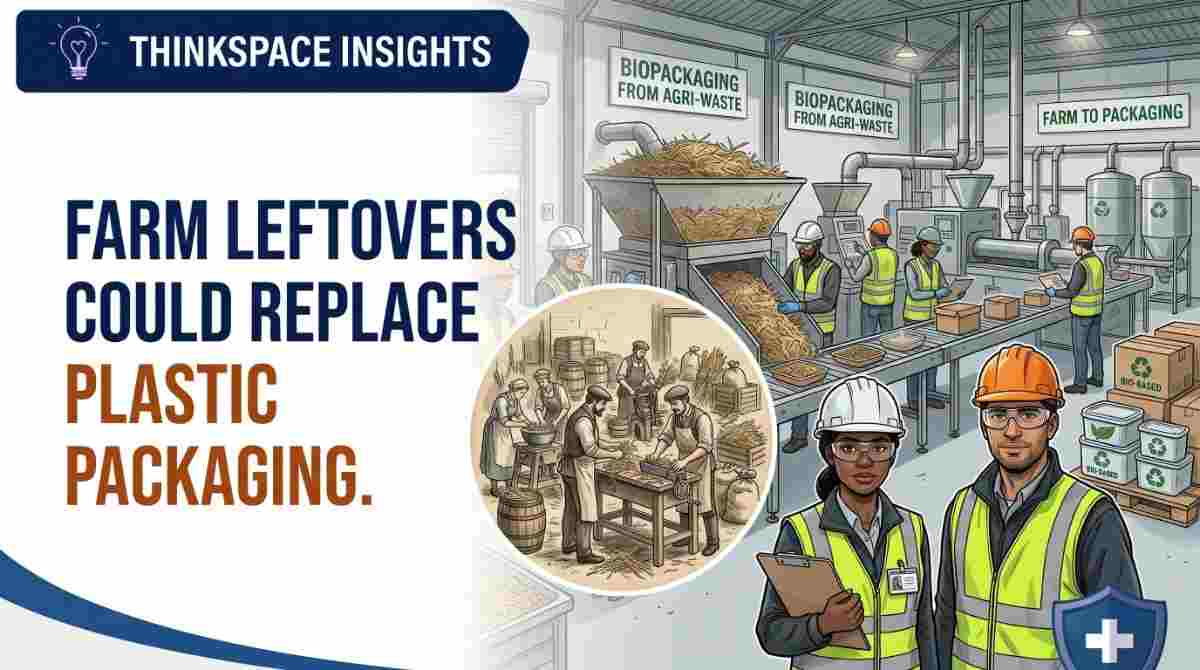
To mitigate this pervasive pollution, the global food system requires a fundamental redesign. The study concludes that the industry must urgently integrate sustainability principles into its processing and packaging frameworks. By transitioning toward biodegradable alternatives, implementing strict circular economy models, and investing in green processing technologies, regulatory bodies and industrial leaders can successfully reduce the production of microplastics across the food chain and push the world toward a safer, plastic-resilient future.
ThinkSpace Insights
- The invisible contaminant, defining microplastics as synthetic polymer particles under 5 millimeters that originate from both intentional manufacturing and the degradation of larger plastics.
- A massive waste footprint, noting that of the 6.3 billion tons of plastic produced between 1950 and 2015, only 9% was recycled while 79% accumulated in the environment or landfills.
- Factory to fork, highlighting that microplastics systematically migrate from processing equipment, packaging materials, and storage environments directly into our food and beverages.
- Cellular disruption, revealing that ingested microplastics are linked to oxidative stress, inflammation, and metabolic disruption, while also acting as carriers for hazardous chemicals.
- Detection deficits, pointing out a critical knowledge gap regarding the current lack of standardized spectroscopic and chromatographic detection protocols across the food industry.
- Sustainable pivots, concluding that the industry must transition toward biodegradable materials, circular economy models, and improved waste management to mitigate this escalating crisis.
Access Full Article