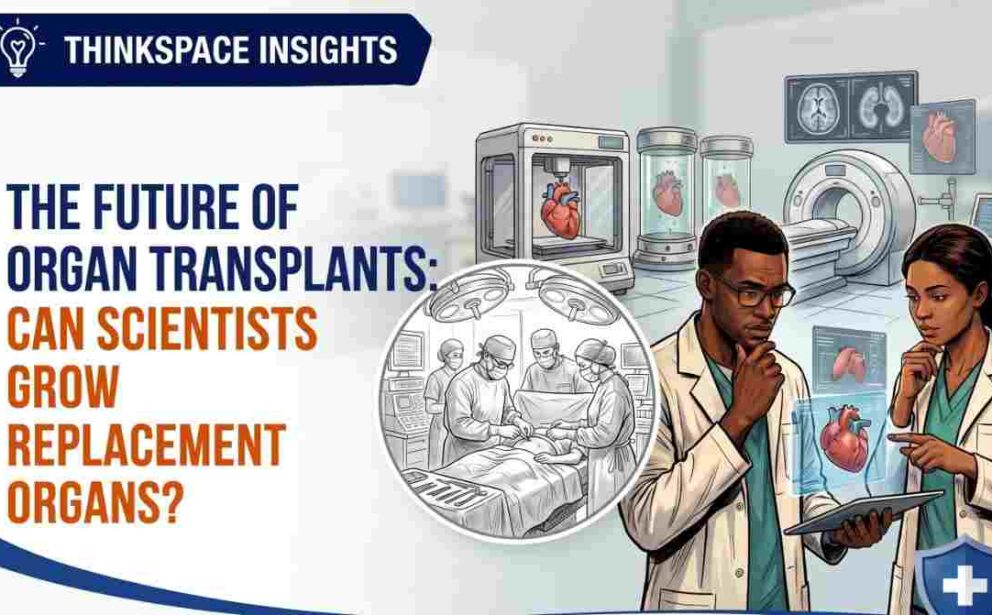
If you have ever seen a standard 3D printer in action, you know it works by melting plastic and slowly stacking it, layer by layer, to build a solid object like a toy or a machine part. Now, imagine replacing that spool of plastic with “bioinks“—a specialized mixture of living human cells, vital nutrients, and structural biological scaffolds. Instead of printing a plastic trinket, scientists are using this process to print living human tissue, microscopic layer by microscopic layer. This futuristic technology is known as “bioprinting.” While it might sound like pure science fiction, it is rapidly becoming a reality in modern laboratories. The ultimate goal of this technology is to construct fully functional, vascularized human organs on demand, potentially ending the agonizing waitlist for life-saving transplants.
Organ transplantation currently faces a massive global crisis due to a severe shortage of viable donor organs and a desperate need for effective tissue repair methods. To address this pressing medical challenge, bioprinting has emerged as a highly innovative, groundbreaking solution in the field of regenerative medicine. By leveraging advanced 3D printing techniques, this technology enables the precise fabrication of functional tissues and whole organs that possess exact architectural and biological properties. A comprehensive review by researcher Kirolos Eskandar provides an in-depth analysis of these latest advancements, mapping the complex journey of bioprinting from experimental laboratory models to real-world clinical prospects.
The review meticulously examines the cutting-edge techniques driving this biomedical revolution, specifically focusing on the complex development of bioinks and their diverse applications in modern tissue engineering. One of the most significant engineering hurdles in creating artificial organs is ensuring they have a built-in blood supply to keep the densely packed cells alive. Excitingly, the research highlights significant recent breakthroughs in the creation of vascularized, transplantable organ prototypes that can successfully integrate with a host’s circulatory system. Furthermore, the study explores how bioprinting plays a pivotal role in the future of personalized medicine, allowing doctors to create customized biological structures perfectly tailored to a specific patient’s unique anatomy and cellular makeup.
The findings of the review underscore the truly transformative impact bioprinting is already having across the broader biomedical field. Beyond full organ replacement, these printed tissues are currently revolutionizing pharmaceutical research, allowing for highly accurate drug testing, advanced therapeutic modeling, and the development of patient-specific treatment strategies without risking human test subjects. However, the path to mainstream medical use is not without friction. The research actively discusses several key obstacles that must be navigated, including severe technological limitations in printer resolution, complex ethical concerns regarding artificially created life, and rigid regulatory considerations.
Ultimately, bioprinting holds immense promise for fundamentally revolutionizing global healthcare. By offering viable, scalable solutions for the chronic organ shortage and rapidly advancing the capabilities of regenerative medicine, this technology has the potential to save countless lives. To achieve this, however, the scientific community must commit to continued research and collaborative innovation. Only by systematically overcoming the existing technological and regulatory challenges can bioprinting successfully transition from a miraculous laboratory experiment into standard, mainstream medical practice.
ThinkSpace Insights
- Printing living tissue, as bioprinting leverages advanced 3D printing techniques to fabricate functional organs with precise architectural and biological properties.
- Solving the donor crisis, highlighting the technology’s primary goal to address the severe global shortage of transplantable donor organs and the need for effective tissue repair.
- Bioinks drive innovation, with the review focusing heavily on the development of specialized biological inks required for complex tissue engineering.
- Vascularization is a major breakthrough, noting significant recent advancements in creating vascularized organ prototypes that can sustain a living blood supply.
- Beyond transplantation, as bioprinting is already transforming the biomedical field through enhanced drug testing, therapeutic modeling, and personalized medicine.
- Significant hurdles remain, cautioning that technological limitations, ethical concerns, and regulatory frameworks must be addressed before mainstream clinical translation can occur.
Access Full Article