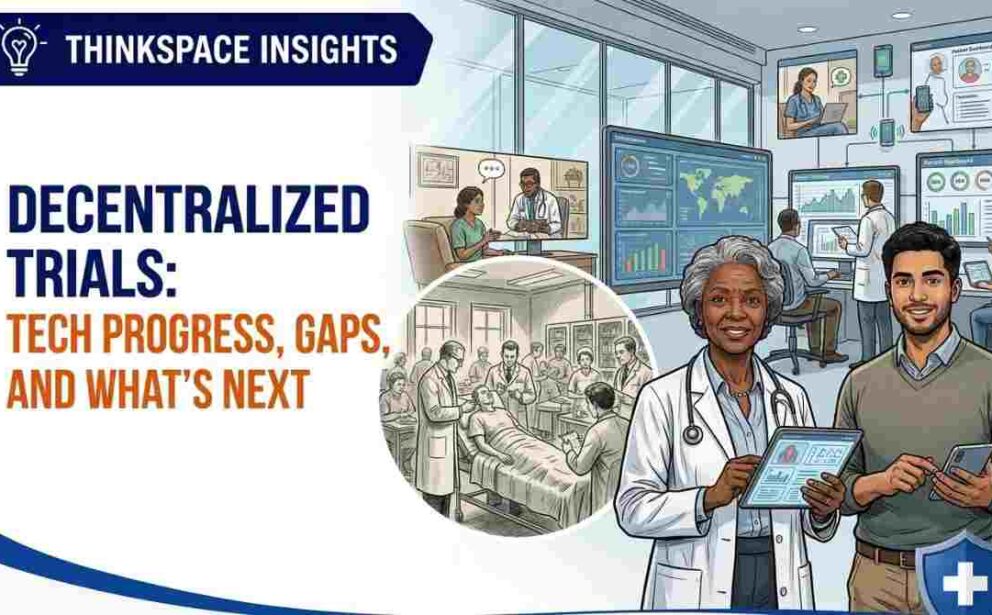
Decentralized clinical trials (DCTs) gained substantial global attention during the COVID-19 pandemic, enabling trial activities to continue directly from participants’ homes or local healthcare facilities despite severe restrictions and lockdowns. By removing the strict requirement for patients to travel to specialized academic medical centers, this model demonstrated immense potential to democratize clinical research. However, despite widespread interest and surging investment, many facets of the DCT landscape remain largely unexplored or nascent in their development. To clarify this evolving domain, researchers Sara Kijewski, Claire McBride, Eric Owens, Elsa Bernheim, and Effy Vayena conducted a comprehensive analysis exploring the key characteristics, adoption patterns, and developmental trajectory of registered DCTs.
To assess the global landscape, the investigators analyzed 1,370 decentralized trials extracted from ClinicalTrials.gov using a broad keyword search. The gathered data was screened, manually categorized, and analyzed descriptively to track temporal trends, the primary purpose of decentralization, intervention types, geographic representation, and the level of digitalization. The analysis highlighted a highly heterogeneous landscape, revealing that behavioral interventions were significantly more suited for decentralized approaches than other clinical intervention types. Furthermore, rather than simply implementing decentralized methods as an operational standard, a majority of current trials are still focused primarily on evaluating the validity of the decentralized methodologies themselves.
The deployment of digital technologies within these trials serves a dual operational purpose. In many protocols, digital tools act as the therapeutic intervention itself, whereas in others, digital platforms are utilized to facilitate the remote delivery and monitoring of study activities. Geographically, the findings revealed significant disparities in global implementation. Although the analyzed registry is based in the United States and a US-based partner was involved in over 50% of the identified studies, many trials were conducted across multiple countries or entirely outside the US. However, highly digitalized DCTs were predominantly concentrated in high-income countries, highlighting persistent geographical imbalances in technological adoption.
Despite the rapid quantitative growth in decentralized trials over recent years, the researchers emphasize that the field is still in active development, heavily preoccupied with establishing a reliable methodological foundation. Rather than a fully mature ecosystem, DCTs represent an evolving paradigm working to reconcile clinical rigor with remote convenience. The author summary underscores that unlocking the transformative potential of DCTs—both within local healthcare ecosystems and globally—requires concerted action across several core operational frontiers.
Ultimately, four critical areas demand immediate international attention to ensure the sustainable expansion of decentralized clinical trials. First, global stakeholders must address digital equity to ensure low-resource regions and underserved demographics are not excluded from modern trials. Second, international regulatory frameworks must be harmonized to provide clear, uniform standards for diverse remote technologies. Third, formal methodological validation processes must be established to guarantee data integrity across disparate remote settings. Finally, focused research is required to resolve specific implementation roadblocks, transforming decentralized clinical trials from an emergency pandemic contingency into a resilient, equitable, and standard pillar of global medicine.
ThinkSpace Insights
- Pandemic-driven emergence, as decentralized clinical trials expanded rapidly during COVID-19 lockdowns by shifting research procedures to participants’ homes and local clinics.
- Methodology remains experimental, with the majority of identified trials still focused on evaluating decentralized mechanisms rather than routinely implementing them.
- Behavioral interventions lead adoption, showing that behavioral therapies adapt much more readily to remote study designs than conventional clinical interventions.
- Global digital divide exists, as highly digitalized trials remain heavily concentrated within high-income nations despite broad international participation.
- Dual technological role, where digital platforms function either as the core therapeutic intervention or as the logistical infrastructure enabling remote delivery.
- Four pillars for future success, requiring targeted efforts toward digital equity, cohesive regulatory frameworks, methodological validation, and overcoming practical barriers to implementation.
Access Full Article