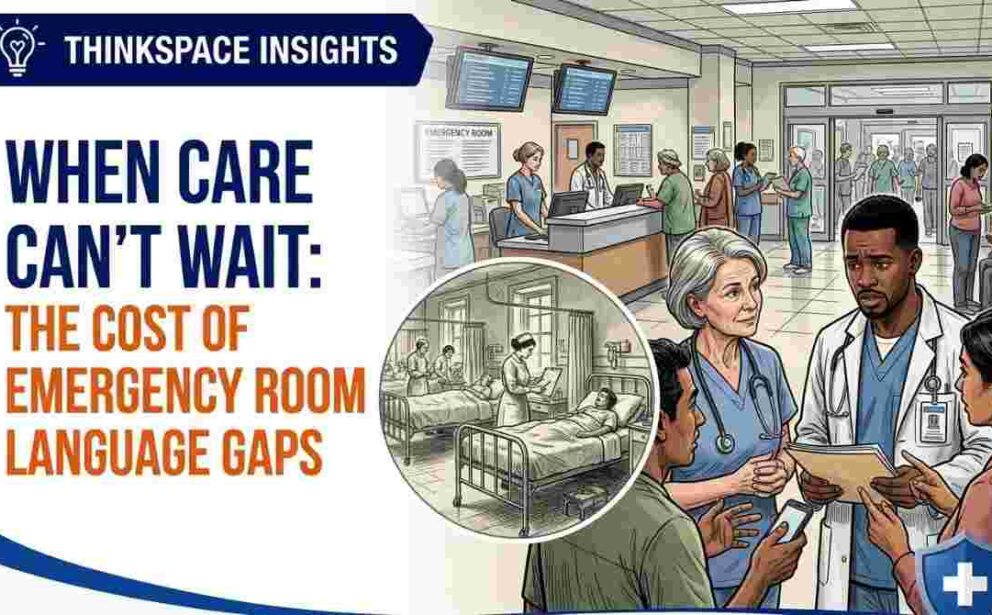
Multicultural societies like Canada face unique healthcare challenges, particularly when rich linguistic diversity meets a predominantly English-speaking frontline medical staff. Despite a general awareness that language barriers can negatively impact medical care, concrete empirical data within the Canadian context has historically been limited. To directly address this critical knowledge gap, researchers Hailey Newton, Edmund S. H. Kwok, and their colleagues conducted a comprehensive study to determine exactly how language barriers impact emergency department (ED) patient care and how frequently interpreter services are actually utilized. The findings expose a deeply flawed system where miscommunication leads directly to worse health outcomes.
To build their dataset, the research team executed a rigorous health records review of patients aged 18 years and older who presented to two Canadian tertiary care emergency departments between November 2019 and October 2020. The study included a total of 1,266 patients who had a documented preferred language, categorizing them into groups of 427 English speakers, 434 French speakers, and 405 speakers of “Other” languages. The primary goal was to measure the direct impact of language barriers on key emergency care metrics, including the total length of stay, the volume of diagnostic investigations ordered, final patient disposition, 30-day return ED visits, and the specific use of interpreter services.
The statistical analysis painted a stark picture of clinical disparity. Language barriers were identified in 462 of the patients, representing 36.5% of the total cohort. When comparing patients who faced these communication hurdles against those who did not, the researchers found that language barriers significantly slowed down the delivery of care. Patients struggling to communicate experienced a much longer average ED length of stay, waiting 406.9 minutes compared to just 342.4 minutes for patients without language barriers. Furthermore, doctors ordered a significantly higher proportion of investigations for these patients, including more frequent blood work (68.8% vs. 52.5%) and higher rates of diagnostic imaging (53.9% vs. 47.4%).
The negative impacts of these communication breakdowns extended far beyond the initial triage and testing phases. Patients facing language barriers were hospitalized at a significantly higher rate (19.7% vs. 12.3%) and were much more likely to require a return visit to the emergency department within 30 days (23.6% vs. 15.6%). Despite these severe, compounding clinical disadvantages, the study revealed that only 52.2% of patients with a language barrier actually utilized any form of interpreter services. Even more alarmingly, among those who did receive some form of translation, a massive 82.2% relied entirely on a family member, while an abysmal 5% actually utilized a professional translation service.
Ultimately, the research unequivocally demonstrates a severe and dangerous underutilization of professional interpreter services, despite these resources theoretically being available within the emergency department. The results highlight that deep care inequities still exist within the modern medical system, directly penalizing patients who cannot fluently communicate their symptoms. To ensure equitable care for all demographics, the study firmly supports the vital importance of continued advocacy to improve immediate access to professional interpreters, alongside urgent further investigations to mitigate the systemic barriers preventing patients from utilizing these lifesaving services.
ThinkSpace Insights
- Language barriers are common, with the study identifying that 36.5% of the evaluated patients faced significant communication hurdles in the ED.
- Wait times drastically increase, as patients with language barriers experienced a significantly longer average ED length of stay (406.9 minutes vs. 342.4 minutes).
- Testing is heavily amplified, showing that doctors order significantly more blood work and imaging tests for patients when they cannot easily communicate with them.
- Clinical outcomes are worse, with language-barrier patients suffering from higher hospitalization rates and an increased likelihood of returning to the ED within 30 days.
- Interpreters are severely underutilized, revealing that only 52.2% of patients facing a barrier used an interpreter, and a mere 5% of those used a professional service rather than a family member.
- Care inequities persist, prompting researchers to strongly advocate for improved systemic access to professional translation services to mitigate these ongoing disparities.
Access Full Article
Https://link.springer.com/article/10.1007/s43678-025-01046-6