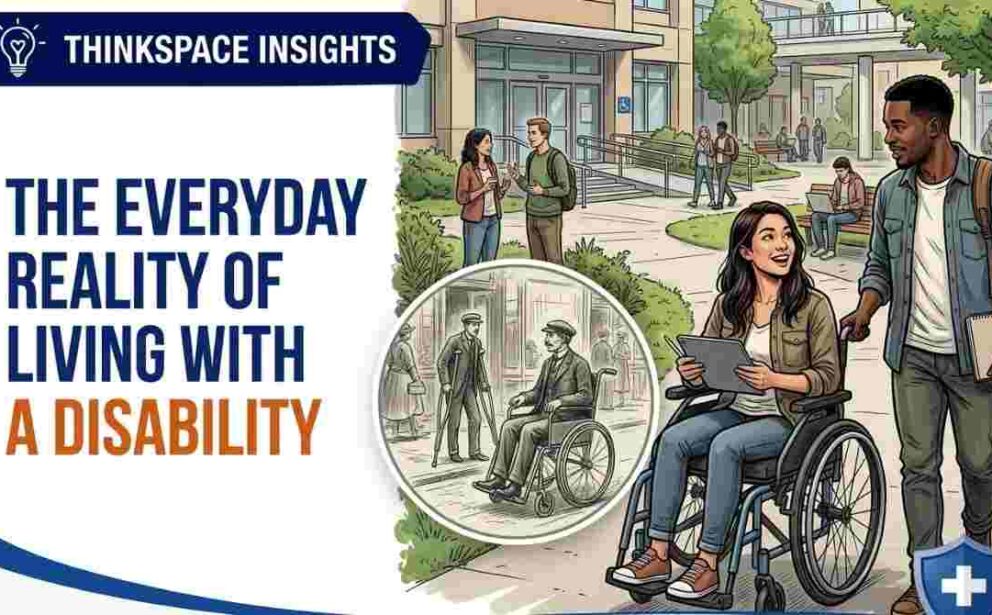
For individuals living with physical disabilities, navigating everyday spaces often means confronting a society that heavily relies on a bio-medical view of their bodies. This traditional framing inherently promotes a “deficit view,” focusing primarily on limitations rather than potential. To challenge this pervasive narrative, researchers Julie-Mary Carmel, Sian Chapman, and Peter Wright published a study exploring the real-world challenges of inclusion. The paper examines how the core principles of diversity, equity, and inclusion are critical to achieving true disability justice in daily life.
The study centers on the lived experiences of a vibrant, intelligent young child pseudonymously named Taylor. During the investigation, Taylor was between three and six years of age and exhibited a love for venturing into the community, enjoying live theatre, musicals, dining in restaurants, and visiting animals. To capture the nuances of Taylor’s interactions with the world, the research utilizes a retrospective auto-ethnographic approach. Informed directly by the first author’s position as Taylor’s carer, the paper presents eight distinct vignettes. These vignettes serve to highlight specific places and spaces of both inclusion and exclusion across formal and non-formal settings, making these daily navigational challenges visible and acting as provocations for change.
One of the most striking elements of the research is Taylor’s own perspective on their mobility device, which stands in stark contrast to societal expectations. While many might assume that requiring a wheelchair would be inherently limiting, Taylor defiantly expressed that being in a wheelchair was positive because “it made me special and it was fun”. The authors observe that for some, this unapologetic joy can be unsettling because it directly challenges the ableist societal perception that people with disabilities should constantly covet “normalness”. The paper points out that being non-disabled is unfairly positioned as the a priori position of society, which places the emphasis on society’s restrictive attitudes toward disability rather than on the disability itself.
By applying critical disability theory and the social model of disability to Taylor’s experiences, the researchers firmly reframe the conversation around accessibility. Instead of viewing the child through an impoverished, medicalized lens, the social model accurately sees Taylor as a dynamic young person actively seeking a life rich with meaning and value. The research emphasizes that the child desires to be seen for their capabilities, beautifully captured by Taylor’s quote: “I wish people could see me first and what I can do instead of seeing me in a wheelchair first”.
Ultimately, the paper provides a powerful argument for redefining how we approach disability justice and community integration. The research reveals that genuine learning and societal change are entirely possible across both formal and non-formal settings. However, achieving this requires an enhanced, deliberate understanding of the physical places and spaces required for true engagement and participation. By moving beyond deficit views and actively understanding these spatial dynamics, society can become significantly more equitable and just for all individuals.
ThinkSpace Insights
- Deficit views limit society, as the traditional bio-medical view of disability inherently promotes a negative, impoverished framing of individuals.
- Lived experiences drive research, with the study utilizing a retrospective auto-ethnographic approach and eight vignettes to make daily inclusion and exclusion challenges visible.
- Wheelchairs are not tragedies, as young Taylor defied ableist expectations by describing their mobility device as something that made them “special” and “fun”.
- Coveting normalness is an ableist pressure, highlighting that society unfairly expects people with disabilities to constantly strive for a standardized version of normal.
- The social model empowers individuals, shifting the focus to see Taylor as a vibrant, intelligent person seeking a life rich with meaning and value.
- Change requires spatial understanding, proving that creating a just society requires an enhanced understanding of the physical places and spaces needed for genuine engagement.
Access Full Article