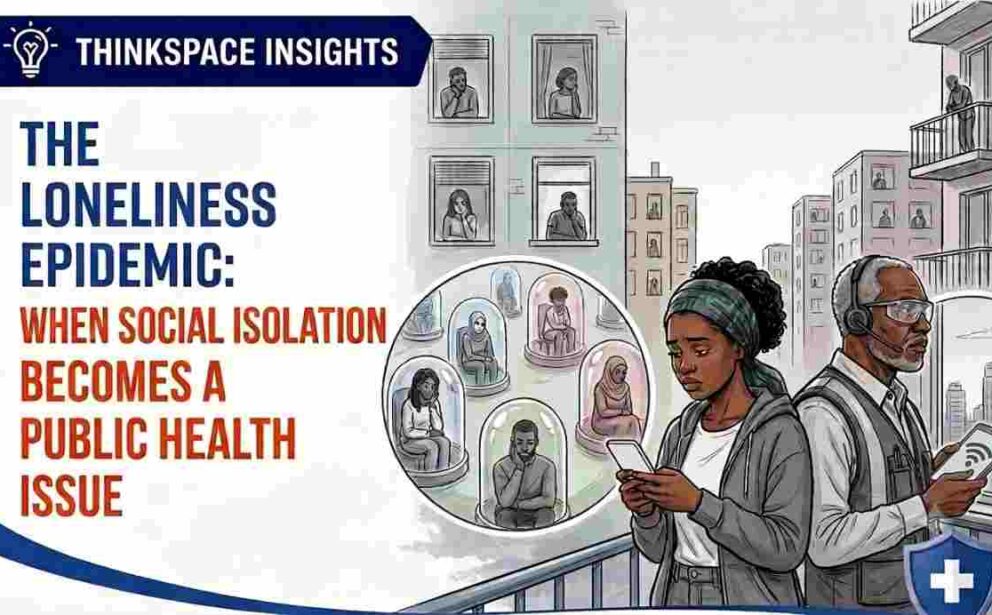
We often measure health in terms of blood pressure, diet, and exercise, but one of the most significant risk factors for chronic illness is completely invisible: social disconnection. Both the subjective ache of loneliness and the objective reality of social isolation are increasingly recognized as major social determinants of adult health. The World Health Organization has explicitly emphasized that our social connections—or lack thereof—play a massive role in shaping long-term disease risk, heavily influencing everything from daily stress responses to basic healthcare engagement.
To map exactly how a lack of human connection physically alters the body, a research team led by Afra O. Ahmed conducted a massive systematic review. Sifting through major medical databases up to May 2026, the team isolated 31 high-quality studies that specifically examined the relationship between social disconnection and chronic disease outcomes in adults. They aimed to move beyond the emotional toll of isolation and synthesize the hard, observational evidence linking it to cardiovascular, metabolic, respiratory, and renal health markers.
The synthesized data painted a stark picture of how social isolation accelerates physical decline. The researchers found consistent, adverse associations between social disconnection and severe health issues, including cardiovascular disease, cardiometabolic conditions, chronic kidney disease, frailty, and overall functional impairment. Crucially, the study highlighted that while loneliness and social isolation are related, they are not interchangeable; loneliness is a subjective feeling of inadequate emotional connection, whereas social isolation is a measurable, objective lack of social network engagement. Yet, both pathways independently contribute to a higher risk of premature mortality.
But how exactly does an empty social calendar translate into a failing heart or kidney? The review points to a combination of behavioral and physiological mechanisms. On a behavioral level, individuals experiencing deep social disconnection often show reduced self-management, poorer preventive behaviors, and lower adherence to their prescribed medications. Biologically, the chronic stress of isolation can trigger underlying inflammatory mechanisms, creating a physical environment where chronic diseases can easily take root and progress rapidly.
Ultimately, these findings demand a major shift in how we approach routine medical care. The researchers strongly suggest that evaluating a patient’s level of social disconnection should become a standard part of primary care and outpatient settings, particularly for adults already managing or at risk for chronic diseases. To truly combat this silent epidemic, future research must prioritize standardized exposure measures and robust longitudinal designs to determine if actively prescribing and improving a patient’s social connection can directly reverse these devastating chronic disease outcomes.
ThinkSpace Insights
- Social disconnection is a major health determinant, heavily influencing long-term chronic disease risk through behavioral, physiological, and stress-related pathways.
- Loneliness and isolation are not the same thing, with loneliness defined as a subjective emotional lack of connection, while social isolation is an objective, structural lack of contact.
- Isolation accelerates severe physical decline, showing consistent links to cardiovascular disease, cardiometabolic conditions, chronic kidney disease, and frailty.
- Behavioral mechanisms drive disease progression, as disconnected adults often struggle with reduced self-management, poor preventive behaviors, and lower medication adherence.
- Inflammation acts as a biological bridge, with the stress of social isolation triggering inflammatory mechanisms that worsen chronic health conditions.
- Primary care must adapt to these findings, highlighting an urgent need for doctors to actively assess social disconnection in patients who are at risk for chronic diseases.
Access Full Article