
As healthcare systems rapidly adopt digital technologies, nurses are increasingly relying on Hospital Information Systems (HIS) to document patient care, access medical records, and coordinate treatment decisions. While digitalization has improved efficiency and information management in healthcare, it has also introduced complex ethical concerns surrounding patient privacy, data security, professional responsibility, and the quality of patient care. A recent study by Hesamaddin Kamalzadeh, Zahra Mastaneh, and Samireh Abedini explores nurses’ ethical experiences with hospital information systems and highlights the growing challenges healthcare professionals face in the digital age.
The qualitative study investigated how nurses experience and navigate ethical issues while using HIS in patient care settings. Using semi-structured interviews with 17 nurses, the researchers explored concerns related to privacy, ethical conduct, and the practical challenges associated with digital healthcare systems. The findings reveal that although hospital information systems play an essential role in modern healthcare delivery, gaps in training, system governance, and ethical awareness continue to create risks for both healthcare professionals and patients.
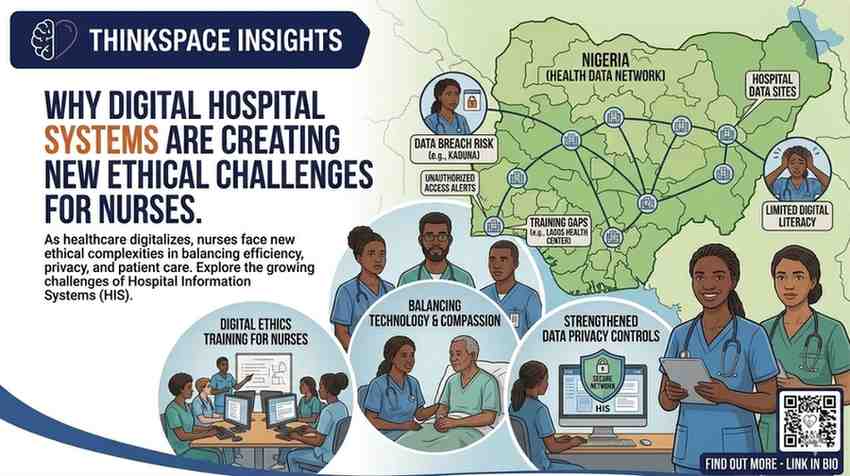
One of the study’s central findings is the ongoing concern over patient privacy and confidentiality. Nurses reported that unauthorized access to patient information, weak monitoring systems, and insufficient data protection measures can compromise patient trust and confidentiality. Because nurses interact extensively with patient records, they often find themselves balancing the need for efficient information access with the ethical responsibility to protect sensitive patient data.
The research also highlights the importance of ethical behavior when using digital healthcare systems. Nurses described the need for professionalism, accountability, and careful handling of electronic records to avoid errors, breaches, or misuse of patient information. The study suggests that ethical digital practice is becoming an increasingly important component of nursing professionalism as healthcare environments become more technology-driven.
Another major finding involves the ethical challenges nurses encounter due to inadequate training and limited digital literacy support. Some participants reported uncertainty about system protocols, data-sharing responsibilities, and cybersecurity risks. Without continuous education and institutional guidance, healthcare workers may struggle to fully understand the ethical implications of using complex digital systems in patient care.
The study further demonstrates how digital healthcare systems can create tension between efficiency and human-centered care. While HIS platforms streamline documentation and communication, excessive administrative demands and system-related pressures may reduce direct patient interaction and contribute to workplace stress. The researchers argue that healthcare institutions must ensure that digital technologies support—not undermine—ethical and compassionate patient care.
Importantly, the findings emphasize that ethical concerns in digital healthcare are not solely individual responsibilities. Institutional policies, leadership support, privacy regulations, and organizational culture all play critical roles in shaping ethical technology use within healthcare settings. Strengthening these systems is essential for maintaining trust, protecting patient rights, and improving care quality in increasingly digital healthcare environments.
ThinkSpace Insights
1.Strengthen Digital Ethics and Privacy Training for Nurses
Healthcare institutions should provide continuous education on data privacy, cybersecurity, ethical decision-making, and responsible use of hospital information systems.
2. Improve Patient Data Protection and Access Control
Hospitals should strengthen monitoring systems, access restrictions, and cybersecurity measures to reduce unauthorized access to sensitive patient information.
3. Balance Technological Efficiency with Human-Centered Care
Healthcare organizations should ensure that digital systems enhance patient care without reducing empathy, communication, and direct nurse-patient interaction.
4. Develop Clear Ethical Guidelines for Digital Healthcare Practice
Policymakers and healthcare leaders should establish stronger ethical frameworks that guide responsible use of electronic health systems across healthcare settings.
5. Support Nurses Through Ongoing Digital Skills Development
Continuous professional development programs can help nurses confidently navigate evolving healthcare technologies while maintaining ethical standards of care.
The study ultimately highlights the growing ethical complexity of healthcare in the digital era. As hospital information systems become increasingly central to healthcare delivery, nurses are expected to balance efficiency, technological competence, patient privacy, and compassionate care simultaneously.
The findings suggest that successful digital transformation in healthcare requires more than technological investment alone. It also demands strong ethical governance, institutional support, continuous education, and healthcare systems designed to protect both patient dignity and professional integrity.
Read Abstract via https://journals.sagepub.com/doi/10.1177/09697330251351907?