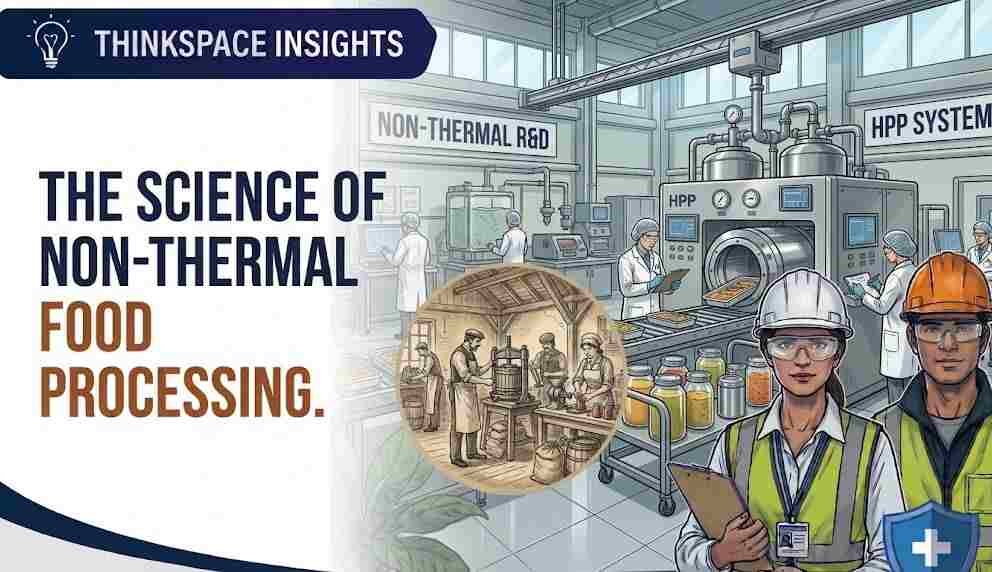
Think of what happens when you boil a vibrant, crisp piece of broccoli for too long; it turns into a mushy, pale shadow of its former self, losing much of its texture and essential vitamins in the water. For centuries, the global food industry has treated commercial food safety in much the same way, relying heavily on intense heat to kill harmful bacteria and extend shelf life. While this traditional thermal processing effectively guarantees microbial stability, it essentially “overboils” our food on an industrial scale. To solve this culinary and nutritional conundrum, scientists and food engineers are rapidly adopting “non-thermal processing technologies”—advanced methods that neutralize pathogens and preserve freshness without ever turning up the heat.
The stakes for improving these preservation methods have never been higher. With an ever-increasing global population, the world faces a constant and pressing requirement to scale up commercial food production. Following the COVID-19 pandemic, consumer demand for improved food quality and nutrient-dense products has skyrocketed, compelling the industry to develop foods that minimize diet-related health issues. However, traditional heat-based processing actively works against this goal; severe thermal conditions destroy heat-sensitive vitamins, eliminate beneficial bioactive compounds, and can even generate potentially unfavorable chemical byproducts such as acrylamides and advanced glycation end products.
To overcome the severe nutritional limitations of traditional thermal processing, a research team led by Xinyu Yuan conducted a substantial review of emerging preservation techniques. Published in the journal Foods, their comprehensive study analyzes how various non-thermal technologies are being effectively deployed across the food industry as viable alternatives to heat. The researchers evaluated the fundamental principles and operational benefits of these advanced methods, aiming to provide crucial industrial recommendations for maintaining optimal nutritional composition while achieving reduced microbial loads.
Rather than blasting food with extreme heat, these innovative technologies utilize alternative physical forces to modify food constituents at the microscopic level. The review highlights cutting-edge techniques such as high-pressure processing (HPP), pulsed electric fields (PEF), cold plasma, and ultrasound technology. These precise physical stressors induce targeted structural alterations in basic food components like proteins, lipids, and carbohydrates. This process causes severe membrane disruption and denaturation in spoilage microorganisms, effectively neutralizing threats while boasting significantly shorter treatment times and much lower operating temperatures.
By completely avoiding thermal degradation, these non-thermal methods offer massive advantages in preserving a food item’s original nutritional quality, organoleptic properties, and delicate flavor profiles. Furthermore, the researchers note that deliberately altering the structural arrangement of these macro and microscopic constituents can actively improve certain functional attributes of the food. For instance, precise non-thermal structural alterations can beneficially modulate a food’s digestibility, water-binding capacity, and gelation processes. However, the successful commercialization of these tools requires careful analysis, as variations in operating conditions and equipment design directly dictate how these technologies impact different food structures.
Ultimately, the shift away from heat-based preservation represents a monumental leap forward for global food security and public health. The researchers emphasize that the development of these advanced processing technologies has been absolutely crucial to producing high-quality food products with minimal nutritional change. By continuing to explore novel hybrid techniques and fostering interdisciplinary collaboration, the food industry can drastically reduce energy consumption while delivering safer, more nutritious, and highly functional foods to an expanding global population.
ThinkSpace Insights
-
The thermal trade-off, noting that while traditional heat-based processing effectively prevents spoilage, it severely degrades heat-sensitive vitamins and valuable bioactive compounds.
-
Harmful byproducts, highlighting that severe thermal conditions can generate unfavorable chemical compounds within food, such as heterocyclic amines, keto-aldehydes, and acrylamides.
-
Preservation without heat, as non-thermal technologies like high-pressure processing and pulsed electric fields effectively reduce microbial loads using lower temperatures and shorter treatment times.
-
Microscopic modifications, revealing that these techniques physically alter basic food constituents—like proteins and lipids—to cause targeted membrane disruption in pathogens.
-
Boosting food functionality, showing that non-thermal structural alterations can actively improve a food item’s digestibility, water-binding capacity, and overall texture.
-
A post-pandemic priority, emphasizing that consumer demand for high-quality, nutrient-dense foods has surged, making advanced processing technologies crucial for modern commercialization.