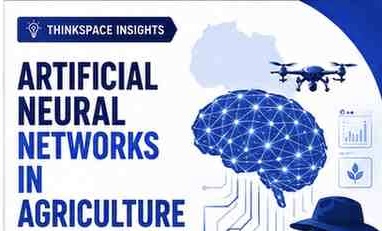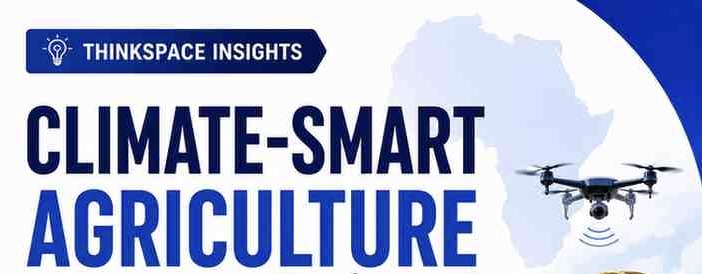


As the global agricultural sector faces mounting pressures to increase yields while minimizing environmental footprints, modernizing traditional farming practices has become an absolute necessity. At the forefront of this technological revolution is the integration of unmanned aerial vehicles, commonly known as drones. By bridging the gap between aerospace technology and grassroots farming, drones are rapidly transforming how producers monitor, manage, and optimize their land.
A comprehensive review by researchers Vishal Choudhary, Satya Prakash Kumar, and Varinder Singh Saimbhi provides a detailed evaluation of this evolving landscape. Published in ScienceDirect, the article systematically classifies the various types of agricultural drones currently on the market and explores the powerful integration of advanced onboard sensors—including multispectral, thermal, and LiDAR technologies. These tools allow for the real-time, high-resolution monitoring of vital field metrics such as crop health, soil moisture conditions, and early-stage pest infestations.
The authors highlight that the utility of drones extends far beyond simple aerial photography. Today, these platforms execute highly targeted agricultural operations, from precision irrigation management and yield estimation to the automated, site-specific application of pesticides and fertilizers. This precision is driven by recent leaps in artificial intelligence, machine learning, edge computing, and swarm intelligence, which collectively upgrade drones from remote-controlled tools into autonomous, decision-making machines. Coupled with GPS and automated mapping, this spatial data collection drastically optimizes resource input while minimizing chemical runoff and environmental impact.
Despite these massive advantages, the review maintains a grounded perspective by outlining the practical barriers to widespread adoption. High initial capital costs, restrictive regulatory constraints, limited battery flight times, and a severe lack of technical expertise among traditional farming workforces continue to bottleneck global deployment. Ultimately, the researchers conclude that while the promise of sustainable, data-driven smart agriculture is entirely within reach, achieving it will require strategic policy solutions, targeted farmer education, and continued technological refinement.
ThinkSpace Insights
- Drones represent a paradigm shift in farm management, transitioning agriculture from broad, generalized crop treatments to highly precise, data-driven interventions.
- Advanced payload sensors act as a diagnostic toolkit, utilizing thermal imaging and LiDAR to capture invisible crop stress and soil variations in real-time.
- Integrating AI and swarm intelligence elevates drone capabilities, allowing multiple autonomous units to coordinate complex tasks and make rapid, in-flight decisions.
- Site-specific application of inputs minimizes environmental damage, ensuring that water, fertilizers, and pesticides are deployed only exactly where they are needed.
- Widespread adoption is currently bottlenecked by practical limitations, including strict aviation regulations, short flight times, and the steep upfront costs of industrial-grade hardware.
- Maximizing the potential of smart agriculture requires focused human capital investment, highlighting the need to bridge the technical expertise gap for everyday practitioners.
Access Full Article
https://www.sciencedirect.com/science/article/abs/pii/S3050475926000060