Imagine building a temporary shelter out of reinforced steel and solid concrete for a simple weekend camping trip, only to leave the indestructible structure in the woods forever when you go home. This is essentially how modern society handles temporary food packaging and agricultural films, building them out of indestructible petroleum-based plastics that are chemically designed to last for centuries. To fix this massive design flaw, scientists are turning to nature’s leftovers, attempting to build these temporary structures out of agricultural waste that naturally composts back into the soil the moment its job is done.
The global reliance on petroleum-derived plastics has triggered a severe and escalating environmental crisis. With cumulative global plastic production now exceeding 9 billion tonnes, enormous quantities of plastic waste are currently suffocating terrestrial and aquatic environments. The food packaging and agriculture sectors are two of the biggest offenders, heavily relying on these cheap plastics to protect crops through plasticulture and extend the shelf life of groceries. However, because agricultural films and food wrappers are highly resistant to natural degradation, they inevitably fragment into persistent, toxic microplastics that threaten human health and global ecosystems.
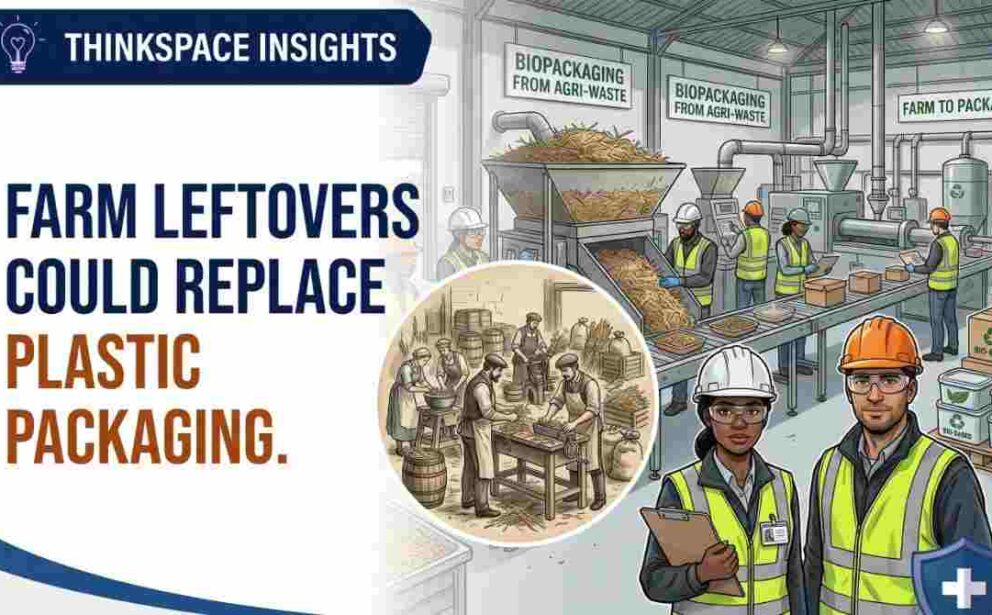
To break this indestructible cycle, a research team led by Ganesh Saratale and Byong-Hun Jeon conducted a critical review on the development of functional bio-polymer films. Published in the journal Polymers, the study critically analyzes the massive potential of “valorizing” agro-industrial by-products and underutilized biomass. Rather than treating agricultural waste as garbage, the researchers explored how extracting biopolymers, bioactive compounds, and natural pigments from these leftovers can produce highly functional, biodegradable plastics for both farming and food packaging.
The underlying mechanics of these new bio-plastics rely on common, starch-rich crops and unique plant extracts. The review highlights that crops like cassava, potato, and Jerusalem artichoke serve as excellent raw materials for manufacturing biodegradable films and agricultural mulches. Furthermore, the researchers detail how residues from yerba mate can be used as reinforcement fillers and antioxidant additives, while pH-sensitive anthocyanins extracted from red cabbage can be integrated to create “intelligent,” freshness-monitoring packaging systems that visually react to food spoilage.
While building active, smart packaging from food waste sounds ideal, scaling this technology from the laboratory to the industrial factory floor presents significant hurdles. The researchers identify that these natural bio-polymers currently struggle with moisture sensitivity and often lack the robust mechanical and barrier performance of their synthetic counterparts. Additionally, translating these advances into commercial products requires overcoming complex challenges related to the instability of natural pigments, strict food safety control, regulatory compliance, and consistent raw-material availability.
Overcoming these mechanical and regulatory barriers is absolutely essential for moving the global economy away from fossil fuels. The review successfully integrates these disparate agricultural applications into a unified circular-bioeconomy approach, explicitly connecting biodegradable structural materials with their active functions and end-of-life environmental requirements. By mastering the valorization of agro-industrial biomass, the manufacturing sector can eventually replace indestructible synthetic plastics with intelligent, renewable materials that safely disappear back into the earth when their job is done.
ThinkSpace Insights
- The indestructible problem, as cumulative global plastic production has exceeded 9 billion tonnes, resulting in persistent microplastics that threaten human health and ecosystems.
- Heavy agricultural usage, noting that the food packaging and agriculture sectors are major consumers of plastic, utilizing it heavily for mulch films and extending food shelf life.
- Trash to treasure, highlighting the “valorization” process, where scientists extract biopolymers and bioactive compounds from agro-industrial by-products to create functional materials.
- Starchy structural foundations, revealing that common crops like cassava, sweet potato, and Jerusalem artichoke provide the raw materials needed for biodegradable films and coatings.
- Intelligent packaging, explaining that pH-sensitive extracts from red cabbage can be embedded into bio-plastics to create packaging that actively monitors and displays food freshness.
- Industrial hurdles remain, cautioning that commercializing these bio-polymers requires overcoming significant challenges regarding moisture sensitivity, mechanical performance, and raw material scalability.
Access Full Article