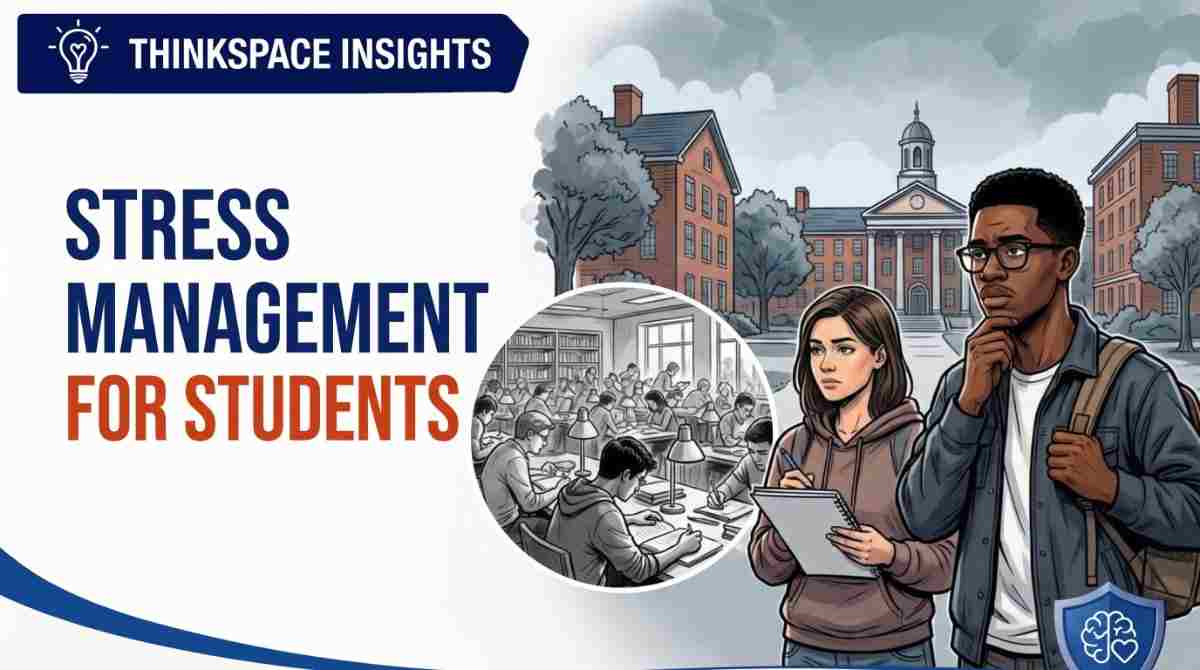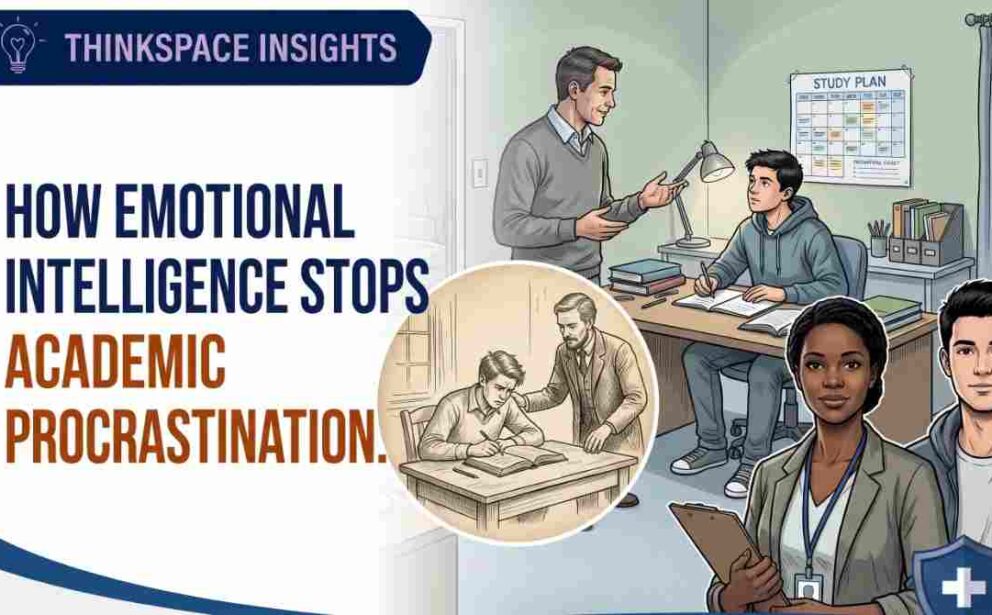
Think of a high-performance sports car running completely out of gas on the highway. No matter how advanced the car’s navigation system is, if the fuel tank is empty, the vehicle simply will not move forward. In the realm of higher education, cognitive intelligence acts as the navigation system, but a student’s psychological resources serve as the vital fuel. When these internal resources are completely depleted, the academic engine stalls, resulting in a widespread behavioral pattern known as “academic procrastination”. Understanding how a student’s emotional intelligence acts as a protective fuel gauge is essential for educators hoping to keep students from breaking down mid-semester.
Academic procrastination is far more than a simple habit of delay; it is a fundamentally maladaptive response rooted in failures of self-regulation and emotional processing. The scale of this problem is staggering, with chronic procrastination documented in more than 60% of students across multiple countries. Scholars have long recognized that academic success is shaped by far more than cognitive ability alone; the affective and volitional aspects of student behavior—specifically how they manage stress and persist through difficulty—are equally consequential. When students fail to manage these stressors, it directly negatively impacts their academic achievement and overall well-being.
To understand exactly why so many intellectually capable students still struggle with task avoidance, researcher Dwi Nur Luthofah and colleagues conducted a comprehensive meta-analytic study. Because prior literature on this subject was highly fragmented, the team systematically pooled data from 28 empirical studies published between 2015 and 2025, yielding a massive combined sample of 6,901 participants. The primary objective of this rigorous synthesis was to investigate the precise mediating role that “academic burnout” plays in the complex relationship between emotional intelligence and procrastination.
The researchers focused on two competing psychological constructs that dominate student life. Emotional intelligence functions as a vital internal resource, defined as the ability to accurately perceive, understand, and regulate one’s own emotions to navigate demanding tasks and sustain intrinsic motivation. On the other end of the spectrum is academic burnout, which describes a state of chronic psychological depletion marked by severe emotional exhaustion, cynical attitudes toward studying, and a diminished sense of academic self-efficacy. The meta-analysis clearly demonstrated that high emotional intelligence strongly and negatively predicts academic burnout.
However, the most groundbreaking discovery involved how these traits actually interact to cause chronic delay. Surprisingly, the study found that the direct effect of emotional intelligence on procrastination was completely non-significant. Instead, the relationship operates through “full mediation” via academic burnout. This means that simply having high emotional intelligence does not directly stop a student from procrastinating; rather, emotional intelligence prevents the severe burnout that causes a student’s capacity for task management to deteriorate into patterns of chronic avoidance.
These compelling findings perfectly align with the Conservation of Resources Theory, proving that students inevitably delay their responsibilities when their psychological reserves are entirely drained. Consequently, universities cannot simply command students to stop delaying their work or rely solely on time-management seminars. The researchers conclude that if institutions want to effectively reduce academic procrastination, they must implement evidence-based strategies that actively combine targeted burnout prevention alongside foundational emotional intelligence development.
ThinkSpace Insights
- The invisible fuel, as scholars recognize that academic success is shaped far more by affective and volitional aspects—like stress management and motivation—than by cognitive ability alone.
- A global academic crisis, noting that chronic academic procrastination is a fundamentally maladaptive response documented in more than 60% of students across multiple countries.
- Massive data synthesis, with researchers conducting a meta-analysis of 28 studies and 6,901 participants to clarify fragmented psychological evidence into a single integrative framework.
- The burnout barrier, revealing that academic burnout—characterized by emotional exhaustion and cynical attitudes—strongly predicts patterns of avoidance and chronic delay.
- Full mediation confirmed, proving that emotional intelligence does not directly stop procrastination, but rather prevents the psychological burnout that ultimately triggers it.
- Evidence-based strategies, concluding that effective educational interventions must simultaneously target burnout prevention and emotional intelligence development to keep students on track.
Access Full Article