Before diving into the science, it helps to understand a few terms that frequently pop up in the conversation about sustainable farming. You might hear the term “regenerative agriculture.” Think of it as farming that gives back more than it takes; instead of simply extracting crops and degrading the land, it actively restores soil health and local ecosystems. This builds what scientists call “biological capital”—the natural wealth of healthy soil, robust biodiversity, and clean water that makes farming possible in the first place. A key method for doing this is “minimal soil disturbance” (or no-till farming), which means planting seeds without aggressively plowing or turning over the earth, a practice that protects the delicate structure of the soil. Finally, these methods result in “carbon sequestration,” a process where healthy soil acts like a sponge, pulling harmful carbon dioxide out of the atmosphere and safely locking it underground. Understanding these concepts highlights why this new approach is so critical for the future of our food systems.
For centuries, humanity’s relationship with the land has been defined by an extractive and exploitative approach to agriculture. Driven by the relentless pursuit of higher yields and profits, conventional farming practices have systematically depleted the very resources our food systems rely on. Fertile soils have been stripped of vitality, water sources have dwindled, and the rich tapestry of biodiversity underpinning healthy ecosystems has been dangerously unraveled. This unsustainable trajectory has left once-thriving landscapes in a state of degradation, compromising their resilience to environmental stresses and jeopardizing their ability to sustain life and provide essential ecosystem services.
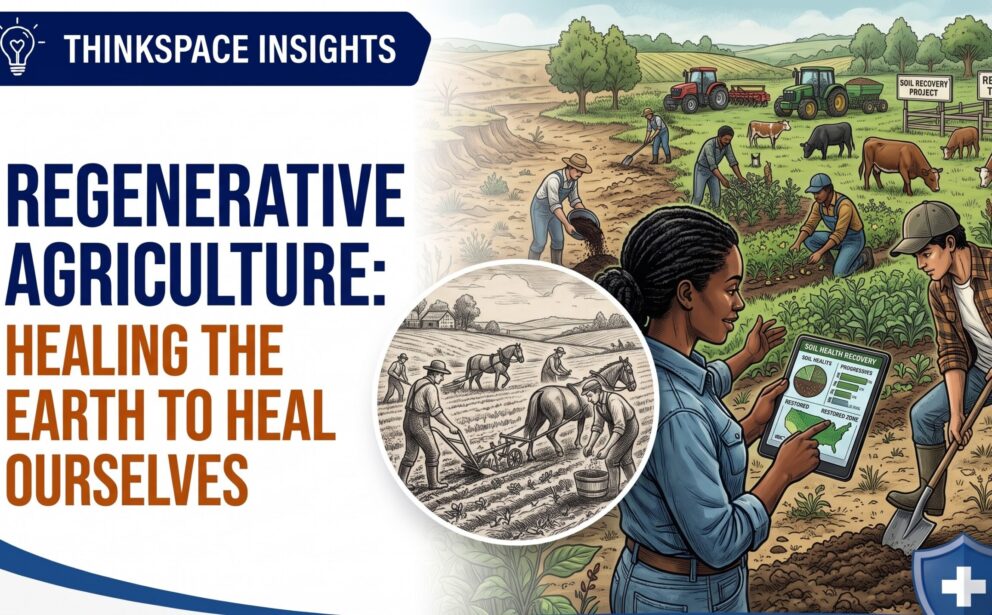
However, amidst this grim reality, a renaissance is stirring: a paradigm shift towards regenerative agriculture. This holistic approach seeks to heal the wounds inflicted upon our planet’s ecosystems by mimicking nature’s intricate designs and harnessing the power of ecological processes. By reframing farms as integrated ecosystems rather than mere production units, regenerative agriculture offers a transformative solution to restore our landscapes’ vitality, resilience, and productivity. A comprehensive review by Dhananjay Kumar, Sakshi Balyan, and their colleagues explores exactly how these practices are reshaping the future of farming.
The core practices of regenerative agriculture mark a fundamental shift from extraction to regeneration. Key techniques include minimal soil disturbance, cover cropping, diverse crop rotations, managed livestock integration, and the application of compost. These methods deliberately reduce the reliance on synthetic inputs and heavily emphasize context-specific design over rigid, prescriptive approaches. To ensure these methods are working, farmers shift their monitoring focus toward crucial soil health indicators, such as organic matter content, biological activity, aggregate stability, and water infiltration.
The research shows that these practices yield highly promising outcomes. Studies indicate that soil organic carbon increases by 0.5–2% over just 3 to 5 years, while water infiltration rates jump to 2–10 times higher than those seen in conventional systems. Ecologically, regenerative farms see a 30–50% increase in soil microbial diversity and boast a 60–80% greater abundance of beneficial insects. The environmental benefits are equally staggering, with carbon sequestration ranging from 0.5 to 3 tons per hectare annually. Furthermore, despite potential yield decreases during initial transition periods, regenerative farms demonstrate 20–40% lower input costs with comparable or improved long-term profitability, proving that systems designed to heal the earth become increasingly productive and stable over time.
ThinkSpace Insights
- Healing the land, as regenerative agriculture reframes farms as integrated ecosystems rather than purely extractive production units to restore soil and biological capital.
- Rapid soil recovery, with soil organic carbon increasing by 0.5–2% within 3 to 5 years and water infiltration improving by 2 to 10 times over conventional systems.
- Surge in biodiversity, showing a 30–50% increase in soil microbial diversity alongside a 60–80% rise in beneficial insect populations.
- Locking away carbon, as regenerative practices achieve carbon sequestration rates between 0.5 and 3 tons per hectare every year.
- Cutting operational costs, with farms demonstrating 20–40% lower input costs and achieving comparable or superior long-term profitability despite initial transition dips.
- Core restorative practices, relying on minimal soil disturbance, cover cropping, diverse rotations, managed grazing, and compost application to replace synthetic inputs.
Access Full Article