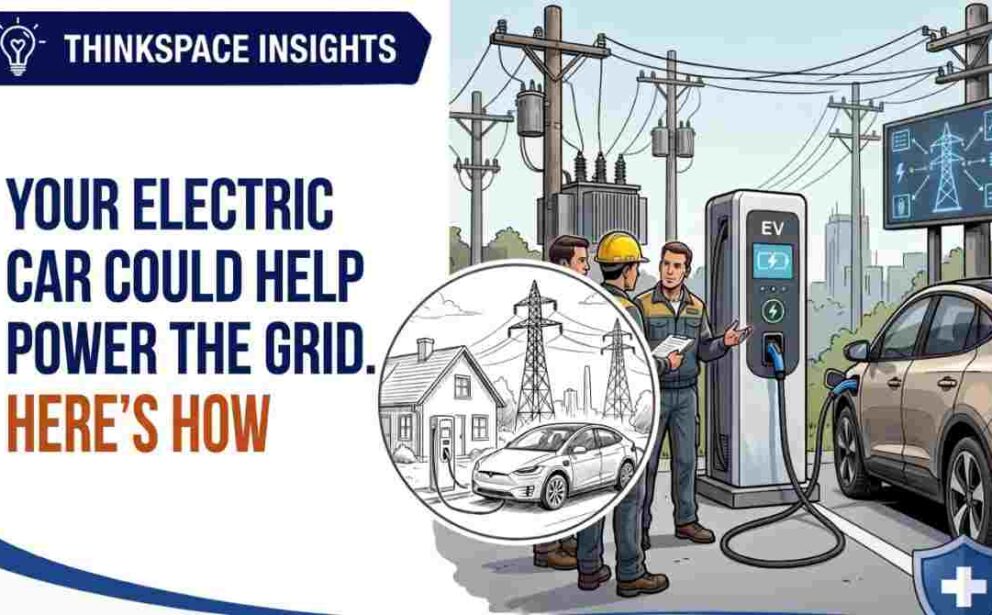
Think of a standard rechargeable power bank used for a smartphone. Usually, you plug your device into the wall to draw electricity and charge the battery. But what if, during a neighborhood blackout or a sudden surge in electricity demand, you could plug a massive, heavy-duty battery back into your house to keep the lights on and the refrigerator running? That two-way street is the foundational concept behind “Vehicle-to-Grid” (V2G) technology. Instead of electric cars simply draining power from the city, V2G allows them to act as giant, mobile batteries that can push stored electricity back into the system when the grid struggles. In the energy industry, these stabilizing boosts are known as “ancillary services.” Furthermore, power grids increasingly rely on “intermittent renewable energy sources”—like solar panels and wind turbines that only generate power when the sun is shining or the wind is blowing. By understanding these concepts, it becomes clear how millions of parked electric cars could serve as the ultimate backup system for a greener, yet less predictable, energy future.
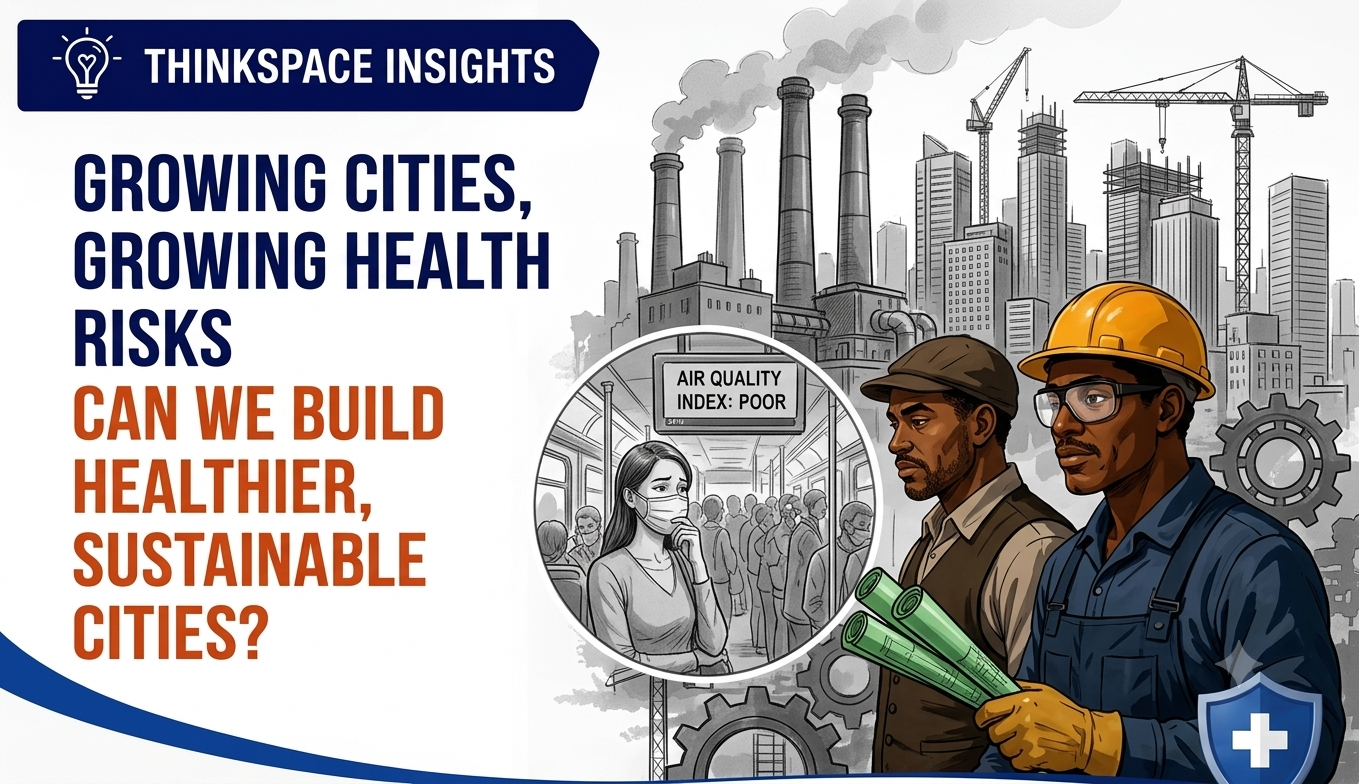
Currently, the global transportation sector accounts for a massive 16.2% of all greenhouse gas emissions, with road transport specifically making up 11.9% of that total. To combat this environmental toll, the widespread adoption of electric vehicles (EVs) has accelerated dramatically, with the number of EVs on global roads exceeding 26 million in 2022 alone. However, while this transition is crucial for eco-friendly emission reductions, the sheer volume of new EVs plugging into the wall creates significant challenges for existing power networks, directly causing overloaded distribution equipment and dangerous spikes in peak electricity demand. At the exact same time, grid operators are struggling to balance supply and demand due to a surge in intermittent renewable energy sources, whose unpredictable weather-dependent outputs make grid stability incredibly difficult to maintain.
To address these dual challenges, researchers Shehzad Alamgir, S Jarjees Ul Hassan, and a collaborative team published a comprehensive review examining how Vehicle-to-Grid technology can serve as a cost-effective, stabilizing solution. The researchers highlight that V2G fundamentally changes the role of plug-in electric vehicles (PEVs). Rather than strictly acting as a drain on the system, PEVs can function as both loads and energy sources. When grid demand is low, the vehicles absorb power to charge (G2V mode), and when the grid is strained, they discharge their stored battery energy back into the network (V2G mode).
This aggregated, injected power provides the grid with vital ancillary services that enhance overall efficiency, stability, and reliability. The review details how V2G can actively facilitate frequency and voltage regulation, peak load shaving, and load shifting, while essentially acting as an emergency spinning reserve and a reliable backup for intermittent renewable energy sources. To prove the viability of this system, the researchers conducted an in-depth techno-economic analysis, comparing V2G against other alternatives and investigating insights from practical V2G demonstration projects distributed worldwide over the past two decades.
Managing this complex, two-way flow of electricity requires highly sophisticated control techniques. The study notes that while traditional linear control methods—like proportional-integration-derivative (PID) controllers—have been widely utilized, their tuning processes are painfully time-consuming and they frequently fail to operate stably when power fluctuations deviate from nominal ranges. To overcome this, the researchers highlight the recent adoption of model predictive control (MPC), which offers a much faster response, superior robustness against variable sources, and an easier setup process for practical, non-linear implementation on the modern smart grid.
ThinkSpace Insights
- Transportation drives emissions, accounting for 16.2% of global greenhouse gases, making the transition to EVs crucial for environmental health.
- Grid strain is increasing, as the deployment of over 26 million EVs globally creates challenges like increased peak demand and overloaded equipment.
- Renewables add instability, with grid operators struggling to balance supply and demand due to the intermittent, weather-dependent nature of solar and wind energy.
- V2G acts as a two-way street, allowing plug-in electric vehicles to function as both a power load for charging and a power source for discharging energy back to the grid.
- Ancillary services stabilize the system, as V2G provides critical grid support including voltage regulation, peak load shaving, and backup for renewable energy fluctuations.
- Advanced controls are necessary, highlighting that modern model predictive control (MPC) methods are required to handle the complex power fluctuations better than traditional linear controllers.
Access Full Article