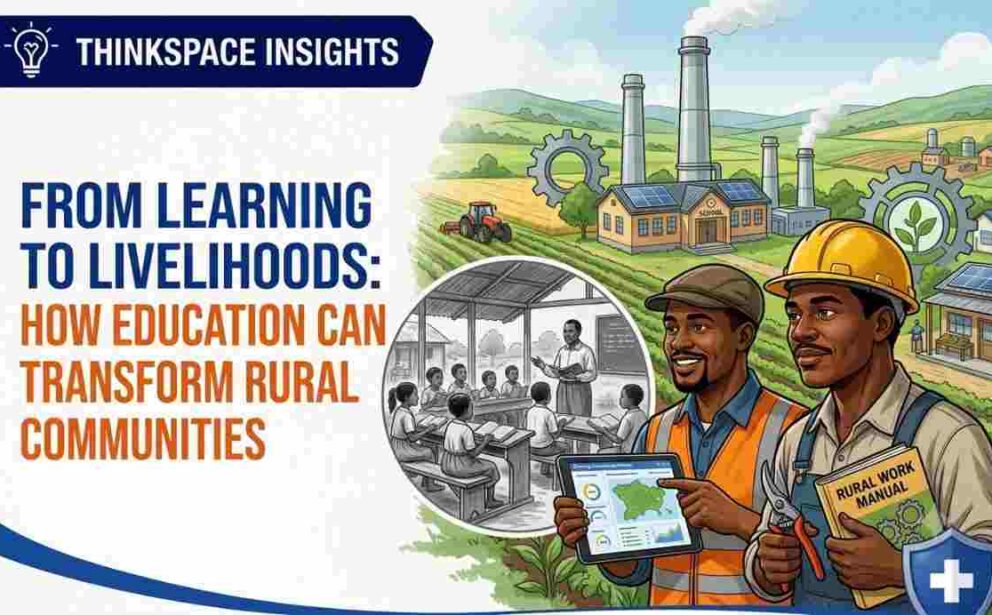
As Nelson Mandela famously stated, “Education is the most powerful weapon which you can use to change the world”. This sentiment is especially true for rural areas, which frequently serve as the lifeblood of a nation’s growth and identity. In countries like India, education and skill development represent the absolute cornerstone for rural societies to achieve impartial access to vital career opportunities. Unfortunately, despite their importance, these rural communities continue to face massive, systemic challenges in providing quality education and adequately equipping their youth with relevant, modern skills.
The root of this challenge often lies in the classroom itself. According to recent research published in the International Journal of Environmental Sciences, the acquisition of dexterous education and skills in rural areas remains meager, largely due to a distinct lack of innovative teaching methods. This severe educational disparity leads directly to severely limited career opportunities for young people. Ultimately, this gap in skill development hinders the broader economic and social development of the entire region, preventing rural communities from thriving alongside the modern world.
This localized struggle is part of a much larger global crisis. Quality education is recognized worldwide as the United Nations’ Sustainable Development Goal (SDG) 4, yet progress was already dangerously slow even before recent global disruptions. The COVID-19 pandemic exacerbated this crisis, having devastating impacts on education and causing massive learning losses. Yet, overcoming these hurdles is critical, because when people receive quality education, they can finally break the generational cycle of poverty, reduce systemic inequalities, and promote vital gender equality.
Solving this complex issue cannot be left to rural schools alone. The researchers argue that bridging this massive gap requires a highly collaborative, multi-sector effort involving teachers, governments, educational institutions, NGOs, and the private sector. To deliver on SDG 4, national governments must make education financing a top investment priority. This means actively implementing foundational measures such as making basic education free and compulsory, significantly increasing the number of teachers, aggressively improving school infrastructure, and wholly embracing digital transformation.
Ultimately, investing in rural education is about far more than just handing out diplomas; it is about building sustainable local economies. Bridging the educational and skill gap serves as a powerful tool for fostering entrepreneurship and creating a much more prosperous future for rural development. By nurturing the inherent talent and ingenuity within these communities, society can cultivate a generation of young, empowered leaders. Equipped with the right skills, these individuals will not just participate in the workforce—they will become the architects of a brighter, more vibrant rural economy for themselves and their communities.
ThinkSpace Insights
- Rural areas are the lifeblood of national growth, yet they face massive systemic challenges in providing the quality education necessary for modern career opportunities.
- A lack of innovative teaching stifles potential, leading to meager skill acquisition that ultimately hinders the economic and social development of rural communities.
- Quality education is the key to breaking poverty, serving as the primary mechanism to reduce inequalities, achieve gender equality, and foster sustainable, healthy lives.
- The pandemic severely derailed global education goals, exacerbating an already slow progress toward the United Nations’ Sustainable Development Goal 4.
- A massive, collaborative effort is required, demanding action and investment from governments, NGOs, private sectors, and local educators to overhaul rural infrastructure.
- Education directly fuels local entrepreneurship, allowing empowered rural youth to become the architects of a much more vibrant, self-sustaining local economy.
Access Full Article