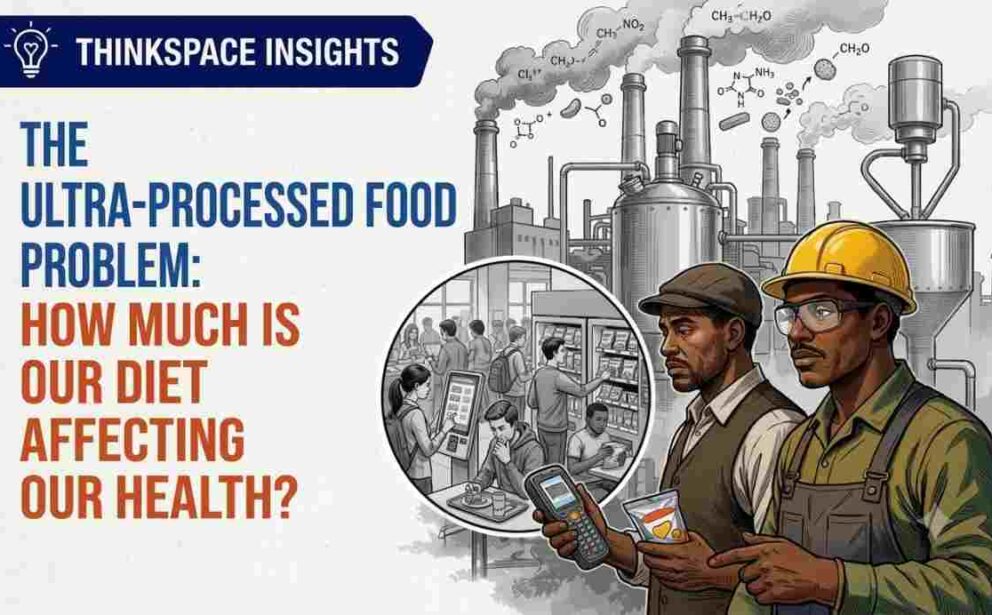
Ultra-processed foods (UPFs) have rapidly taken over modern diets, fundamentally changing how the world eats. Ranging from everyday sugary drinks and packaged snacks to ready-to-eat meals and even plant-based meat alternatives, these industrial products are aggressively displacing fresh, whole foods. In countries like the United States and the United Kingdom, UPFs now account for more than half of the average diet. For certain populations, such as younger individuals or those from lower socioeconomic backgrounds, an astonishing 80% of daily calories come strictly from these highly processed products.
This massive shift in dietary patterns has triggered intense research into the public health consequences, and the findings from large prospective cohort studies are stark. High exposure to UPFs is consistently associated with severe adverse health outcomes, including obesity, type 2 diabetes, cardiovascular disease, selected cancers, depression, and an overall increase in all-cause mortality. The biological reasons behind this are multifaceted. Diets rich in UPFs can promote excess energy intake and weight gain, driven by poor nutrient quality, high glycemic loads, disruptive cosmetic additives, and severe perturbations to the gut microbiome.
Despite these clear associations, the science surrounding UPFs remains surprisingly debated, particularly regarding how we actually define them. The most common framework, the Nova classification system, categorizes foods based on the extent and purpose of their processing rather than just their raw nutrients. Nova defines UPFs as industrially formulated products made with multiple ingredients and processing steps, designed to be highly palatable, energy-dense, and market-oriented. However, this classification has sparked significant controversy, with critics pointing out substantial heterogeneity within the UPF category and immense challenges in classifying foods reproducibly across different studies.
The core of this ongoing scientific debate centers on causation. Researchers are trying to determine whether the observed health risks are caused specifically by the industrial processing itself, or if UPFs are simply a marker of a broader, nutrient-poor dietary pattern. These methodological challenges severely hinder clear causal inference, leaving experts divided on whether ultra-processed foods act as independent disease-causing factors or merely reflect a generally unhealthy food environment.
Because the science is still hotly contested, policy responses around the globe are entirely fractured. Some countries have aggressively adapted to these findings, explicitly incorporating warnings against ultra-processed foods directly into their national dietary guidelines. Meanwhile, other nations maintain predominantly nutrient-based or hybrid frameworks, waiting for more conclusive data. Ultimately, resolving these conceptual limitations is a critical priority for future research, as governments desperately need clear, unified evidence to regulate the food supply and effectively protect population health.
ThinkSpace Insights
- UPFs dominate the modern diet, accounting for over half of the average diet in the US and UK, and up to 80% of daily calories for certain demographics.
- High UPF intake is linked to severe chronic illnesses, with large studies showing strong associations with type 2 diabetes, cardiovascular disease, depression, and increased mortality.
- Industrial processing alters our biology, negatively impacting health through poor nutrient quality, high glycemic loads, and disruptions to the gut microbiome.
- The Nova classification system remains controversial, as researchers debate how to reproducibly categorize these foods due to immense heterogeneity within the UPF category.
- Causation is still actively debated, leaving experts questioning whether the physical processing is the danger, or if UPFs simply represent an unhealthy, nutrient-poor lifestyle.
- Global dietary policies are heavily divided, with some nations explicitly warning against UPFs while others strictly stick to traditional, nutrient-based guidelines.
Access Full Article
https://doi.org/10.17179/excli2026-9425