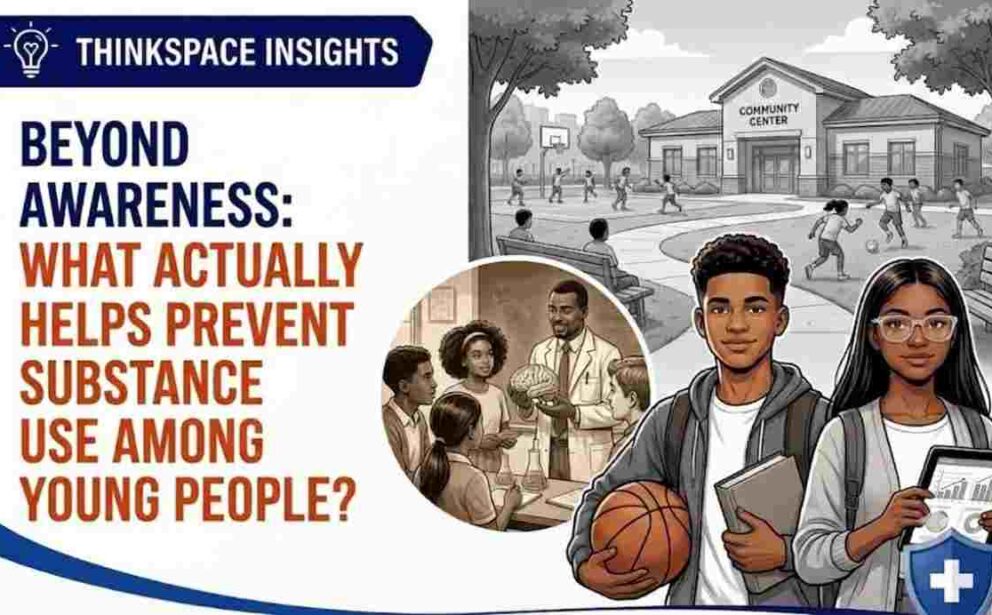
Substance use among adolescents is a rising global crisis, with rates climbing steadily despite numerous public health campaigns. For decades, the primary response has been either reactive treatment or intermittent, high-pressure messaging that often fails to resonate with young people. The most critical medical consensus in 2026 is that we must focus on primary prevention—stopping problematic substance use before it ever begins. This approach, targeting adolescents aged 10-19, represents one of our most promising strategies for curbing the long-term societal and medical burdens of addiction.
To understand the complex landscape of these prevention efforts, a comprehensive new scoping review published in the Journal of Prevention synthesized the available evidence from 2020 onward. Lead researcher D. Borkenhagen and a global team of experts analyzed over 24,000 records, ultimately selecting 71 high-quality studies focused on the United States, Canada, and Australia. Their goal was to cut through the significant noise and heterogeneity surrounding existing interventions to document exactly what is being tested, where, and—critically—what is working.
The findings reveal that the front lines of prevention remain firmly rooted in schools. Most identified interventions were school-based, followed by digital, media-based, and community strategies. Crucially, the target substances have shifted; while general substance use is still frequently addressed, the rising popularity of vaping has made e-cigarette use a primary target. The good news is that these interventions are successfully hitting their mark when it comes to fundamental cognitive change: many demonstrated clear improvements in adolescents’ knowledge, attitudes, risk perception, and refusal skills. Schools, in particular, show strong promise in educating and shifting mindsets.
However, the review exposed a frustrating and long-standing blind spot in public health: a massive disconnect between knowledge and action. Despite knowing the risks and processing positive attitudes toward refusal, evidence that these programs actually change long-term substance use behaviours remains mixed and varied. While the cognitive groundwork is laid, sustained behavioural change often fails to materialize, suggesting that currently dominant school-based models are necessary, but insufficient. We are teaching the “what” and the “why,” but we aren’t successfully influencing the “do.”
This behaviour gap highlights an urgent need to rethink our future tactics. The authors argue that future research can no longer afford to rely on short-term knowledge metrics; it must emphasize long-term behavioural outcomes. Furthermore, while school lectures are dominant, the landscape is shifting toward emerging digital and policy-level strategies that have not yet been fully evaluated. We must move past traditional, one-size-fits-all messaging and embrace tailored, long-term behavioural support. To truly stop the cycle, we need to prove that our prevention strategies actually keep young people substance-free, not just well-informed.
ThinkSpace Insights
- Primary prevention is the modern front line, with experts agreeing that the most effective strategy is stopping problematic substance use before it begins during the 10-19 age window.
- Schools remain the dominant intervention setting, proving highly effective at improving fundamental knowledge, shaping risk perception, and building refusal skills.
- Vaping is the primary target for modern campaigns, reflecting the massive epidemiological shift in adolescent substance preference.
- Knowledge is not behaviour change, as the review found that while kids are learning the risks, results on actual long-term behavioural choices are mixed.
- Long-term behavioural tracking is critically needed, marking a departure from relying on short-term metrics like knowledge gain to prove program efficacy.
- Emerging digital and policy strategies hold promise and require urgent evaluation to become viable alternatives to traditional, analog lectures.
Access Full Article
Https://link.springer.com/article/10.1007/s10935-026-00932-8