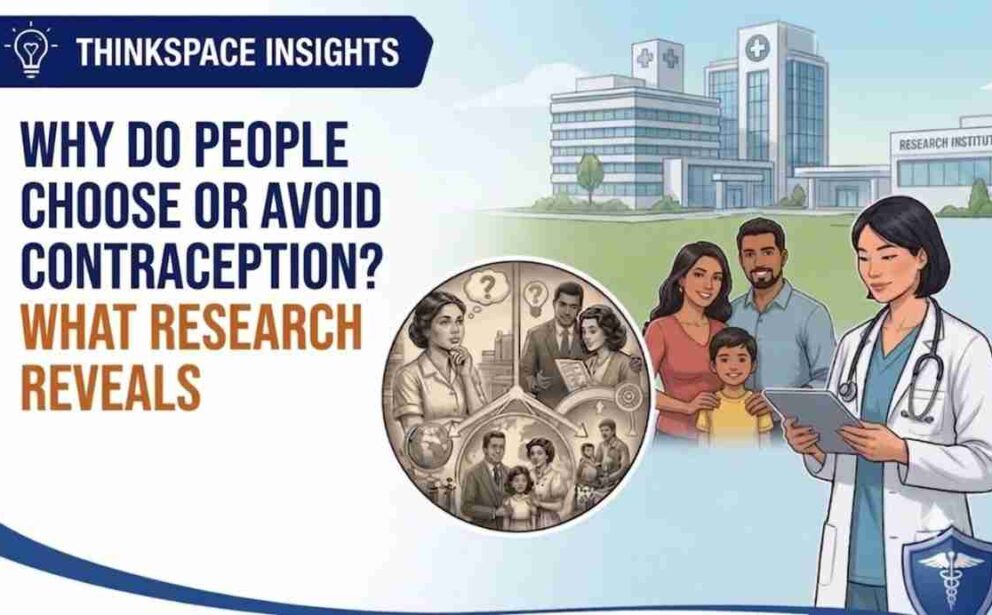
Family planning is often framed as a simple medical transaction: you visit a clinic, consult a doctor, and pick a method that works for you. But in reality, reproductive health is rarely that straightforward. Despite the fact that access to contraception is a fundamental cornerstone of public health, personal empowerment, and sustainable development, massive global disparities still exist. People in different regions and communities are making vastly different choices about their reproductive futures, proving that the decision to use contraceptives is driven by far more than just basic medical availability.
To uncover the invisible forces actually driving these deeply personal decisions, a research team led by Pipit Feriani conducted a comprehensive systematic review of recent global literature. Sifting through multiple academic databases for open-access articles published between 2018 and 2023, the team utilized strict guidelines to isolate 25 high-quality studies. Their goal was to step outside the traditional clinical setting and map the complex, interconnected web of individual, community, and sociocultural factors that ultimately dictate family planning behaviors worldwide.
The synthesized data painted a vivid picture of how our reproductive choices are either empowered or constrained by our immediate surroundings. On an individual level, a person’s baseline education, age, existing knowledge, and personal attitudes heavily dictate their approach to contraception. However, even with perfect knowledge and a positive attitude, community-level barriers often stand firmly in the way. The studies revealed that severe geographical disparities and a sheer lack of accessible healthcare facilities play a pivotal role, meaning that for many, family planning remains a logistical impossibility rather than a readily available choice.
Perhaps the most striking insights from the review came from the sociocultural determinants. The researchers highlighted that family planning is almost never an isolated choice; it is heavily influenced by surrounding gender norms, local media exposure, and peer influence. Crucially, spousal dynamics are a massive determining factor. A woman’s ability to successfully navigate her reproductive health is often deeply tied to the active participation, understanding, and support of her husband or male partner.
Ultimately, this review makes one thing perfectly clear: simply shipping boxes of contraceptives to a clinic is not enough to achieve global reproductive health goals. To truly advance equitable family planning, public health initiatives must be culturally sensitive and actively work to bridge the frustrating gap between simply having knowledge and actually taking action. By designing comprehensive programs that actively involve male partners, reduce geographical disparities, and challenge restrictive gender norms, we can finally ensure equal access to reproductive freedom.
ThinkSpace Insights
- Family planning goes far beyond medical access, with global disparities proving that complex sociocultural factors heavily dictate a community’s reproductive choices.
- Individual education and attitudes are primary drivers, showing that a person’s baseline knowledge and age fundamentally shape their willingness to adopt contraceptives.
- Geography can dictate reproductive freedom, as severe geographical disparities and poor healthcare accessibility remain massive barriers to contraceptive use at the community level.
- Spousal dynamics are critically important, highlighting that the active participation and support of husbands and male partners is essential for successful family planning.
- Sociocultural norms heavily influence personal choices, with gender roles, media exposure, and peer influence quietly shaping how individuals view contraception.
- Programs must bridge the gap between knowledge and action, requiring culturally sensitive, comprehensive strategies rather than just basic medical supply chains.
Access Full Article