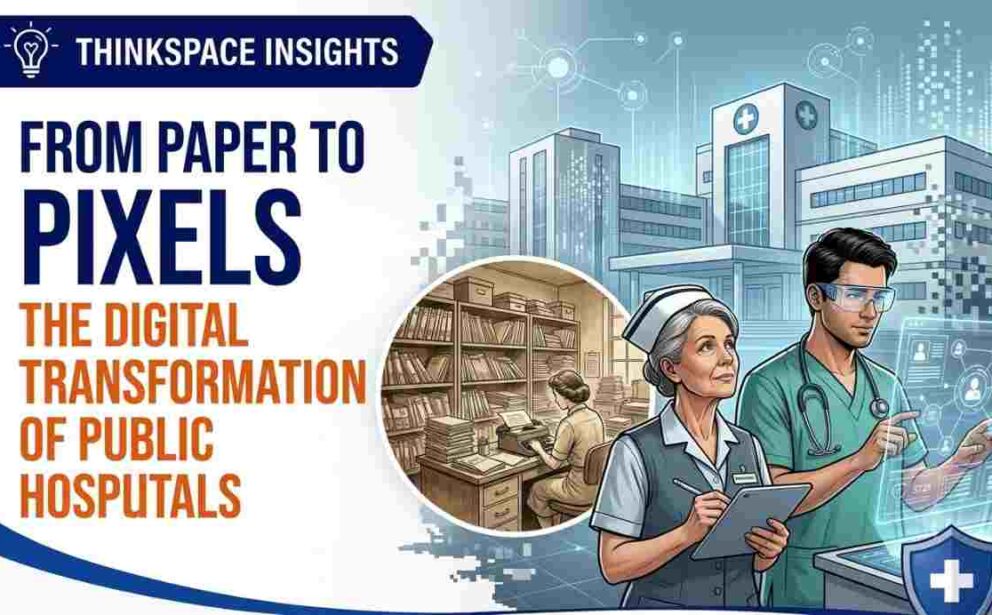
When we picture the future of healthcare, we often imagine a sleek, high-tech environment straight out of a sci-fi movie. We envision doctors holding tablets, AI predicting patient needs, and seamless data flowing across every ward. But the reality of achieving a sustainable digital transformation in public hospitals is far more complicated than just plugging in a few new devices. It is a monumental organizational challenge, particularly in emerging economies where resources are tight and the margin for error is razor-thin.
To figure out what actually makes a hospital transition successfully into the digital age, researchers Suthida Chansanguan, Nattharika Rittippant, Yasushi Ueki, and Chawalit Jeenanunta decided to look beyond the software. They noticed a significant gap in our understanding of the human and organizational factors driving these massive tech upgrades. Using Thailand as their primary case study, the team rolled up their sleeves and gathered data from the ground up, conducting in-depth interviews with senior administrators and surveying 370 healthcare professionals across 37 different hospitals.

What they uncovered completely challenges the standard tech industry playbook. We usually assume that the best way to get busy doctors and nurses to adopt new technology is to make it as absolutely simple and “easy to use” as possible. Surprisingly, the study revealed that an excessive focus on mere simplicity actually dragged down a hospital’s overall digital maturity. Similarly, relying too heavily on traditional, old-school communication methods acted as a stubborn roadblock to genuine modernization.
Instead, the true drivers of a successful “smart hospital” proved to be deeply human. The researchers discovered that well-structured institutional knowledge repositories and the specific reading comprehension skills of hospital leaders were the most significant factors in pushing digital transformation forward. It turns out that a strong foundation of shared knowledge and the cognitive readiness of administrators matter far more than simply buying the most user-friendly software on the market.

Ultimately, this research provides a powerful, actionable reality check for policymakers and healthcare administrators, particularly those operating in low- and middle-income countries. True sustainability in healthcare technology isn’t just about buying flashy gadgets or simplifying interfaces; it requires building resilient, knowledge-driven environments led by sharp, capable leaders. If we genuinely want to build smart hospitals that last, we have to start by investing in the people running them.
ThinkSpace Insights
- Sustainable digital transformation in healthcare requires much more than just adopting new technology; it demands profound organizational readiness and resilience.
- Making tech “easy to use” isn’t a silver bullet, as researchers found that an excessive focus on simplicity can actually hinder a hospital’s overall digital maturity.
- Relying on traditional communication methods acts as a significant roadblock, preventing healthcare teams from fully integrating modern, smart systems.
- Institutional knowledge repositories are critical, proving that well-organized data and shared information are the true backbone of a modernized hospital.
- Leadership’s cognitive readiness is a game-changer, with the analytical skills and reading comprehension of administrators directly driving digital success.
- Policymakers in emerging economies have a new blueprint, showing that sustainable healthcare tech must prioritize management competencies over mere software solutions.
Access Full Article