
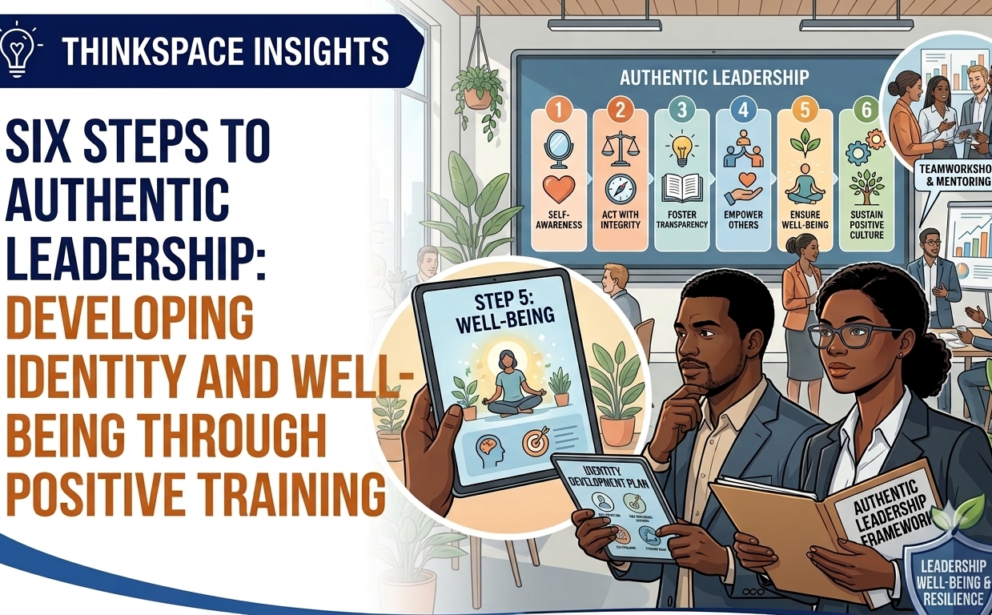
In the contemporary business world, demands for ethical and socially sustainable management practices have sharply intensified. While historical leadership frameworks often prioritized raw performance, modern organizational success requires a deeper focus on ethical decision-making, leader well-being, and long-term career sustainability.
A compelling study by researchers Kristina Ström, Sanna Wenström, and Ilkka Ratinen addresses these evolving needs by examining a specialized positive leadership development framework known as the Six-Step (6xS) Positive Leadership Program. The primary purpose of their research was to enhance the general understanding of how leaders internalize and reflect upon the development of an authentic leadership identity while progressing through a structured training curriculum.
To capture these insights, the authors utilized a narrative research methodology, gathering qualitative data from a sample size of 88 leaders (N = 88). Following a rigorous analysis of these personal leadership narratives, two distinct categories of description emerged: the narrated meaning of self-awareness in leadership identity, and the narrated meaning of collegiality in leadership identity.
The findings of the study demonstrate that the 6xS framework significantly supports the natural emergence of a genuine, authentic leadership identity. By offering a structured path to self-reflection and peer collaboration, the program provides clear, actionable implications for the design and execution of next-generation corporate training and positive leadership development initiatives worldwide.
ThinkSpace Insights
- Modern management requires a structural pivot toward ethical and socially sustainable practices to meet changing global workplace demands.
- Long-term career sustainability for executives relies heavily on balancing organizational performance with personal well-being.
- The Six-Step (6xS) Positive Leadership Program provides a practical, validated framework for transforming abstract managerial concepts into concrete actions.
- Cultivating deep self-awareness serves as a vital foundational pillar for building a stable and authentic leadership identity.
- Fostering robust collegiality and peer networks among leaders significantly accelerates and reinforces identity development during professional training.
- Implementing structured positive leadership programs enables organizations to measurably support and guide the growth of their leadership pipelines.
Access Full Article
https://link.springer.com/chapter/10.1007/978-3-032-02369-8_2